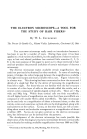
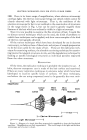
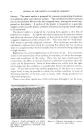
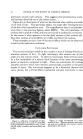
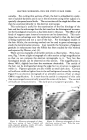
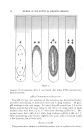
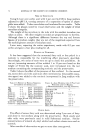
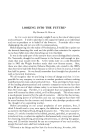
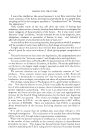
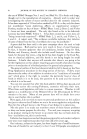
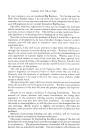
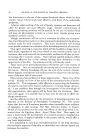
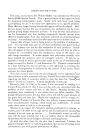
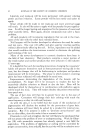
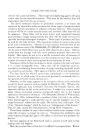
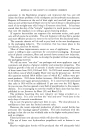
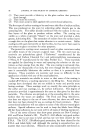
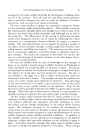
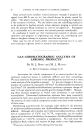
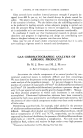
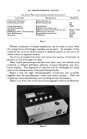
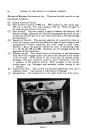
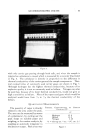
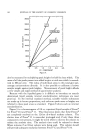
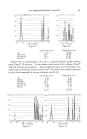
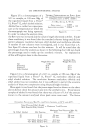
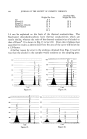
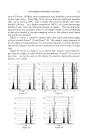
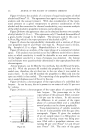
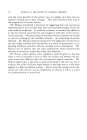
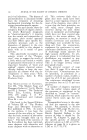
62 JOURNAL OF THE SOCIETY OF COSMETIC CHEMISTS factory. The metal replica is prepared by vacuum evaporating chromium or a platinum alloy onto the hair surface. The metallized surface is presse into a nitrocellulose film and the hair stripped away, leaving the metal sup- ported on the plastic. A section of the plastic is mounted on a specime support screen and the plastic carefully dissolved, leaving the metal replica to be examined. The plastic replica is prepared by clamping hairs against a thin fihn of l polystyrene on glass. At slightly elevated temperature the polymer soften and takes the contours of the sample so that, when the hair is stripped off, a negative impression of the surface is left. This must then be "shadowed with metal to provide adequate contrast. This technique provides le•s satisfactory replicas than metal for revealing fine detail, but has its place when it is suspected that the hair sample may be altered by being subjected to high vacuum. Replication has several applications in the study of hair. ] t is eminently suited to the examination of the surface, for example, to look at the arrange- ment and conditions of the scales. Once this has been determined for• normal hair, the effect of various chemical or physical treatments upon the scales can be determined. Some of these effects are visible with the light microscope, but the resolution is considerably better with electron micros copy. If one then knows the surface appearance of the hair on a micro scopic level, it may be possible to relate this surface condition to some the bulk properties of the hair, such as luster, static charge production or other such properties. There is one other special use of this technique although it can be some Figure 2.--Light micrograph of a plastic replica of a hair surface. This was taken at the highest magnification obtainable with light microscopy. Figure 3.--Electron micrograph of a plastic replica of a hair surface.

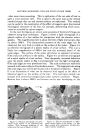
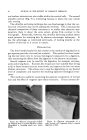
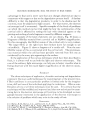
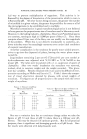
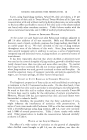
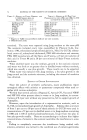
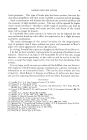
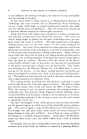
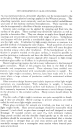
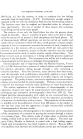
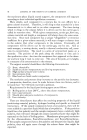
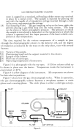
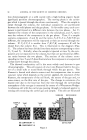
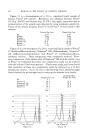
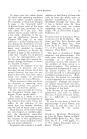
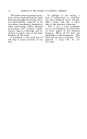
ELECTRON MICROSCOPE--TOOL FOR STUDY OF HAIR FIBERS 63 I what more time-consuming. This is replication of the cut ends of hair to I give a cross sectional view. This is done in the same way as the normal •method except that cut and treated surfaces are replicated. This method I can be useful in the examination of the effect of reagents upon the internal I histological structures of the hair, for example, determining which struc- I tures are attacked by a given reagent. In the next few figures are shown some examples of the kind of things one •observes using these techniques. Figure 2 shows a light micrograph of a Iplastic replica of a hair surface for comparison with the electron micro- Igraphs. The magnification here is about the limit of light microscopy, that iis, about 1100X. The characteristic patterns of the scale edges can be •observed, but very little is visible on the surface of the scales. Figure 3 is •an electron micrograph of a plastic replica of a hair surface. This is at a Ifairly low magnification of 4200X but note the increased detail of the •scale edges. The surface of the scales still shows no apparent structure. IThe cracks are artifacts in the replica. Figure 4 is an electron micrograph Iof a metal replica of a hair surface. Note the greatly increased definition •over the plastic replica in Fig. 3 and especially over the light micrograph. IThe scale edges are very prominent here. The scale surfaces are relatively Ismooth with some evidence of particulate matter. The large particles along Ithe scale edges may well be particulate soil or hardened oil deposits. Figure 15 is an illustration of what can be observed with regard to the effect of Ichemical agents on the surface of the hair. This particular sample was •treated with ammonium thioglycolate under extreme conditions. Magni- Ification here is about 4200X and furrows can be seen developing on the Figtire 4.--Electron micrograph of a chro- Imium metal replica of an tintreated hair ,surtkce. Note increased definition of the iscales over that seen in Figures 2 and 3. .... Figure 5.•Electron micrograph cf a chro- mium metal replica of the stirface efa hair fiber treated with ammonium thioglycolate under extreme conditions.
Purchased for the exclusive use of nofirst nolast (unknown)
From: SCC Media Library & Resource Center (library.scconline.org)