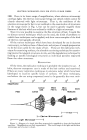
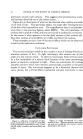
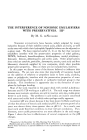
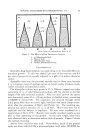
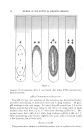
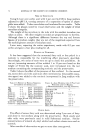
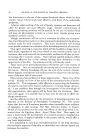
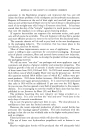
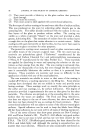
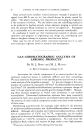
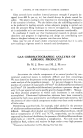
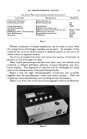
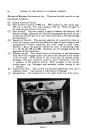
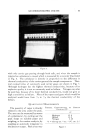
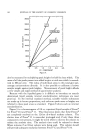
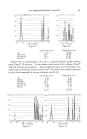
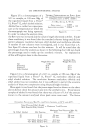
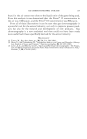
GAS CHROMATOGRAPHIC ANALYSIS 105 sure of 150 mm. of Hg at room temperature and, therefore, not be entirely in the vapor state. From Fig. 16 we can see that the maximum pressure that can be used at 20øC. with a sample that contains 30 per cent ethyl alcohol is 80 mm. At a higher temperature (40øC.) or a lower percentage alcohol (25 per cent) the maximum pressure is higher. The use of greater pressure than the maximum shown in this figure results in the condensing of the ethyl alcohol in the gas sampling valve or the column and, hence low results are obtained. Figure 17 shows a synthetic sample made with equal mole percentages of ethyl alcohol, Freon © 11 and Freon © 12. By using a vapor pressure of 45 min. Hg and using the factor 1.4, the results indicate a variance between the amount present and the amount analyzed of only a few tenths of a per cent. Figure 18 shows an analysis of an aeroxo[ hair lacquer containing 24.5 per cent by weight of ethyl alcohol and propellents 11 and 12 in a two to one ratio. As can be seen on this figure the analysis checks the mount present very closely. loo . 80 ---• 6O ,,- 40 • -- 100 •- eo 6O 4O TIME: Figure 21. i i i i i i t t I x L L 50X oeOX 1OX 1 Figure 22. lOO 60 __J_• ,- 40 • o-- _ TIME Figure 23. 100 80 60-- 40-- 20 0 , i [ i i i i , ] [ n.- --c,,J uJ uJ t.t_ [ , [ i i t i i i i TIME Figure 24.

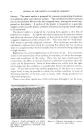
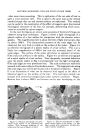
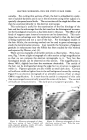
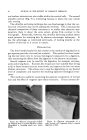
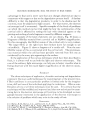
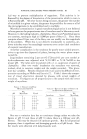
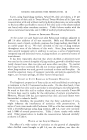
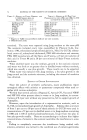
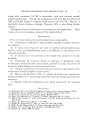
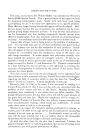
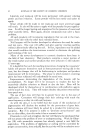
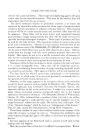
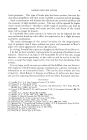
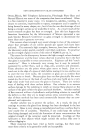
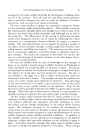
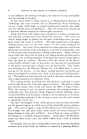
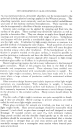
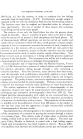
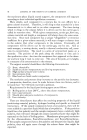
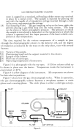
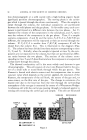
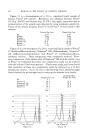
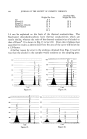
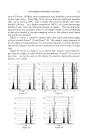
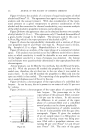
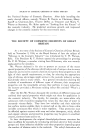
106 JOURNAL OF THE SOCIETY OF COSMETIC CHEMISTS Figure 19 shows the analysis of a mixture of equal molar parts of ethyl alcohol and Freon © ! 1. The agreement here again is very good between the analysis and the amount present. With due consideration of the maxi- mum pressure at a given temperature to prevent condensation of the alcohol and the correction for thermal conductivity, very accurate analysis of the ethyl alcohol in propellent mixtures can be obtained. Figure 20 shows the agreement that can be obtained between two samples of ethyl alcohol (1.55 cc.). This represents only 17 hundred thousandths of a gram, barely enough to be weighed. The pressure used in this case is 4.39 cm. Hg, which is the vapor pressure of the alcohol at 20øC. Figure 21 shows the reproducibility obtainable with a mixture of 50 per cent propellent type 11 and 50 per cent type 12. Pressure used is 12 min. Hg. Sample is 1.55 cc. of gas. Reproducibility is q- .3 per cent. Figure 22 shows an analysis of the vapor phase of a commercial window spray. This analysis was carried out at four different sensitivities to deter- mine at which sensitivity it would be desirable to run each constituent. At the highest sensitivity a trace of propane was detected. Air, butane and iso-butane were quantitatively determined in the vapor phase from this chromatogram. zterosol products can be filled by two methods, the cold fill and the pres- sure fill. With the pressure fill method the propellent is forced into the sealed can therefore, the air that was in the can when it was sealed re- mains there. In the cold fill method the propellent is filled cold into the open can which is then sealed. The vaporizing of the propellent before the can is sealed displaces most of the air in the can. Figure 23 shows a chromatogram of the vapor phase of a cold filled hair lacquer. As can be seen, the air is present to an extent of only 2.5 per cent by volume. Figure 24 shows a chromatogram of the vapor phase of a pressure-filled hair lacquer. The percentage air in the lOO i i z -o-- • uJ •m , , TIME Figure 25. vapor phase of this pressure filled container is 9.6 per cent by volume. In this manner the difference in air content of the vapor phase of a pressure-filled and a cold-filled aerosol product can be shown graphically. Trace determination of volatile materials in the air is also possible with the gas chro- matograph. Figure 25 gives the analysis of an air sample taken in a filling plant on a day when shaving cream was being pres- sure filled with a propellent mixture con- taining 60 per cent Freon © 12 and 40 per cent Freon © 114. The ratio of the gases
Purchased for the exclusive use of nofirst nolast (unknown)
From: SCC Media Library & Resource Center (library.scconline.org)