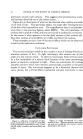
88 JOURNAL OF THE SOCIETY OF COSMETIC CHEMISTS (1) They must provide a lubricity to the glass surface that protects it from damage. (2) They must be nontoxic. (3) They must accept a label applied with conventional adhesives. The first type of surface coating to be used was a thin film of sodium sulfate. This was produced on the ware by admitting sulfur dioxide gas to the annealing lehr. The sulfur dioxide combined with the sodium in the sur- face layers of the glass to produce sodium sulfate. The coating was visible as a white or grayish "bloom" on the ware and provided a slick, greasy, lubricating film. The extraction of sodium from the surface leaves a tough skin on the glass that resists abrasion to a certain extent. Sulfur coating is still used extensively on beer bottles, but has never been used to any extent on glass containers for other purposes. The protective coatings most commonly used on glass containers today are edible waxes of the stearate or glycol type. The two used most ex- tensively are polyethylene glycol ("Carbowax" manufactured by the Carbide and Carbon Chemical Co.) and polyoxyethylene monostearate ("Myrj.-52 S" manufactured by the Atlas Powder Co.). These materials are applied by dissolving in water and spraying the solution on the con- tainers as they emerge from the lehr. The wax coating is extremely thin, less than one thousandth of an inch, but even though the film cannot be seen it successfully lubricates the surface so that it is protected from abrasion. These materials are nontoxic and cause no difficulty in the ß application of labels with any of the usual adhesives. The wax materials are soluble in water so that some of the coating is washed off if there is a washing operation in the filling line. Some silicone coatings have developed that are not soluble in water and provide more lasting coatings. These coatings work on exactly the same principle as the sulfur and wax coatings, i.e., by surface lubrication. The degree of protection provided is approximately the same as that given by the other materials. The silicones are sprayed on at the annealing lehr in the same fashion that the waxes are applied. The Food and Drug Administra- tion does not object to the use of some silicones, but there are still some that have not been cleared for use as coatings for food containers. Many conventional adhesives will not adhere to some of the silicone treated glass surfaces. Special adhesives can be used to keep the labels-from falling off, but these adhesives do not work well in all types of labeling equipment. Two of the newer silicones that show great promise are Dow Corning's 4141 and Union Carbide's 520. The D.C. 4141 affords very good surface protection, but is not easy to label and has not yet been cleared by the F.D.A. The U.C.C. 520 affords good protection, has been cleared by the F.D.A. and labels fairly well although the coating is somewhat less per- manent than most silicones. Silicones are also occasionally mentioned as

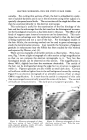
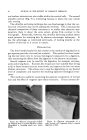
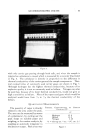
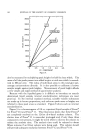
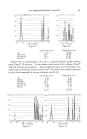
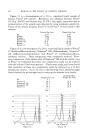
NEW DEVELOPMENTS IN GLASS CONTAINERS 89 coatings for the inside surfaces of bottles for the purpose of helping drain out all of the contents. This will work for very fluid, watery products such as penicillin solutions, but will not work for products of heavier consistency, such as sirups, hand creams and catsup. The most recent product to appear as a protective coating for bottles is a low molecular weight polyethylene plastic. This provides a nontoxic film which protects the glass fairly well (though not as well as some of the silicones) and which takes labels reasonably well (although not as well as the waxes do). The effectiveness of the coating in protecting the glass surface from dangerous abrasion can be tested by subjecting the coated containers to a standardized abrasion followed by impact or pressure testing. The controlled abrasion can be applied by passing a sample of two dozen coated containers through a rolling trough that simulates both rolling abrasion and filling line impacts. The containers are then tested with an instrument applying a controlled impact to determine their im- pact strength. The results are compared to the results of a similar test run on a control group of uncoated containers to see what degree of pro- tection the coating provided. We were not satisfied with the state of knowledge on the strength of glass, so we started a research group at Mellon Institute in Pittsburgh to study specifically the weakening effect of abrasions on glass. This group has developed an entirely new method for testing glass strength based upon the rupture of circular glass discs by hydrostatic pressure. The disc is not clamped at the edges but is free to deflect symmetrically under the hydrostatic load until it breaks. The strength can then be calculated by means of a rather complicated mathematical expression. The advantage of this new method lies in its ability to give accurate values of the actual breaking stress at any specific location on the specimen. Now, for the first time it will be possible to find the exact effect of a given type of surface damage. When this type of information is collected it is then possible to develop treatments to prevent the most serious types of surface damage. The fiat surface, which simulates the side of a bottle, enables us to use ellipticity of reflected light, electron microscopy, multiple beam interferom- etry, infrared reflection, gas absorption and other techniques to study the surface and the changes taking place in the surface before fracture occurs. One technique currently in use involves the introduction of metal atoms into the surface of the glass to locate the position of cracks. Such research tools enable this group to study the effectiveness of various surface treatments under carefully controlled conditions. In addition tO the strength research, we are carrying out investigations on the physical chemistry of glass with particular emphasis on the solubility of gases in glass. It has been found for example, that water vapor is soluble in glass and that it changes the physical properties of the glass. These changes
Purchased for the exclusive use of nofirst nolast (unknown)
From: SCC Media Library & Resource Center (library.scconline.org)