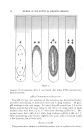
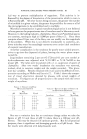
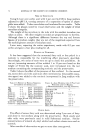
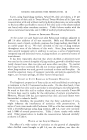
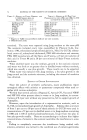
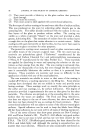
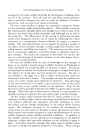
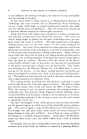
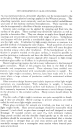
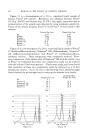
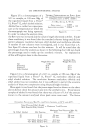
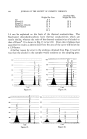
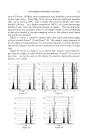
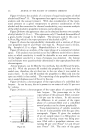
74 JOURNAL OF THE SOCIETY OF COSMETIC CHEMISTS 5--EFFECT OF FATTY RADICAL AND 1:1000 SORBXC Acre oN GROWTH ASPERGILLUS TABLE 6--EvvECT Or 0.2 PER CENT PRESERVATXVe wrru (2%) ANY (4%) G-3720 ON GROWTH OF ASPERGILLUS Carbowax 1540 ++++ Sorbic Acid (2)* +q-q-+ Pluronic L-64 + +++ Sorbic Acid (4) + + ++ Myrj 59 q-q- DHA (2) t G-3720 + + + + DHA (4) + + G 3920 4- 4- 4--3- Methyl p-Hydroxybenzoate (2) Tween 20 4- 4- Methyl p-Hydroxybenzoate (4) q- q- q- Span 20 ++ Control Jaag only (2) Control Jaag only (4) +-3-++ * Figures in Table 6 in parentheses indicate per cent nonionic. J' Dehydroacetic acid. termined. The tests were repeated using Jaag medium at the same pH. The nonionics included every type exemplified by Pluronic L-64, Car- bowax 1540, ethoxylated propoxylated glycerin, Myrj 59, G-3720, ethoxy- lated castor oil, ethoxylated cholesterol, PEG 600 ricinoleate and stearate, PEG 1000 monolaurate, all the Spans and Tweens, a 25 per cent solution of oleic acid in Tween 80 and a 30 per cent mineral oil Span-Tween nonionic emulsion. When distilled water was the medium, growth in the nonionic mixture and water was little or no greater than in distilled water without nonionic, which was usually a one plus growth. These results are to be expected. When water was replaced with Jaag medium, a four plus growth in the Jaag control and the nonionic mixtures, including the mineral oil emulsion was obtained. EFFECT OF OTHER SURFACTANTS Since the advent of synthetic surfactants, many publications report synergistic effects with anionics or quaternary compounds when used to- . gether with various antiseptics. We find that several anionics (Duponal C, Aerosol OT, Nacconol NRSF ' and MP 189) when present alone in water or in Jaag medium, in concen- ß trations of 0.1 per cent without any preservative, fail to support growth of ' dspergi//us. However, upon the introduction of a representative nonionic, such as G-3720, we immediately get growth ofdspergi//us. Indeed, when a mixture of from 1 per cent to 10 per cent of these anionics in G-3720 were used in concentrations of 2 per cent in distilled water or in Jaag medium containing 1:1000 and 1:500 of methyl p-hydroxybenzoate, we got from two plus to four plus growths readily. Data are accumulating to indicate that higher concentrations of anionic in the nonionic neutralize the interference in some way. Failing to completely overcome the interference being studied with anionics, attention was turned to the combined use of cationic germicides

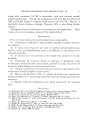
NONIONIC EMULSIFIERS WITH PRESERVATIVES. III 75 along with nonionics, G-3720 in particular, with and without methyl p-hydroxybenzoate. Among the compounds tried were Roccal, Hyamine 10X and Ethyl Cetab in varying combinations with G-3720. Roccal, in particular shows promise although Hyamine 10X is also being further studied. Among the classes of surfactants to be tested are the ampholytes. These results are not yet complete, hence will be reported later. DISCUSSION From the tests made so far several observations are possible. (1) Preservative usefulness is still a problem specific to a given product formulation. (2) It takes more than 0.1 per cent of methyl p-hydroxybenzoate, benzoic, sorbic and dehydroacetic acids to be effective in the absence of a nonionic emulsifier. (3) In the presence of nonionics, even double this amount is not de- pendable. (4) Practically all nonionics based on ethylene or propylene oxide condensates, with each other, fatty esters, alcohols or acids, inactivate all presently usable drug and cosmetic preservatives. (5) Anionics sometimes used with nonionics may favorably prevent this interference if used at higher concentrations. (6) Roccal and Hyamine 10X of a group of quaternary compounds showed possibilities in preventing preservatives from being inactivated by nonionics. (7) Results with the ampholytes now being tested will be reported later. REFERENCES (1) deNavarre, M. G., First World Congress on Surface Active Agents, Section 9 (1954). (2) deNavarre, M. G., and Bailey, H. E., y. $oc. Cosmetic Chem., 7, 427 (1956). (3) Rahn, O., and Conn, J. E., trnd. Eng. Chem., 36, 185 (1944). (4) Berry, H., and Perkin, H. A., •uart. •. Pharm. Pharmacol., 19, 535 (1946). (5) Ingram, M., Ottaway, F. J. H., and Coppock, J. B. M., Chemistry • trndustry, No. 42, 1161 (1956). (6) Arkins, F., Mfg. Chemist, 21, No. 2, 51 (1950). (7) Molho, D., and Lacroix, L., Bull. soc. chim. biol., 31, 1348 (1949). (8) Bolle, A., and Mirimanoff, A., y. Pharm. Pharmacol., 2, 685 (1950). (9) Dubos, R. J., and Davis, B. D., y. Exptl. Med., 83, 409 (1946). (10) Minami, K., Nature, 178, 743 (1956).
Purchased for the exclusive use of nofirst nolast (unknown)
From: SCC Media Library & Resource Center (library.scconline.org)