THE JOURNAL OF THE SOCIETY OF COSMETIC CHEMISTS This edition is published by THE SOCIETY OF COSMETIC CHEMISTS OF GREAT BRITAIN Publication Office: 54, Woodlands, London, N.W.11 ¸ 1960 Society of Cosmetic Chemists of Great Britain VOL. XI OCTOBER 1960 7 SURFACE CHEMICAL TECHNIQUES IN THE DESIGN OF COSMETIC PREPARATIONS A.M. POSNER, B.Sc., Ph.D.* Delivered at the Summer Conference of the Society on 25th August 1960. Many of the methods used for the study of soluble and insoluble films at the Air-Water and Oil-Water inter•aces are described. The possible appli- cations for their use in the furthering of cosmetic products is given. It is suggested that much useful basic information can be obtained by the appli- cation of the results obtained from studies of this type. W}IETI•R • realizes it or not, the cosmetic chemist is intimately concerned with the properties of surfaces or interfaces of one type or another. His products are designed for application to the surface of the skin and the formulation chemist is constantly striving to improve and modify the physical and subjective properties of his preparations, usually by altering the mechanical properties of the interfaces existing in them. Interfaces are the boundaries between two immiscible states of matter, e.g. Liquid/Liquid (emulsions), Gas/Liquid (foams), Gas/Solid (powders) and Sohd/Liquid (toothpastes). It was realized before the time of Rayleigh that an interface is a region of high free energy and in consequence, has special properties of its own, some of them being two-dimensional analogues of a three-dimensional system. *County Laboratories Limited, Brentford, Middlesex. 373

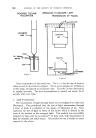
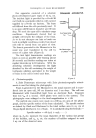
374 JOURNAL OF THE SOCIETY OF COSMETIC CHEMISTS If a third substance is dissolved in one of the phases, it will tend to concentrate at the interface to a greater or lesser degree depending on its so-called "Surface Activity." This concentration at the interface is termed "adsorption" and the extent of adsorption will depend on relative affinity of the dissolved substance for the bulk phases. Adsorption results in a lowering of the free energy of the surface and hence it becomes easier to disperse one phase in the other. Thus, surface active agents are used as emulsifiers, detergents, foaming agents, etc., because they are able to modify the properties of multiphase systems. Many of the methods of surface chemistry and physics have been developed for studying the pro- perties of adsorbed films, usually using model systems. Thus the Air/Water surface in a trough is a model for the interface existing in a foam, while the Oil/Water interface formed by placing oil on water is a model for the interface existing between the oil and water in an emulsion. This paper is a review of the experimental methods that can be used to study Gas/Liquid and Liquid/Liquid interfaces, with an illustration of the type of result that can be obtained. It is convenient to classify the experimental methods in terms of the type of interface being examined. GAs/LIQuID INTERFACE This interface and the Liquid/Liquid interface are probably the simplest to work with, since they are easy to form reproducibly. The experimental techniques are also fairly straightforward. ADSORBED FIL•4S It should be remembered when formulating a shampoo, that its ability to foam will depend on :. (1) the surface tension being lowered sufficiently, (2) a sufficiently rapid diffusion of the surface agent into the surface, especially during the rapid expansion of the surface as the foam is generated, (3) the correct mechanical properties of the adsorbed film being achieved. If the film is too fluid or too rigid, it will be unstable and an unsatis- factory foam will be obtained. The Determination of Su•3face Concentrations (i) Radio Isotopes This technique was introduced by Dixon et al • and Aniannsson and Lamm 2.
Purchased for the exclusive use of nofirst nolast (unknown)
From: SCC Media Library & Resource Center (library.scconline.org)