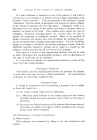
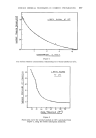
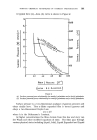
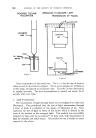
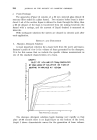
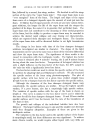
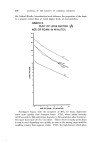
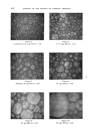
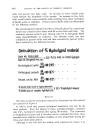
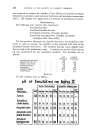
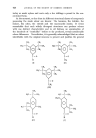
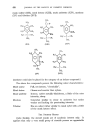
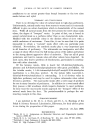
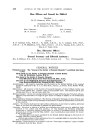
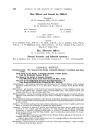
394 JOURNAL OF THE SOCIETY OF COSMETIC CHEMISTS MODIFIED TECHNE VISCOM ETER APPARATUS TO MEASURE LIGHT TRANSMISSION OF FOAMS VISCOMETER TUBE TO TECHNEHEAD••I•'[• CU P• 11 I Figure I '•TO 6v. AccU-I - MICROSCOP5 [ LAMP -'• I I FOAM CELL PHOTO- I CEIl" ,• I ' TO AL•ER Figure Foam is generated in the usual way. The t -- o for the age of foam is taken as soon as the mixer is stopped. Six to seven samples are withdrawn at this stage, and placed in viscometer cups. Viscosity is then determined at regular intervals. The first determination is carried out about 15-17 seconds after zero time. c. Light Transmission The transmission of light through foams was investigated by Clark and Blackman 4. They postulated that the loss of light transmission through a layer of foam is a function of the degree of dispersion of air. They expressed the loss of light in terms of loss factor which is defined as the ratio of the incident to the emergent light. This method was successfttlly adopted by Ross and his co-workers 5' 6 in their work with transmission of light by unstable and stable foams. The method we use is similar in many respects to the above.

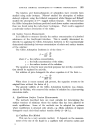
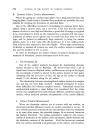
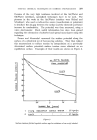
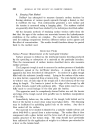
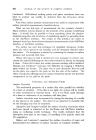
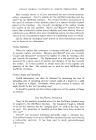
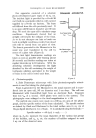
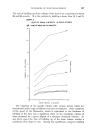
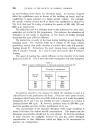
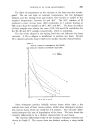
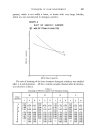
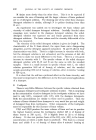
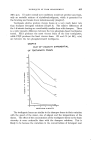
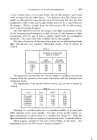
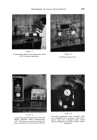
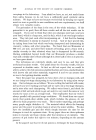
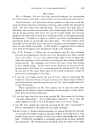
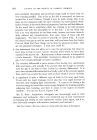
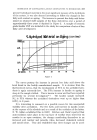
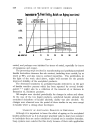
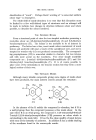
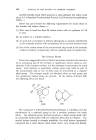
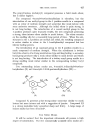
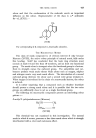
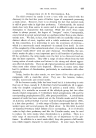
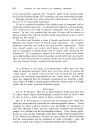
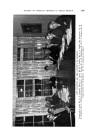
TECHNIQUES OF FOAM MEASUREMENT 395 Our apparatus consisted of a selenium photo-cell (Barrier Layer type) of 12 sq. cm. The incident light is provided by a 6-volt 36 watt bulb in a parabolic reflector, with current supplied by a 6-volt car battery. The foam cell differed from the cells previously used. It is an open cell 50 mm in diameter and 30 mm deep. We used the open cell to simulate usage conditions. Experiments showed that an airtight cell retards the collapse of the foam. As we do not shampoo our hair or brush our teeth in airtight conditions, results from closed cells will be unreal from our point of view. The foam is generated in the Mixmaster in the usual way and transferred to the cell by means of a glass tube (Figure 2). The first light transmission readings are taken as soon as possible after beating (about 20 seconds) and further readings are taken at regular intervals up to 10 minutes. With the absorbing solutions (toothpastes) the light absorbed by the cell containing the weight of toothpaste solution equivalent to the weight of foam in the cell is noted each time. DRAINAGE APPARATUS SINTERE d FUNNEL '• PLATINUM WIRE TIP $rnl GRADUATED d. Photomicrography Figure 3 A Zeiss Demoscope microscope with Zeiss photomicrographic attach- ments is used for taking the photographs. Foam is generated in the Mixmaster in the usual manner and is trans- ferred into an open cell, 3.5 cm diameter and 1 cm deep. The cell was illuminated with transmitted light from an electronic flash. Exposure time was 1/25 of a second. HP3 plates were used in the camera. The photographs were enlarged so the final magnification is x 45. The particle size counts were made on a 100 sq. cm area of the photo- graph, and the specific surface of the foam calculated. The specific surface as defined by Clark and Blackman 4 is the total surface area in sq. cm of the gas liquid interface in 1 cc of foam. It is calculated using the formula :- Specific surface: •: (xldl q- x2d• ...... ) where dl, d• etc. represent the mean diameters of the various size groups of the bubbles, and xl, x• etc. the number of bubbles assigned to each 1 sq. cm of the observed area.
Purchased for the exclusive use of nofirst nolast (unknown)
From: SCC Media Library & Resource Center (library.scconline.org)