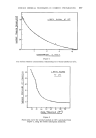
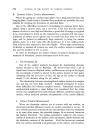
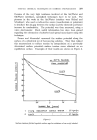
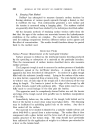
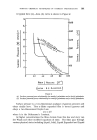
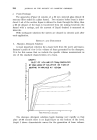
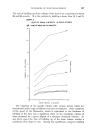
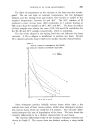
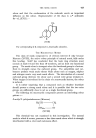
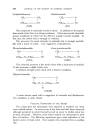
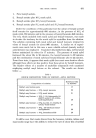
434 JOURNAL OF THE SOCIETY OF COSMETIC CHEMISTS of the macrocyclics approach the "bouquet" effect of the natural musk. In this class Pentadecanolide (XX) is perhaps the most outstanding example. Although Steroids have been discovered which possess a musk odour, they are of no commercial importance. It can be confidently predicted that further types of compound with a musk odour will be discovered. As the literature indicates, work has already been carried out in the field of tricyclic compounds with some degree of success. In fact, it is possible that the next 10 years will see almost as great a change in the types of synthetic musks in general use as has occurred during the last decade! The author also describes a series of simple experiments carried out to illustrate the fixative effect of several musk compounds. Two common perfumery materials were used as the basis for these experiments. These were, benzyl acetate and methyl amyl ketone and the effect on their rate of evaporation of adding 10 per cent of various musk compounds was determined. The experiments showed that while the simple nitro musks and a high-boiling solvent (benzyl benzoate) undoubtedly had some fixative effect, a much increased effect is obtained by the use of certain musks drawn from the benzene, indane, tetralin and macrocyclic series. As a footnote to the paper, it is interesting to reflect upon the wide range of chemical structures which have now been shown to possess the "musk odour". It almost seems as if the more we learn the less specific become the structural requirements for the "musk odour". In fact, Dr. Beets has suggested that the minimum requirements are basically a mole- cular weight of 2-300, a closely-packed molecular structure that is of bulky profile and an easily accessible functional group. •)ISCUSSION DR. H. W. HIBBOTT .' How far do these fixatives, being what they may be, affect vapour liquid chromatography, because if they do, then it may be that we have a better notion of what a fixative should be. MR. •). E. BUTTERFIELD: I presume you are meaning, how would they affect the performance of a material on a chromatographic column ? I have certainly no direct evidence myself or any knowledge of experiments to that end, although I know that the author has considered gas chromato- graphy as a possible tool for investigating fixation. These simple experi- ments, as I am sure Mr. Pickthall would agree, really need carrying further to see whether this difference between say, nitro musks or benzyl benzoate and the macrocyclics can be confirmed by other techniques. Also, the extent to which other types of compounds possess these properties.

THE MUSK ODOUR 435 DR. H. W. HIBBOTT: By analogy is there not some connection between retention time on a chromatographic column and the retention times you mention ? MR. I). E. BUTTERFIELD: Possibly, though the separation of the con- stituents of a mixture on a column depends on the column itself and not on the other constituents which are present. DR. B. L. R^o: What is the effect of reducing the carbonyl group to the alcohol in these compounds and does it lead to any loss of odour ? MR. I). F.. BUTTERFIELD: From the evidence, for example in the Indane series, it is pretty certain that you need an acyl group present for pro- nounced musk odour. That is, you need the carbonyl group itself. Although I do not recall any particular compounds of this type containing the alcohol group, I think that reduction would certainly remove the musk odour. Whether you get a different odour or just attenuation of the musk character, I do not know. Something comparable, I think, is known about the con- stituents of Civet. The alcohol Civetol, which occurs in natural civet has, I believe, a definite but weak musk odour, but can be oxidised to the odorous civetone. I think there is another comparable case among the amber compounds. DR. A. W. MIDDLETO•: The author gives values for odour retention for methyl amyl ketone of 17 minutes which is increased to 27-28 minutes after replacement of 10 per cent methyl amyl ketone by macromolecules. The 10 per cent is a bulk concentration whereas the relevant concentration is that in the evaporating surface. A surface concentration of about 40 per cent macromolecule (moles per cent) would explain the odour retention times. Has the author any data regarding the surface concentration ? MR. I). F.. BUTTERFIELD: This is an interesting possibility and could explain the different retention times found, other than on the basis of physical interaction in the bulk of the liquid. Unfortunately, we have no data on surface concentration. DR. A. W. MIDDI. ETON: You would expect that the surface concentration would differ with the different types of chemicals you put in. MR. I). E. BUTTERFIELD: Yes that is true. It would certainly be inter- esting to extend this work to further types of compounds, particularly as the compounds yielding high retention times differ significantly in structure from those having little "fixative" effect. Comparison of the macrocyclic ester, ethylene brassylate with benzyl benzoate could be of interest. MR. F. ATKINS: I would like to draw attention to the last line in Table 1.
Purchased for the exclusive use of nofirst nolast (unknown)
From: SCC Media Library & Resource Center (library.scconline.org)