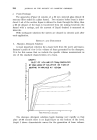
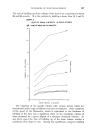
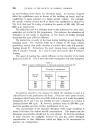
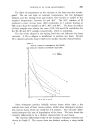
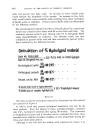
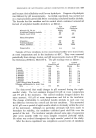
SURFACE CHEMICAL TECHNIQUES IN COSMETIC PREPARATIONS 375 The kinetics and thermodynamics of adsorption have recently been studied using radio isotopes. Nilsson g studied the adsorption of sodium dodecyl sulphate using the tritiated compound, while Flengas and Rideal 4 studied the adsorption of Cx4--tagged sodium stearate. They showed that the Gibbs Adsorption Isotherm predicted much lower surface concentrations than was found using the radio-tracer techniques. Their results suggested a molecular surface association of the solute. (ii) Surface Tension Measurements It is difficult to measure directly the surface concentration of adsorbed substances at the Gas/Liquid interface. This is usually determined in- directly by applying the Gibbs Adsorption Isotherm to the experimentally determined relationship between concentration of solute and surface tension of the solution: The Gibbs Adsorption Isotherm is of the form :-- --c d7 RT dc where F = the surface concentration. c: the bulk concentration of the solute. 7 = the surface tension of the solution. The equation is true for most practical purposes but strictly, concentra- tion should be replaced by activity. For solution of pure detergents the above equation is of the form :-- --c d7 2RT dc •Vhen there is excess neutral salt present, the equation reverts to its original form without the factor of «. The general validity of the Gibbs Adsorption Isotherm was demon- strated by McBain, who removed the surface of solution by a fast-moving microtome knife. A. Equilibrium Surface Tension Measurements The methods described here are most suitable for determining the surface tensions of solutions where the surface film has been allowed to reach equilibrium. Some of the methods can be adopted for systems, where equilibrium is attained only slowly, e.g. dilute solutions of impure detergents reach their final surface tension slowly (1--24 h.). (a) Capillary Rise Method This can be a very accurate method. It depends on the measure- ment of the rise of the liquid in a capillary tube of known radius and

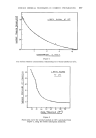
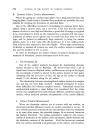
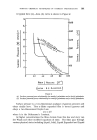
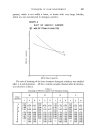
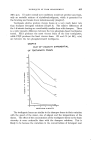
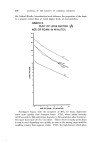
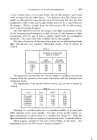
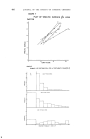
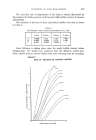
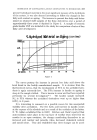
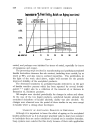
376 JOURNAL OF THE SOCIETY OF COSMETIC CHEMISTS relies upon a zero contact angie between the tube and test liquid. This is sometimes difficult to achieve with dilute solutions of surface active materials. (b) Maximum Bubble Pressure Method This method depends on a measurement of the force required to blow a bubble of gas from a tube of known radius immersed in the test solution. This bubble must be blown sufficiently slowly to allow the equilibrium film to be established. The technique can be rendered simpler, by comparing the pressures for two tubes of differing diameters. (c) Drop Volume and Drop Number Method This is the most common and simplest method for determining surface tensions. The volume or weight of drops which fall from the tip of a vertical tube is determined. It is usual to calibrate the tip with solutions of known surface tension, e.g. ethyl alcohol, although absolute values may be determined using published correction factors. An Agla micro-syringe is a most convenient device with which to carry out Drop Volume determinations. (d) Ring Detachrnent Method The surface tension may be determined by measuring the force required to detach objects of various shapes from a liquid surface. If the object is wetted by the liquid (zero contact angle) some of the liquid comes up with it as it is lifted. At a certain height the liquid breaks away. The force at the break point is a function of the surface tension. The most commonly used shape for this method is a ring in conjunction with a du Nuoy tensiometer. It is always necessary to apply a cor- rection factor, a table of which has been published by Harkins and Jordan 5. The pull on a thin plate (Wilhelmy) is often quite satisfactory, especially when making quick comparative studies. (e) Sessile and Pendant Drop The shape of a large bubble or drop of liquid at rest on a plate or hanging from a suitable tip, is related quite simply to the surface tension of the liquid. The surface tension may be calculated from the height and maximum diameter of the drop or bubble. A typical surface tension-concentration curve is shown in Figure 1 for n-butyl alcohol. The Gibbs Adsorption Isotherm may be applied to this and the force (surface tension lowering)--area curve shown in Figure 2 derived.
Purchased for the exclusive use of nofirst nolast (unknown)
From: SCC Media Library & Resource Center (library.scconline.org)