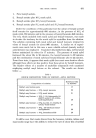
432 JOURNAL OF THE SOCIETY OF COSMETIC CHEMISTS amylketone to an extent greater than benzyl benzoate or the two nitro musks ketone and xylol. SUMMARY AND CONCLUSIONS There is no denying the value of natural musk in high-class perfumery. Unfortunately, natural musks vary from source to source and it is extremely difficult to give an odour description which is characteristic of the named item. While all natural musks from the deer possess the sweet clean musk odour, the degree of "bouquet" varies. In point of fact, one is forced to accept natural musk as a perfume rather than as one characteristic note. Blended with the musk-like odour is the distinct effect of civet with a subtle undertone of castoreum. From this, it can be seen that it is quite impossible to obtain a "natural" musk effect with one particular pure chemical. Nevertheless, the synthetic musks play a very important part in all branches of perfumery. The nitromusks are inexpensive and offer a range of odour effects from the full toning action of the xylene and ketone to the strong almost aggressive effect of ambrette. They are all of great persistence and tend to remain when all other odours have departed. In most cases, they lead to problems of discoloration, particularly in combina- tion with other chemicals. Of the benzene musks, little is heard but 3.5-ditertiarybutylaceto- phenone and 3.5-ditertiarybutylpropiophenone offer great possibilities. Of the tetralin musks, 1.1.4.4-tetramethyl-6-ethyl-7-acetyl-l.2.3.4-tetrahydro napthtalene is a first-class product. In the indane field, 4-acetyl-l.1- dimethyl-6-tertiarybutylindane is outstanding. It is of obvious value in high-class perfumery and may be used to replace nitromusks when colour becomes a problem. The macrocyclic musks offer a wide range of products for use in many branches of perfumery. In addition to a sweet musk effect they possess a full woodiness which imparts character to most perfumes. In some ways the macrocyclic musks approach the "bouquet" effect of the natural musk from the deer. The pentadecanolide is perhaps the out- standing example in this class. ACKNOWLEDGMENT I am indebted to Dr. M. G. J. Beets and Dr. L. G. Heeringa of the Polak & Schwarz Research Laboratories, Hilversum, for their advice given to me during the preparation of this paper. (Received: 1st June 1960) REFERENCES • Beets, M. G. J. Symposium on Molecular Structure and Organoleptic Quality, Geneva (1957) 83. • Beets, M. G. J., van Essen, H. & Meerburg, W. Rec. tray. chirn. ?? 861 (1958). a Pickthall, J. Soap, Perfumery • Cosmetics 32 889 (1959). 4 Stoll, M. Mfg. Perfumer 1 107 (1937).

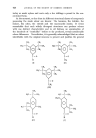
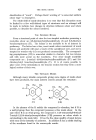
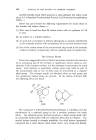
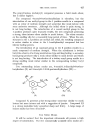
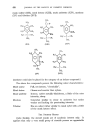
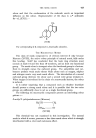
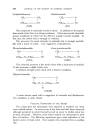
THE MUSK ODOUR 433 INTRODUCTION BY I). E. BUTTERFIELD, B.A. The field covered by musks is now a very wide one indeed with the discovery in the last few years of further types of compounds possessing a musk odour. However, there is no denying the fact that natural musk is still of great value in high-class perfumery. Unfortunately, the natural musk does vary from source to source and it is difficult to give an odour description to characterise this material. While the sweet clean musk odour is always present, the degree of "bouquet" varies. Consequently, one is forced to accept natural musk as a perfume rather than as one charac- teristic note. We find, in fact, that blended with its musk-like odour are distinct effects of civet, together with a subtle undertone of castoreum. In this connection, it is interesting to note the occurrence of civetone-- which is a macrocyclic musk compound--in natural Civet itself. In view of the complexity of the natural musk odour, it is quite impossible to obtain a natural "musk effect" with one pure chemical. Nevertheless, the syn- thetic musks do play a very important part in all branches of perfumery. Of the synthetics, the nitro musks were the first to be discovered and are also the least expensive. They offer a range of odour effects from the full toning action of musk xylene and ketone to the strong and almost aggres- sive effect of Ambrette. They are all of great persistence and tend to remain when most other odours have departed. However, in many cases, they lead to problems of discoloration, particularly in combination with other chemicals. Today, besides the nitro musks, we now know of five other groups of compounds with a musk-like odour. They are: the benzene, indane, tetralin, macrocyclic and steroid musks. Of the benzene musks, little has been heard but it is interesting to note that one of these, namely 3: 5 ditertiary butyl benzaldehyde (I) is appar- ently the simplest compound known to possess a musk odour. Unfor- tunately, it is unstable on account of the aidehyde group but two other closely related compounds, 3:5 ditertiary butyl acetophenone (II) and the corresponding propiophenone (III), offer great possibilities. A considerable amount of work has been carried out on the Tetralin musks and of these, 1.1.4.4-tetra methyl 6-ethyl 7-acetyl 1.2.3.4-tetrahydronaphthalene (VII), is a first class product. A wide range of Indane compounds has also been worked upon and several possess the Musk odour. In this field, 4-acetyl 1.1-dimethyl 6-tertiary butyl Indane (X) is outstanding. It is of obvious value in high class perfumery and like the Tetralin musks, may be used to replace the nitro musks when discoloration is a problem. There is a wide range of macrocyclic musks, which are of importance to the per- fumer. In addition to a sweet musk effect, they also possess a full woodi- ness which imparts character to most perfumes. In some ways, the best
Purchased for the exclusive use of nofirst nolast (unknown)
From: SCC Media Library & Resource Center (library.scconline.org)