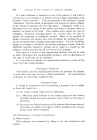
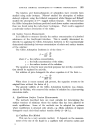
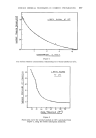
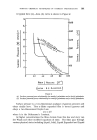
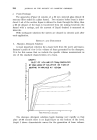
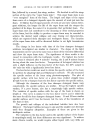
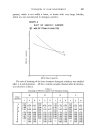
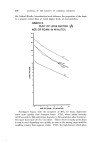
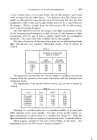
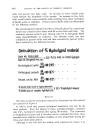
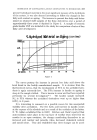
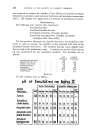
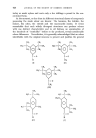
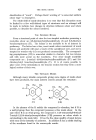
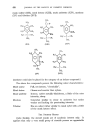
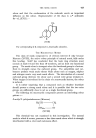
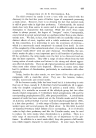
416 JOURNAL OF THE SOCIETY OF COSMETIC CHEMISTS acids and percent free fatty acids. An increase in water soluble acids would indicate the hydrolysis of the acetate. An increase in free fatty acids would include water insoluble acids resulting from either hydrolysis of lanolin esters or oxidation. Percent water soluble acids was determined by the following method: 50 g of matedhal were dissolved in 150 cc of benzol, placed in a separatory funnel and extracted three times with 25 cc hot water each time. The combined aqueous extracts were titrated with 0.1 N methanolic KOH using phenolphthalein as indicator. The titration result was first calculated as percent acetic acid and then converted to percent hydro- lyzed material by the following formula: Oaleula-kion r % Hydrolyzed material Equiv. w'c. Ace'tic Aoid I00 =% Sol. Acids on Cornpl. I-lydroysi• Equiv. •. lee•lated Prod.(oale) X Fo•- Aeeoe•lat. ed Lanolin :tgxlO0=2.91% .......... For Aee•glaf. ed LanolinAIc. 6ø xlOOqS.7%' ........ [o• Acct. Lan. •,lc. l•icin. 6•ox 1110=9.l% .......... % •oluble Acidg found on Aging ldett•mined). ........ x I00-- % Itydrokjzed material %,qoluble Acid.q on compleLe h•drolygi•(eale.) RESULTS The data on percent hydrolyzed material as determined by this method are expressed in Figure 1. It will be noted that percent hydrolyzed matedhal is very low for all three products. Even the highest of these, acetylated lanolin, contained only 0-4% hydrolyzed material after ageing 36 months. This represents an insignificant increase and it therefore can be concluded that these three materials have exhibited excellent stability at room temperature during the three-year observation period. Although it was felt that the soluble acids expressed in Figure 1 as

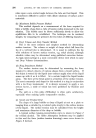
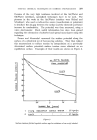
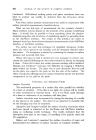
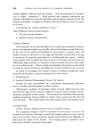
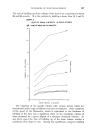
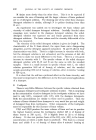
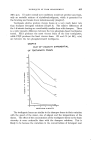
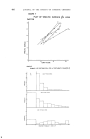
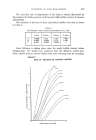
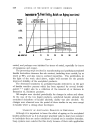
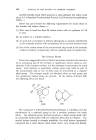
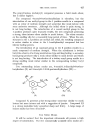
RESISTANCE OF ACETYLATED LANOLIN DERIVATIVES TO HYDROLYSIS 417 percent hydrolyzed material is the most significant measure of the hydrolysis of the acetate, it was also deemed interesting to follow the changes in free fatty acid content on ageing. The increase in percent free fatty acid deter- mined on retained shelf samples of the three derivatives over a period of approximately three years is depicted in Figure 2. A sample of cosmetic grade lanolin USP was included in the study for comparison of rates of free fatty acid development. % Hydrolzed Ilaterial on Agin (m0mtn, o AGE-A•O#I'I• G 12 Ig, 24 • •G 40 Figure The curves portray the increase in percent free fatty acid above the level found in the freshly manufactured sample. It is obvious from the flat low-level curves, that the development of FFA in the acetylated pro- ducts is again extremely low. The FFA increase in lanolin on ageing is steep in the sample studied. This is known to occur and had been reported previously by several investigators 2' a. The lanolin sample increased 13% in FFA whereas the acetylated derivatives went up no higher than 0.25% in 3 years. It is interesting to comment on a possible reason for this unexpected stability after acetylation. The free fatty acid increase in lanolin occurs at the expense of the alcohols and as a result of the oxidation of the latter. N. W. Gillam established this in 1947. 2 Kitchen and Clark a reported that auto-oxidation takes place in the top layer of woolfat when stored for 19. months in an open container, the changes manifesting themselves in an increased acid number and peroxide value, decreased cholesterol content and rancid odour. They also established that these changes can be accel-
Purchased for the exclusive use of nofirst nolast (unknown)
From: SCC Media Library & Resource Center (library.scconline.org)