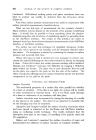
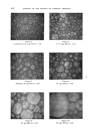
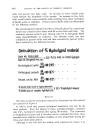
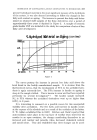
392 JOURNAL OF THE SOCIETY OF COSMETIC CHEMISTS conditions. This foam should be similar to the foam produced under usage conditions. The simplest foam generation experiments were carried out by shaking the detergent solution in a cylinder a number of times. Some authors •, • evolved shampoo foams by bubbling a known volume of air through a detergent solution, or by using an oscillating perforated disc in a cylinder of detergent. The first technique is not reproducible. The second is not realistic as there is no work simultaneously "making and breaking" the foam. The third technique is too restricted in the amount of air which can be incorporated. The generation of foam by beating with food mixers is widespread and was used as far back as 1933 by Henry and Barbour a in their studies on egg white. Besides food mixers, adapted food mixers and various other stirrers are also used. We chose a Sunbeam Mixmaster to generate the foams. Our choice was governed by the following factors: 1. The foam generated in the Mixmaster at the faster speeds is com- parable to the actual shampoo and toothpaste foams. 2. Air is freely incorporated. 3. Excellent reproducibility because of easy and accurate controls. 4. Speed of beaters is practically independent of the load on them. We measured the properties and specific (bulk) volume of foam produced on a head of hair when shampooed with a mild anionic detergent shampoo. When beating a similar solution on the Mixmaster the foam after 4 minutes' beating at 720 r.p.m. was found to be similar to the foam after 30 seconds' shampooing on the second application. The testing of toothpaste foams in a similar manner is technically impossible as saliva rapidly ages and the amount of foam produced when cleaning teeth is insufficient for experiments on the foam properties. Subjective tests, however, indicated that tooth- paste foam whipped between 720 and 820 r.p.m. for 1-4 minutes is similar in feel to the foam produced during the tooth brushing. Materials Tested We tested four shampoo detergent solutions and four toothpastes. The shampoo detergent solutions were typical detergents of the following types:-- A "mild" anionic detergent ref. M A "harsh" anionic detergent ref. H A non-ionic detergent ref. N A cationic detergent ref. C The anionic detergents are referred to as good foamers. When used as a shampoo the mild anionic produces a rich, creamy, voluminous foam.

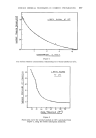
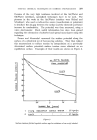
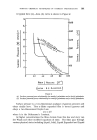
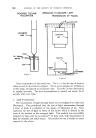
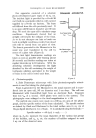
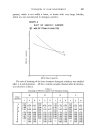
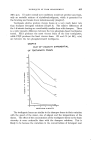
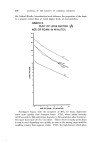
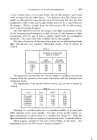
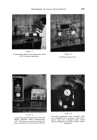
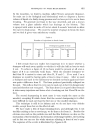
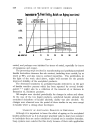
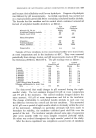
TECHNIQUES OF FOAM MEASUREMENT 393 The harsh anionic detergent is not as satisfactory in this respect as the mild anionic. The non-ionic detergent produces a small volume of foam which feels dry. The cationic detergent produces only a poor foam, which feels soft and elastic, and is hard to rinse out. The following types of toothpaste were tested :-- 2 phosphate-based toothpastes q- synthetic detergent Ref. PD/1, PD/2 Chalk-based toothpaste q- synthetic detergent Ref. CD Chalk-based toothpaste q- soap Ref. CS In use, the two phosphate-based toothpastes are classed as high foamers. PD/2 is the more acceptable of the two because of its rinsing out properties. CS is a very poor foamer and CD is intermediate between phosphate-based toothpaste and CS. EXPERIMENTAL TECHNIQUES a. Specific Foam Volume The foam is withdrawn from the mixing bowl at the required time with a glass tube and a container of known volume is filled with it. The amount of foam in this container is weighed, and the density and thence the specific volume calculated in ml/g. b. Measurement of Viscosity A modified Techne viscometer is used for all viscosity measurements. The principle of this viscometer is a weighted piston producing a constant air pressure which forces the foam under test through a capillary tube into the viscometer tube. The viscometer tubes are calibrated with standard mineral oils at 25øC. 50 ml aliquots are whipped in the small bowl of a Mixmaster. The samples are withdrawn with a wide bore glass tube at 1, 2, 4, 6 and 8 minutes after beating commences. During withdrawal the Mixmaster is momentarily stopped. Care is taken to avoid the formation of air pockets when with- drawing the foam from the mixing bowl and transferring it to the viscometer cup. The viscometer head is placed over the cup (Figure 1), some foam having first been smeared around the edge of the cup. It is then connected to the pressure unit, the plunger released and the time taken by the foam to travel between two_marks on the tube is noted. The viscosity, in centi- stokes, is the time in seconds multiplied by a factor, if any, for the viscometer tube. In order to study the variation of viscosity with the age of a foam, numerous viscosity measurements are carried out on one foam at quick time intervals.
Purchased for the exclusive use of nofirst nolast (unknown)
From: SCC Media Library & Resource Center (library.scconline.org)