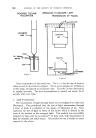
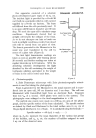
SURFACE CHEMICAL TECHNIQUES IN COSMETIC PREPARATIONS 383 More recently Davies et al have introduced two new (viscous-traction) surface viscometers. One •a is suitable for the Air/Water interface and the other •* for the Oil/Water interface. The method involves measurement of the speed of rotation of talc particles placed in a narrow circular channel placed at the interface. Any viscosity developing at the surface retards the motion of the talc particles. Davies and Mayers •* showed that the mixed film of adsorbed sodium lauryl sulphate and cetyl alcohol, which is well known as an efficient oil in water emulsifying system, becomes extremely viscous in the concentration regions where its emulsifying power is evident. All the different rheological types known in three-dimensional systems can be shown in two dimensions. Surface Rigidities When the surface film condenses, it becomes solid and it is impossible to measure surface viscosities. Monquin and Rideal •ø and more recently Cumper and Alexander" measured the rigidity of a film by rotating a disc just beneath the interface. The displacement of a talc particle was then measured for a given speed of rotation and distance of the disc beneath the surface. It is thus possible to obtain some idea of the rigidity and elasticity of the film. The method can be used for both Oil/Water and Air/Water interfaces. Contact Angles and Spreading Useful information can often be obtained by measuring the rate of spreading, area of spreading and the contact angle of a liquid on a solid or a liquid on a liquid. Obviously, where good contact is wanted, the angle should be low and spreading easy. It should be pointed out that contact angles are not the easiest of things to measure. THE OIL/WATER INTERFACE Many of the methods described above for the Air/Water interface may be adapted to the Oil/Water interface. The Langmuir trough is difficult to use for this interface but the "hanging plate" or "pull on the ring" may be used. The properties of insoluble protein films have been studied in this way •8. Davies •9 has measured interfacial potentials using a vibrating disc. This method is easier to use at the Oil/Water interface than the one involving a radio-active electrode. It has been used to study protein/detergent interactions.

384 JOURNAL OF THE SOCIETY OF COSMETIC CHEMISTS Zeta Potential When one phase is dispersed in another, electrical charge separation occurs either by adsorption of ions from one of the phases, or by an electrical dipole at the interface. These electrical charges play an important role in determining emulsion stability, especially of the water in oil type. The presence of such electrical charges may promote or hinder penetration of "active" ingredients through the skin. The zeta potential at an interface may be determined by measuring the speed with which the dispersed phase migrates under an electrical potential. The particles are observed with an ultra-microscope. Thus, oil, water, skin or hair may be dispersed in suitable media and this migration deter- mined using a micro-electrophoresis cell of the type described by Bradbury and Jordan •ø. The zeta potential and charge density on the particle may thus be calculated from the speed of migration and the applied potential. The technique has been successfully used to gain insight into the mech- anism of the salt precipitation of various colloids and dispersions. It has been shown that coagulation is due to a reduction in the thickness of the double layer and zeta potential. CONCLUSION The above descriptions of surface chemical techniques are by no means exhaustive. They have been collected together to direct thinking along such lines as might be found useful in determining some of the basic surface chemical and physical problems of cosmetic formulation and application. It must, however, always be borne in mind when interpreting this type of experiment, that quite often over-simplified model systems have to be used in order to make the measurements. Thus measurements on the Oil/Water interface described above neglect the interface/interface interaction which is always present in a concentrated emulsion and very often determines its physical properties. ACKNOWLEDGMENT I should like to thank the Directors of County Laboratories Limited for permission to publish this paper. (Received: 16th June REFERENCES Dixon, J. K., Weith, A. J., Argyle, A. A., and Salley, D.J. Nature 163 845 (1949). Aniannsson G., and Lamm, O. Nature 165 357 (1950). Nilsson, G. troc. Second International Congress of Surface Activity I 141 (1957). Flengas, S. N., and Rideal, E. K. Trans. Faraday Soc. 55 339 (1959). Harkins, W. D., and Jordan, H.F. J. Am. Chern. Soc. 52 1751 (1930).
Purchased for the exclusive use of nofirst nolast (unknown)
From: SCC Media Library & Resource Center (library.scconline.org)