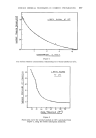
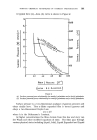
414 JOURNAL OF THE SOCIETY OF COSMETIC CHEMISTS and correlated theoretical and practical results until we knew that we were running parallel. But as far as the feel is concerned, we have no method for it and I believe, though I may be quite wrong, that I can make up two shampoos with the same viscosity, the same particle distri- bution volume, in fact with identical properties, but they will feel different. To the touch this is something which has nothing to do with physical property but with the adsorption on to the skin. I do not think that this is so very important in our foam work, because you know immedi- ately without any measurements, that some types of foam will feel unpleasant. You have to assess it yourself, we cannot help. It is just the same if you put an acid on your skin, well you know how that burns. I do not think that these things can be done by physical methods they are not physical techniques. I wish they could be. 2. Our instrument does not allow us to vary the air pressure but what we have done is that we have various viscosity tubes which we have stan- dardised with known oils. Measurement of foam viscosity is independent of tube diameter. This particular viscometer is claimed by its maker to give C.G.S. results although we had to modify it. 3. The viscosity differential is just a means of not having very cumbersome titles and names, and actually I do say here that the change in viscosity with the age of the foam is what I mean by viscosity differential. It is not a true calculus differential and is actually a plot of the viscosity against time, and it has exactly the same units as these which I use for viscosity. 4. A superfoam is quite a different type of foam to the more aged foam. It not only has rapid drainage, but it also has very rapid decrease of viscosity, and changing light transmission. It seems to be having a lot of excess energy in it and that excess energy dissipates by draining quickly, collapsing fast, bursting, and then it comes to the region of relative stability. You can see that in Figures 5-10. MR. D. BAss: Amphoteric detergents are increasing•ly used in both shampoos and toothpaste. Have you conducted any of your experiments on foaming and rinsing on any amphoteric surface active agent, and if so, how did results compare with anionics, nonionics, and cationics ? THE LECTURER: We have done no work with this class of detergent.

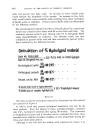
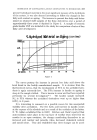
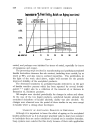
RESISTANCE OF ACETYLATED LANOLIN DERIVATIVES TO HYDROLYSIS 415 THE RESISTANCE OF ACETYLATED LANOLIN DERIVATIVES TO HYDROLYSIS L. I. CONRAD, K. MOTIUK and H. F. MASO* Delivered at the Summer Conference qf the Society on 25th August 1960. A study was made of the stability of acetylated lanolin derivatives per se and in anionie emulsions. The stability of the products was expressed in terms of % hydrolyzed material, while the stability of the emulsions was expressed as changes of pH. A comparison was made with stability tests on emulsions containing aeetylated monoglyeerides. ThE OBJECT of this paper is to report on studies of the resistance of acetylated lanolin derivatives to hydrolysis. This investigation xvas initi- ated some three years ago when the growing importance of these products as cosmetic and pharmaceutical ingredients necessitated detailed data on the subject. It was apparent from initial evaluation work that the acetates of lanolin, lanolin alcohols and lanolin alcohol ricinoleate evinced many of the stability characteristics of waxes. Lanolin is a wax composed mainly of esters of higher aliphatic and polycyclic alcohols. Like all waxes it is glyceride-free. It is fairly resistant to hydrolysis and to saponification by methods effective on glyceride fats. Truter I presents a detailed description of this interesting subject. Experi- enced cosmetic formulators are familiar with the characteristics of lanolin and it is hoped that this presentation will supply information on the stabihty of acetylated lanolin derivatives important for their practical application to cosmetic emulsions. ST^rariTY OF ACF•TYLATEr) PROr)UCTS EXPER•nENTAL The following acetylated lanolin derivatives were used in this experi- ment: Acetylated lanolin Acetylated lanolin alcohols Acetylated ricinoleate of lanolin alcohols Retained room temperature shelf samples of plant production batches of the above materials were analyzed periodically for percent water soluble *Research Laboratories, American Cholesterol Products, Inc., Edison, N.J., U.S.A.
Purchased for the exclusive use of nofirst nolast (unknown)
From: SCC Media Library & Resource Center (library.scconline.org)