378 JOURNAL OF THE SOCIETY OF COSMETIC CHEMISTS B. Dynamic Surface Tension Measurements Where the ageing of a surface takes place over a long period of time, the hanging plate, Sessile Drop or Pendant Drop methods are probably the most suitable for studying the formation of adsorbed films. One of the difficulties involved in formulating an aqueous spray form- ulation using a squeeze pack, say a wave-set, is the fact that the surface tension of water is very high and therefore a great deal of energy is required to be concentrated to break up the material into a satisfactorily fine spray. Additions of surface active agents may be made but they must be of the type, and be present in sufficiently large amounts, to bring the surface tension down to a low value (25--30 dynes/cm.) in a few milli-seconds. That is in the time required to form the droplet. Where high concentration of alcohol or mineral oil systems are used, the surface tension is naturally low and the problem is not so acute. In order to investigate the surface tension of surfaces during the early moments of formation, special techniques have to be used. 1. The Oscillating Jet One of the earliest methods developed for determining dynamic surface tensions is due to Rayleigh. He showed that when a jet of liquid issues from an elliptical orifice, oscillations are set up in the liquid, the wavelength of which is related to the surface tension at that point. Assuming that the jet moves en bloc, the age of the surface is related simply to the distance along the jet surface. The relationship between wavelength and surface tension is a complex one and has not been fully resolved. Addison 6 attempted to resolve these difficulties but without complete success. Sutherland carried the mathematical analysis a stage further but considered that the whole system was complicated by indeterminate diffusion conditions under the surface, which rendered absolute interpretation of the restfits difficult. 2. Surface Potential Measurements When two dissimilar surfaces are in contact with one another, an electrical potential difference known as contact potential is set up. If now a third material is introduced into the interface either by adsorption or by some other means, the potential changes by an amount known as the Surface Potential. The surface potential is related to the concen- tration of molecules at the surface, their orientation, dipole moment and the dielectric constant of the interface. If all the factors are constant then the surface potential is proportional to the surface conc4ntration.

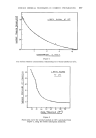
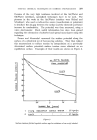
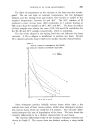
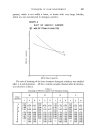
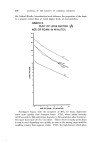
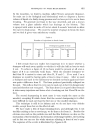
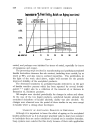
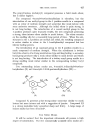
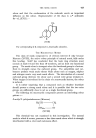
SURFACE CHEMICAL TECHNIQUES IN COSMETIC PREPARATIONS 379 Because of the very high resistance involved at the Air/Water and Oil/Water interfaces, specialized techniques have to be used. The pioneers in the work at the Air/Water interface were Rideal and Schulman 7, who used a radio-active source (mesothorium or polonium) to irradiate the air gap between the surface and the electrode and hence increase its conductivity. The potential was then measured, using a valve electrometer. Much useful information has since been gained regarding the orientation of adsorbed and spread mono-layers using this technique. Posner and Alexander s measured the surface potential along the surface of a cylindrical jet of fast-moving solution. They then related this measurement to surface tension by interpolation on a previously determined surface potential--surface tension curve obtained on an equilibrium surface. Examples of their results are shown on Figure 3. z LU IO I. 0'O•% EQUILII•RI U H SURFRCE TENSION Figure $ Surface tension plotted against surface age for solutions of sec-octyl alcohol.
Purchased for the exclusive use of nofirst nolast (unknown)
From: SCC Media Library & Resource Center (library.scconline.org)