DETERMINATION OF ALKALINE PHOSPHATASE ACTIVITY IN HUMAN LYOPHILIZED PLACENTA EXTRACT By •VILLIAM COLBURN, RALPH SCHURE, and JACK AXELROOD* Presented May 12, 1960, New York City •VITHIN THE PAST FEW YEARS there has been an increasing interest in the incorporation of placenta extracts in cosmetic products. Various published research reports and projects presently under way, show that placenta preparations have biological effects which are within the field of interest of cosmetic chemists. As soon as there arises the possibility of incorporating an active ingredient into a product, the assay or measure- ment of its activity becomes an important concern. Chemical analysis reveals the presence of proteins, peptones, amino acids, steroids, vitamins, enzymes--in general the types of substances found in biological fluids. However, no definite relationships have been estab- lished between particular constituents and specific biological activities. In a case such as this, it is logical to seek out a substance: (A) which is found uniformly in the active product, (B) which is not likely to be present in other materials that might be formulated with the active substance and (C) which is apt to be a sensitive indicator of the activity. The substance dealt with in this report is human placenta extract. Such an extract is ordinarily impractical to store without treating with preservatives, or as in the present case by dehydrating by the freeze-dry method. It is later reconstituted by the addition of water. Preparation of placenta extract by freeze-drying, or lyophilization, reduces the likeli- hood of destruction of active principles. Without knowing what substances may be involved in the bio-activity, it is logical that if an enzyme is selected for assay purposes, the presence of its specific enzymatic activity will indicate that the extract as a whole has neither been diluted nor subjected to destructive processing conditions. The enzyme present in lyophilized placenta extract and commonly used for assay purposes is alkaline phosphatase. This enzyme is also found in bovine preparations. * Colburn Laboratories, Inc., Chicago 9, Illinois. 441

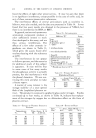
442 JOURNAL OF THE SOCIETY OF COSMETIC CHEMISTS The first work on assay methods suitable for routine use was done in connection with clinical testing, since the phosphatase activity of blood serum is of diagnostic importance. The amount of enzyme is expressed in terms of its ability to cause hydrolysis of a phosphate ester, such as a glycerophosphate, with libera- tion of free inorganic phosphate. Fundamentally, the measurement is one of the rate of phosphate production, and this of course varies with experi- mental conditions as well as with the phosphatase activity. The amount of inorganic phosphate set free from an ester will depend not only on the amount or concentration of enzyme, but also on the reaction time, the temperature, the nature of the substrate, interfering substances and other variables. Over the years different investigators have developed procedures of progressively improved efficiency. Unfortunately the units of phosphatase activity adopted by different authors have not always been the same, and therefore the phosphatase units obtained by different procedures are not generally interconvertible. One of the definitions of phosphatase activity is that suggested by Jenner and Kay in 1932 (1). According to these authors, one unit is the amount of enzyme that will liberate one rag. of phosphorus as free phos- phate from an excess of disodium-•-glycerophosphate in three hours, at 37.5øC., at a pH of 8.8, with certain other conditions specified. King and Armstrong (2), when working on a new assay inethod, de- veloped one in which the units were numerically equal to those of Jenner and Kay. Whereas the Jenner and Kay method required upwards of three and one-half hours, the King and Armstrong procedure could be completed in but thirty minutes. King and Armstrong used disodium phenylphosphate as the substrate instead of glycerophosphate. Their method, as modified later (3) defines an alkaline phosphatase unit which has been adopted by a number of manufacturers of placenta extracts. By the King and Armstrong defini- tion, one unit of phosphatase activity is the amount of enzyme which will liberate one rag. of free phenol from an excess of disodium phenylphos- phate, at a pH of 9.0, in thirty minutes at 37øC. Although the King and Armstrong method measures phenol produced, the nature of the substrate and the conditions are such that the number of units found in a sample equals numerically the number determined when phosphate is liberated from glycerophosphate by the Jenner and Kay (1) procedure. In spite of the fact that the King method is prescribed in quite some detail (3), it has been disturbing in this field of placenta extract assay that different laboratories frequently disagree in their assay results on the same material. This report describes a study of the effects on assay results
Purchased for the exclusive use of nofirst nolast (unknown)
From: SCC Media Library & Resource Center (library.scconline.org)