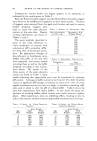
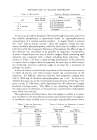
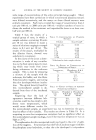
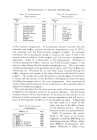
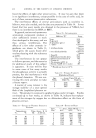
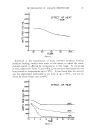
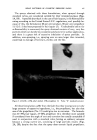
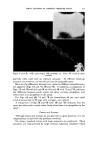
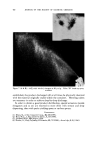
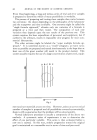
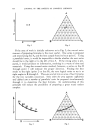
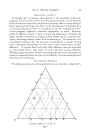
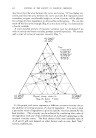
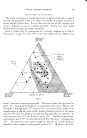
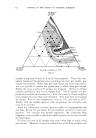
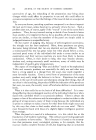
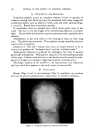
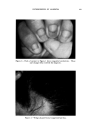
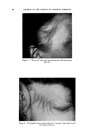
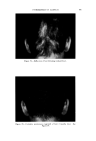
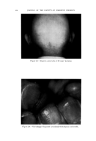
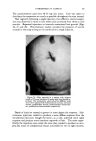
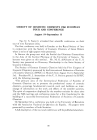
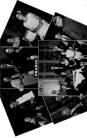
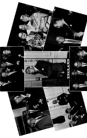
454 JOURNAL OF THE SOCIETY 01 COSMETIC CHEMISTS ... .. -E . Figure 1 (A & B).--50% ethyl alcohol, 25% propellant 11, 25% propellant 12. Valve "A" standard actuator. A turbulance is then caused in the liquid stream as it passes through this special chamber to the final orifice, where it breaks up into fine particles which are, however, often coarser than the particles obtained by direct propellant atomization. The second valve type is known as a metering valve, and its function is to deliver an equal dosage at each operation. It is usual to employ ordinary actuators, but with formulations of low pressure or where compressed gases are employed, mechanical break-up spray actuators are necessary. In order to assess the spray pattern of a particular formulation, the method of Dixon (1) or Root (2) indicating the pattern at right angles to the spray direction, should be utilized in combination with an assessment parallel to the direction of the spray. The latter may be done visually but it is best to make use of high-speed photography which permits a better comparison between different sprays, and also serves as a permanent record. Dixon's method was employed for obtaining the relevant illustrations that follow. In the early days of this industry, hair lacquers (and suntan preparations) were formulated in the following general manner: Product, % .......................... 40 or 50 60 50 Propellant 11/12 (1:1) mixture, % ..... tOO or 100

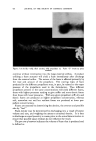
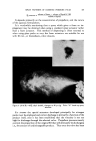
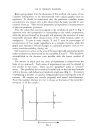
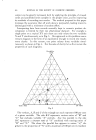
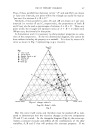
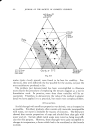
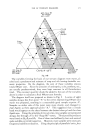
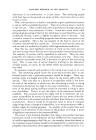
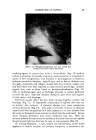
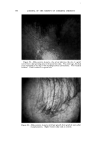
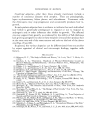
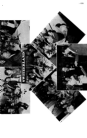
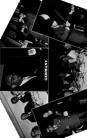
SPRAY PATTERNS OF COSMETIC PRESSURE PACKS 455 The sprays obtained with these formulations, when sprayed through standard valves, are considered suitable for their intended purpose (Figs. 1A, lB). A possible drawback in the case of hair laquers, is the flammability rating according to the United States I.C.C. regulations, and possibly be- cause of this, the formulation 20 per cent product, 80 per cent propellant 11/12 (1:1) has been proposed for hair laquer (3). Undoubtedly safe so far as flammability is concerned, the spray obtained consists of very, very fine particles which can hardly be considered satisfactory for surface application, and there is a great risk of excessive inhalation of spray particles. In addition, over-spraying, i.e., spraying over an area larger than intended, could lead to damage of furniture, clothes and the like. Figure 2 (A & B).--65% ethyl alcohol :35% propellant 12. Value "A" standard actuator All these formulations suffer from the fault that they incorporate not only large amounts of expensive ingredients, i.e., the propellants, but also that one of the propellants (No. 11) could give rise to corrosion. The formula- tion 65-70% hair laquer, 35-30% propellant 12 is therefore more suitable if considered from the angle of cost and corrosion but totally unsuitable if used in conjunction with a standard valve having an ordinary actuator because a strong narrow jet, consisting of large particles results (Figs. 2A, 2B), despite the fact that the spray does contain liquid propellants.
Purchased for the exclusive use of nofirst nolast (unknown)
From: SCC Media Library & Resource Center (library.scconline.org)