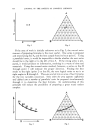
CONSUMER RESEARCH ON NEW PRODUCTS 473 prepared by an untrained technician in only two days, following a very simple, routine set of instructions. Recording of viscosity, clarity and similar information was also a routine task. Evaluation and the determi- nation of new directions to take, of course, had to be done by someone trained in this technique. In addition to the assurance of knowing that all work done is purposeful, this technique gives a wealth of information about the particular system being explored. The diagrams clearly define the changes in viscosity and/or gel clarity caused by formula changes, temperature and storage. Too often, the usual practice is to pick a recent formula for production, merely because it is the best to date. The ternary diagram method, how- ever, by clearly defining borderline areas, gives the positive assurance that the final formula chosen is the best one possible. CONSUMER RESEARCH ON NEW PRODUCTS By R. H. MARRIOTT, D.Sc.* Presented September I, 1960 1st Congress of Cosmetic C/•emistry, Interna- Federation of Societies of Cosmetic C/•emists, Munic/•, Germany THERE is ABUNDANT EVIDENCE that when a new product is to be launched, it is necessary to have some indication of consumer acceptance. It would appear, however, that there is a significant weakness in the way in which the consumer acceptance is judged and, almost wholly, this would seem to arise from the method of approach which is adopted in submitting the samples to the members of the panel. It is well appreciated that judg- ment of anything by the senses, whether it be sight, odor, taste or feel, can be influenced by innate psychological bias and it is well accepted that lead- ing questions with regard to features of the product should be avoided. Nevertheless, it is fair to say that the lay mind is not trained to be highly observant of the fundamental qualities of a product. That this is so, is shown by the structure of all modern companies that sell their products through the normal channels direct to the consumer, in that they have to be primarily, highly skilled in the arts of marketing and although obviously one cannot market something unless one is able to make the product, never- theless, the making of the product is subsidiary to skill in marketing. In the main, marketing means drawing attention of the consumer to a particular product, extolling its virtues and advantages in, of course, a responsible fashion, so creating a desire in the consumer to purchase the * County Laboratories, Ltd., Brentford, Middlesex, England.

474 JOURNAL OF THE SOCIETY OF COSMETIC CHEMISTS product. It is true to say that no preparation put on the market merely with a plain description of the sort of purpose for which it is to be used, would be able to survive in modern times. In short, the product can only sell if there are claims which indicate its precise usefulness, and provided the product lives up to them, then there is no reason, fundamentally, why the preparation should not be bought and febought by the consuming public. It is reasonable to suggest that with a new product one of the objects in using a consumer panel is to find out whether or not the panel will accept the claims which are to be made. It would seem to be of little avail if the present procedure of panel testing is pursued, bearing in mind that the general method is to sample a product merely on the generic title, as for example, a shampoo or a hair cream, etc., without making any attempt to gain the confidence of the panel by indicating the reasons for the test. Such a procedure places members of the panel under some considerable disability if they are to give correct answers. It could be said that with the innate conservatism of all humans, the majority tend to reject something which is new unless it is supported by some particular gimmick which is obvious at the very beginning. Let us see the implications of what might appear to be a simple straight- forward consumer panel test. The makers of a product decide to alter the method of manufacture by using an improved and more efficient plant. They wish to know whether the public would notice the difference, a vital point if the preparation is of significant importance in the market. This is a fairly simple experiment because, presumably, the product is unaltered in perfume and its theological properties. But because a question has to be asked, the psychological reactions of people come into play. Which do you prefer? Many will have courage and say neither others will start to worry because they wonder whether they are expected to find differences. Is this a test of their powers of observation--is it a trick? Or what? They may guess or find refuge in, "I don't know." Whichever way they vote, given a panel of reasonable statistical size, it is a good chance that the results will approach the 50-50 level. Under such condi- tions, it would be fair to ask the reasons why one moiety prefers one and not the other. These remarks should be considered and any statement which raises a query in the minds of the laboratory should be examined just in case a new aspect of the preparation be unmasked. Generally speaking, if the outward appearance, the odor, color and composition are constant, then the test statistically will indicate parity. The difficulties lie when a change in composition has to be made but sometimes circumstances may simplify the problem, as for example, war- time restrictions. As long as the modification simulates the old standard, the purchasing consumers will go a long way to understand the reasons and
Purchased for the exclusive use of nofirst nolast (unknown)
From: SCC Media Library & Resource Center (library.scconline.org)