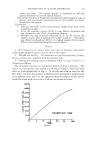
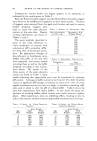
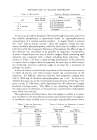
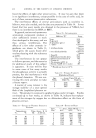
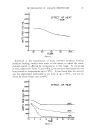
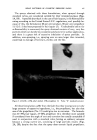
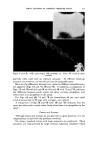
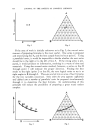
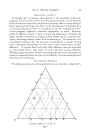
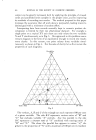
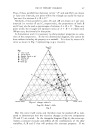
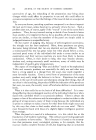
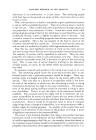
DETERMINATION OF ALKALINE PHOSPHATASE 451 J 32OO 2800 2400 200• 1200 800 4OO 0 EFFECT OF HEAT I HOUR I I I I •L 30 40 50 60 70øC TEMP. ]7igure 2. Inasmuch as the manufacture of many cosmetic products involves moderate heating, studies were made on the extent to which the recon- stituted extract is affected by temperatures in this range. In one group of tests, reported in Table 17 and in Fig. 2, the extracts were heated for one hour periods at temperatures up to 70øC. It was found that the activity was not appreciably diminished in one hour at up to 50øC., and was re- duced by about 30 per cent at 60øC. 3200 2800 • 2400, g2000 I.• 1600 __1200 z 800 40O o o EFFECT OF HEAT 70øC 12 15 18 21 HRS. TIME Figure 3.

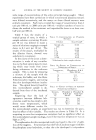
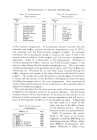
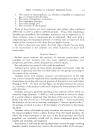
452 JOURNAL OF THE SOCIETY OF COSMETIC CHEMISTS Holding for longer periods, up to twenty-four hours, at 50, 60 and 70øC., was studied, with the results shown in Table 18 and in Fig. 3. It would seem that during a reasonably common manufacturing process such as one involving heating for several hours at about 50øC., there might be expected a loss of phosphatase activity (but not necessarily other activities) of about 20 per cent. A statistical examination of the results of some 90 assays by three technicians, showed a standard deviation from the mean of 4.34 per cent. The probable error of a single determination was 3.43 per cent. The data were obtained in the assay of reconstituted lyophilized human placenta extracts without additives or preservatives, and in the concentration range of 600 to 2600 units per 100 ml. In summary, this report describes a study of the factors involved in the King and Armstrong assay method for alkaline phosphatase, as applied to lyophilized human placenta extract. In addition, the effects of various possible interferences, and of heating, have been examined. •lcknowledgment: The authors wish to thank the R.I.T.A. Chemical Com- pany of Chicago, Illinois, who sponsored this study, for their kindness in furnishing materials and in permitting publication of the results. REFERENCES (1) Jenner, H. D., and Kay, H. D., Brfl. •. Explf. Palh., 13, 22 11932). (2) King, E. J., and Armstrong, A. B., Can. Med. •dssoc. •., 31,376 0934). (3) King, E. J., Haslewood, G. A.D., Delory, G. E., and Beall, D., The Lancel, 1, 1942, 207. (4) Folin, O., and Ciocalteu, V., f. Bid. Chem., 73, 627 (! 927). SPRAY PATTERNS OF COSMETIC PRESSURE PACKS By A. HrzI4^* Presenle,t September Z, Z960, /st Congress of Cosme/ic Chemislry, Inter- national Federation of Societies of Cosmetic Chemists, Munich, Germany Us•ot•'rvm•,¾, AUk PF,•SOSS•L concerned with the marketing of pressurized products are fully aware that many problems have to be over- come before a pack is ready for placing before the public. Thanks to many informative publications during recent years the more common problems, such as corrosion and compatibility, have been dealt with fairly adequately. Within the scope of this paper it is proposed to deal with spray pattern and to summarize the ways and means to achieve correct results. The more important factors which control the type of spray obtained are: * Independent Consultant, l.ondon, England.
Purchased for the exclusive use of nofirst nolast (unknown)
From: SCC Media Library & Resource Center (library.scconline.org)