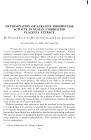
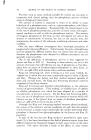
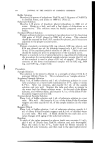
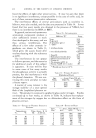
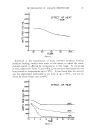
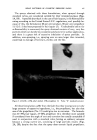
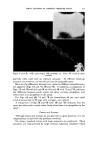
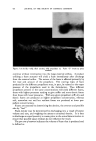
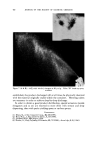
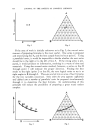
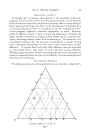
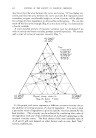
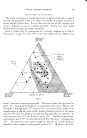
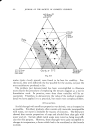
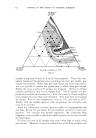
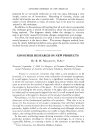
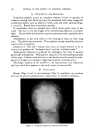
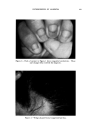
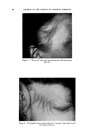
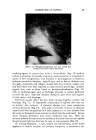
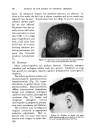
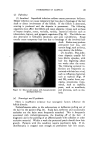
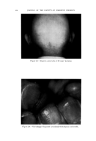
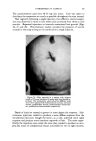
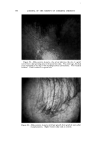
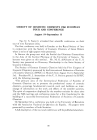
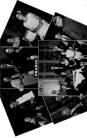
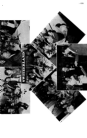
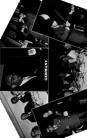
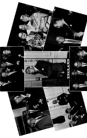
PATHOGENESIS OF ALOPECIA 485 Figure 9.--Friction caused temporary breakage of hair on the back of an infant's head. Figure 10.--Burn of the scalp caused by boiling water resulted in a permanent alopecia. Alopecia of this type may also be caused by friction-producing work gear and rough clothing and invariably improves after removal of the eliciting agent. Pressure factors may be internal or external. Internal pressure, com- monly caused by a cyst (Fig. 4) may cause a localized alopecia. External pressure may be acute or chronic. In acute trauma, with or without lacera- tion, hair loss may occur at the site of injury. This loss is likely to be permanent, if there is scarring. Chronic pressure also may produce localized alopecia. This type of hair loss may be seen after prolonged general anesthesia especially if the patient is kept in Trendelenburg position. Edema of the scalp may be noticed in the area that later develops temporary hair loss. Electric trauma may produce a burn. If the destruction affects the hair follicle and produces scarring permanent hair loss will ensue. Thermal trauma by extremes of heat (Fig. 10) or cold can cause hair loss which may be permanent if there is necrosis of the follicle-bearing tissue. (2) Chemical Chemicals may come in contact with the hair and scalp in industry and in the use of cosmetics. Industrial exposure to sodium and calcium sulfide or dimethylamine can cause hair breakage. The resulting temporary hair loss involves the shaft only and does not interfere with growth. Cosmetics commonly contain the following chemicals: thioglycolates (Fig. 11) in cold wave permanent preparations with the application of

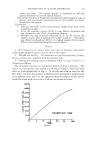
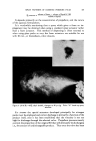
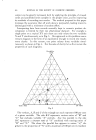
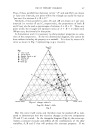
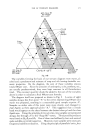
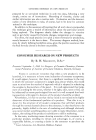
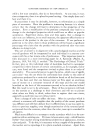
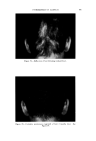
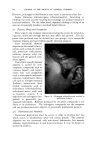
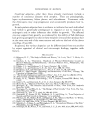
486 JOURNAL OF THE SOCIETY OF COSMETIC CHEMISTS Figure 11.--Thioglycolates and strong alkalis caused this temporary hair loss. Figure 12.--Improper bleach application caused a severe chemical primary irritant action and a permanent alopecia.
Purchased for the exclusive use of nofirst nolast (unknown)
From: SCC Media Library & Resource Center (library.scconline.org)