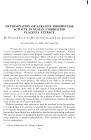
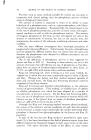
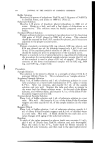
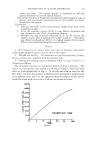
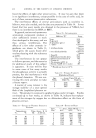
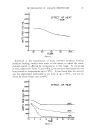
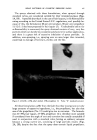
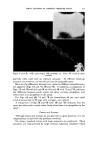
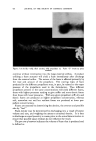
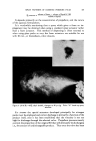
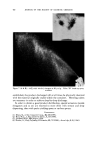
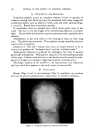
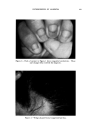
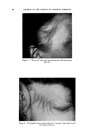
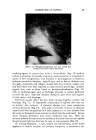
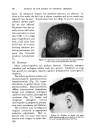
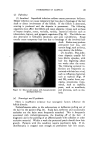
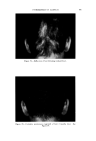
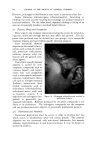
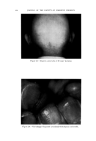
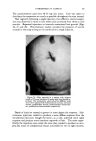
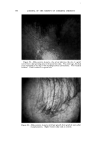
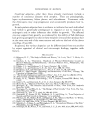
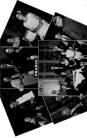
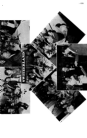
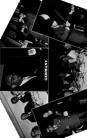
PATHOGENESIS OF ALOPECIA 493 (g) Dermatologic Disorders Atlopecia areata (Fig. 22), and its concentric, guttate, diffuse localized and diffuse generalized forms, ophiasis, alopecia totalis and alopecia universalis (Figs. 23 and 24) are the many forms of a bizarre-pattern alopecia of unknown etiology. Figure 22.--Typical alopecia areata of the scalp. Hair loss usually occurs fairly suddenly and is seldom accompanied by other symptoms, though premonitory paraesthesia sometimes occurs and mild erythema of the involved site may be detected early. The pathog- nomonic "exclamation point" hairs are present during the early active phase of the disorder. The course of the disease is unpredictable. Single patches usually regrow spontaneously in a few months. Recurrences are common and extensive to alopecia universalis, though rare, cannot be prognosticated. Response to oral or intralesional corticosteroid treatment is both diagnostic and therapeutic. Patients with alopecia areata, alopecia totalis and alopecia universalis have responded favorably to local injections of steroid suspensions of pred- nisolone acetate, hydrocortisone acetate, prednisone acetate, fluoro- cortisone acetate, hydrocortisone free alcohol, hydrocortisone diethyl- aminoacetate hydrochloride, methylprednisolone acetate, fiuorometholone, triamcinolone acetonide, triamcinolone diacetate (Fig. 25). The more insoluble the steroid the more effective it was in causing hair regrowth.

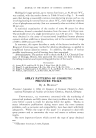
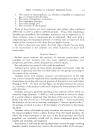
494 JOURNAL OF THE SOCIETY OF COSMETIC CHEMISTS ß .,.... ,...:•.., . : ,....•-.....:,., .:...,, ...... •,,..,..,•,•. Figure 23.--Alopecla universalis of 20 years' duration. Figure 24.--Nail changes frequently a•sociated with alopecia universalis.
Purchased for the exclusive use of nofirst nolast (unknown)
From: SCC Media Library & Resource Center (library.scconline.org)