DETERMINATION OF ALKALINE PHOSPHATASE 443 when each of the steps in the procedure is varied purposely and system- atically. The assay procedure we suggest is substantially the 1942 modification by King et al. (3) of the King and Armstrong method. The method involves the use of the Folin-Ciocalteu reagent (4) for colorimetric estimation of the phenol which is liberated as a result of the action of phosphatase on the phenyl phosphate. Since the reagent is a protein precipitant, some of it is lost by reaction with the protein of the blood serum or of the placenta extract. In the published King and Arm- strong method, the authors attempt to partially compensate for this by using different amounts of reagent in their known phenol comparison stand- ards than they do in the unknown. Each known phenol standard is reacted with a different amount of the color developing reagent. Although this would be theoretically inaccurate in the absence of interferences, we have found no difference in results when the procedure is carried out rigorously as to reagent concentration. However, those comparison tests were made over a relatively small range of enzyme concentrations. Since our interests cover a wide range of con- centrations and a variety of added substances, we decided it would be better to eliminate the inconsistency of using different amounts of reagents in the standards than are used in the samples. We have therefore sug- gested a modification in the manner of preparing the phenol comparison standards, and in addition made a change in the Folin-Ciocalteu reagent concentration. The method, with this slight modification, gives placenta extract assay results in agreement with those given by the original or modified King methods, and tests of series dilutions establish that it has the advantage of being consistent over a wide range of phosphatase con- centration. The assay procedure is given below: Reagents Folin-Ciocalteu Reagent To a 2-liter flask add 100 grams of sodium tungstate (Na2WO4.2H20), 25 grams of sodium molybdate (Na2MoO4.2H20) and 700 ml. of distilled water. When dissolved (slight warming may be neces- sary), add 50 ml. of phosphoric acid (85 per cent) and 100 ml. of concentrated (12 N) hydrochloric acid. Reflux for ten hours. At the end of the reflux period, cool, and add 150 grams of lithium sulfate (Li2SO4.H•O), 50 mi. of distilled water, and 2 or 3 drops of liquid bromine, and again heat (without reflux this time) to remove excess bromine (Note 1). Cool and dilute to 1000 cc. Filter if necessary and store in an amber bottle to protect from light. The solution should be yellow in color, free from any greenish tint. It should be not more than three months old when used. Dilute Folin-Ciocalteu Reagent Dilute the reagent, prepared as above, one part reagent to 2 parts distilled water. This diluted reagent is stable for three months.

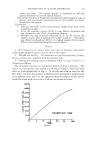
444 JOURNAL OF THE SOCIETY OF COSMETIC CHEMISTS Buffer Solution Dissolve 6.36 grams of anhydrous Na2CO3 and 3.36 grams of NaHCO.• in distilled water, and dilute to 1000 ml. (Note 2). Substrate Solution Dissolve 2.18 grams of disodium phenyl phosphate in 1000 ml. of water. Bring to a boil, and add a few drops of chloroform as a preservative. This solution must be freshly prepared every two weeks. Standard Phenol Solution Prepare a phenol solution containing 1 rag. phenol per ml. by dissolving 1.00 gram of U.S.P. phenol in 1000 ml. of water. This solution should be assayed by the U.S.P. method for phenol, and if necessary adjusted to the proper concentration. Standards Prepare standards containing 0.04 rag. phenol, 0.08 mg. phenol, and 0.16 rag. phenol per ml. by diluting respectively 4 ml., 8 mi. and 16 ml. of the standard phenol solution to 100 ml. These solutions should be made just prior to preparation of the standard curve. Prepare a standard curve of optical density rs. rag. phenol by following the procedure for nonincubated sample solution, except that 0.5 ml. of the standard is used in place of 0.5 ml. of sample. The phenol contents of the three nonincubated samples will be 0.02 rag., 0.04 rag. and 0.08 rag., respectively. Procedure Sample Solution The solution to be tested is diluted to a strength of about 10 K & A units per 100 mi. (Note 3). This is referred to as "sample solution." Incubated Sample Solution Place 5 ml. of buffer solution and 5 ml. of substrate solution in a test tube and place in a water bath maintained at 37øC. (plus or minus 0.5øC.). After ten minutes, add exactly 0.5 mi. of the sample solution and mix well. Stopper the tube and allow to remain in the water bath for fifteen minutes more. At the end of the fifteen minutes, and without delay, add exactly 4.5 cc. of the dilute Folin- Ciocalteu reagent and mix well. Nonincubated Sample Solution Place 5 ml. of buffer solution and 5 ml. of substrate solution in a test tube. Mix well. Add exactly 4.5 cc. of the dilute Folin-Ciocalteu reagent and then exactly 0.5 ml. of the sample solution (in the order given). Reagent Blank Place 5 mi. of buffer solution, 5 mi. of substrate solution, exactly 4.5 ml. of dilute Folin-Ciocalteu reagent and 0.5 ml. of distilled water in a test tube. Mix well. A blank should be run each day as its value changes with aging of the substrate solution. Reading To each of the tubes prepared as above (each now contains 15 ml.), add 4 ml. of 20 per cent Na2COa solution and mix thoroughly. Place the tubes in the 37øC., water bath for fifteen minutes to develop full color intensity, and then read in the spectrophotometer
Purchased for the exclusive use of nofirst nolast (unknown)
From: SCC Media Library & Resource Center (library.scconline.org)