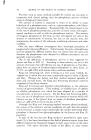
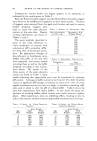
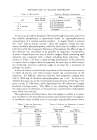
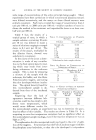
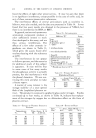
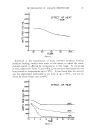
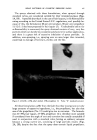
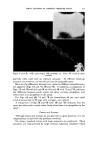
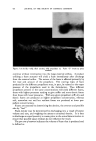
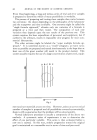
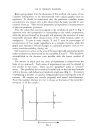
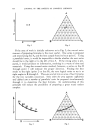
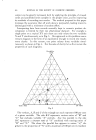
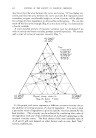
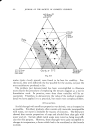
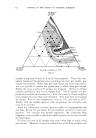
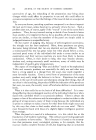
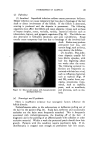
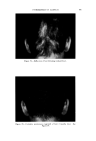
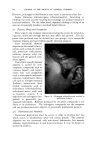
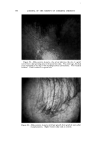
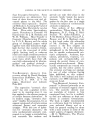
464 JOURNAL OF THE SOCIETY OF COSMETIC CHEMISTS Fig. 3 Fig. 4 A If the area of work is initially unknown as in Fig. 2, the crossed series manner of preparing formulas is the most useful. One series is prepared and tested along line A, and the best sample found to be at point 1. Using a paralleled series, it would be impossible to decide whether the next series should lie to the right or to the left of line A. If the wrong series is pre- pared, it would produce no information, resulting in a waste of time and materials. Using the crossed series method, however, a series on line B through point 1 will indicate the proper direction. Finding the best result to the right (point 2 on line B), the next logical series to try is at right angles to B through 2. Thus,-we are led into an area of best formulas for the two variables concerned. Only when the area appears su2ficiently well defined can a number of paralleled series be prepared simultaneously through it to determine the best formula. An understanding of this principle will reduce the possibility of preparing a great many useless samples. A Fig. 5 Fig. 6

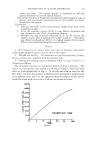
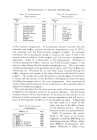
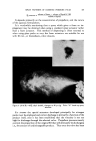
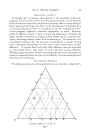
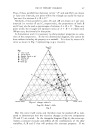
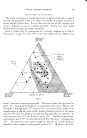
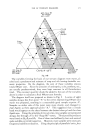
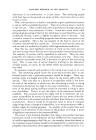
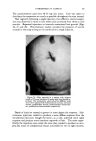
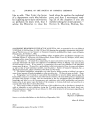
USE OF TERNARY DIAGRAMS 465 RECORDING THE DATA An integral part of product development is the recording of formulas prepared and the results of tests and measurements made on each formula. Such information determines the direction of future efforts toward the goal. Since speed is an all important factor in the development of formulas by a commercial laboratory, there is a tendency to use the "multiple formula" (crash program) approach somewhat desperately at times. However, unless an efficient system is used to record the information obtained, the larger number of formulas so prepared often simply results in greater con- fusion, retarding progress rather than accelerating it. Furthermore, it is reasonable to believe that the pressure of competition is already forcing most commercial laboratories to work close to the current limit of their efficiency. To expand their work load, either efficiency must be improved, or more people hired. The latter is costly and often causes confusion. Dividing a general project between several groups may cause the project to evolve in tangential directions due to the difficulty of communicating exact ideas between individuals. THE TERNARY DIAGRAM The Following discussion will graphically demonstrate that a laboratory's A •50 •o bo 2.0 ¾iscos ty relative to A,I• • C. Fig. 7 IO
Purchased for the exclusive use of nofirst nolast (unknown)
From: SCC Media Library & Resource Center (library.scconline.org)