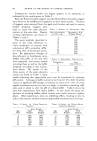
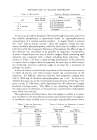
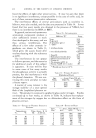
DETERMINATION OV ALKALINE PHOSPHATASE 449 T^•ns 12 INTERFERENCES (Preservatives) TABLE 13--][NTEP, F E P, ENC ES (Preservatives) Additive, Additive, % Assay % Assay None 2600 0.1 methylparaben 2630 None 2180 0.2 rnethylparaben 2575 0.1 phenol 2110 0.1 propylparaben 2580 0.1 sorbic acid 1975 0.1 benzoic acid 2540 0.1 borax 2015 0.1 hexachlorophene 2640 0.1 boric acid 2045 0.1 Actarner 2635 0.1 Dowicide H 2227 0.1 chlorbutanol 2565 0.1 Dowicide 1 2140 0.1 PCMX 2525 0.1 Santophen 1 2095 0.1 dichlorophene 2560 0.1 Vancide 2180 of the reaction temperature. If the placenta extract is mixed with the substrate and buffer, reaction commences immediately, even at 20øC., and continues until the Folin-Ciocalteu reagent is added. An increased reading for the nonincubated sample is found as the result of even a few seconds delay in addition of this reagent, and this increase is temperature dependent. Table 11 is illustrative of this phenomenon. Procedure I involved placing the buffer, substrate and Folin-Ciocalteu reagent in the reaction tube, followed by the sample undergoing assay. This is the order of addition prescribed in the procedure given above, and is that of King and Armstrong (2). Procedure II, on the other hand, involved placing the buffer, substrate and sample in the tube, followed by the Folin-Ciocalteu reagent. The results show that this permits a certain degree of hydrolysis to occur, and the amount of this hydrolysis will depend on both the speed of adding the reagent and on the room temperature. Such experimental results emphasize the necessity of strict adherence to the prescribed order of addition of sample and reagents. The work described thus far deals with our study of the assay procedure as applied to the placenta extract or its aqueous dilutions. The practicing cosmetic chemist will be interested also in the assay of such extracts in the presence of certain commonly used cosmetic ingredients, and will want to know of their possible interference in the phosphatase assay. A beginning has been made on a study of this TABI.E 14--I NTEP, F E P, ENC ES (Antioxidants) Additive, % Assay None (control) 1880 0.1 BHA 1820 0.1 BHT 1905 0.1 NGDA 1480 0.1 BHA, 0.1 Actarner 1835 0.1 BHT, 0.1 Actamer 1890 0.1 NDGA, 0.1 Actarrer 1280 type, and also on the effect of heat on the placenta extract. The pre- liminary results are reported below. Table 12 presents the results found in the assay of an extract originally containing 2600 King and Armstrong units per 100 ml., where nine different preservatives were added. Similarly, in Table 13 are

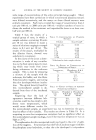
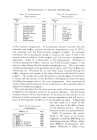
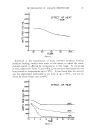
450 JOURNAL OF THE SOCIETY OF COSMETIC CHEMISTS listed the effects of eight other preservatives. It may be seen that there is no significant interference, except possibly in the case of sorbic acid, by any of these common preservative substances. The interference effects of several antioxidants used as rancidity in- hibitors, were also studied, and the data are presented in Table 14. It was found that low assay results are obtained in the presence of NDGA, but there is no interference by BHA or BHT. In general, amines and quaternary ammonium compounds produce a color sufficiently intense to mask that developed in the assay, and are thus serious interferences. The effects of a few other cosmetic in- gredients are shown in Table 15, which gives the assays found after one hour heating with the substance at 60øC. The interferences do not appear to follow a pattern, and the necessity for additional study of this subject is apparent. It may well be that in some cases of low assay results the phosphatase activity is actually present, but the interference is with the phenol detection. We are con- tinuing this work and plan to make a future report. A matter of some interest is the storage stability of a once opened flask of the lyophilized placenta ex- TAm.• 15--INTEP. FEP. ENCES Additive, %* Assay None 1195 25 glycerol 1230 25 propylene glycol 985 1 "Quat" Color too intense 1 triethanolamine Color too intense 1 coco:diethanolamide Color too intense 1 Span 80 1172 5 Ethoxylated lanolin deriv. 1252 2 Glycerol monostearate S 475 1 Tween 60 0 1 Na stearate (pH 9.4) 54 5 Stearic:NaOH (10:1 moles) 387 * Heated one hour at 60øC. TAI•LE 16 STOkAGE STABILITY (Dehydrated Form) Age, •---Assay, Units/100ml.--• Weeks Under Ng Under O• 0 2058 1836 2 2022 1805 4 1865 1820 tract. This product is commonly supplied in glass under nitrogen. Studies continued up to four weeks, as shown in Table 16, indicate that replace- merit of the nitrogen by oxygen has no deleterious effect on this form of placenta extract. TABLE 17--ErrEc'r or HEATING PLACENTA EXTI•AC'r Temperatures Time, Assay, K & øC. øF. Hr. A/100 mi. 3O 86 1 1955 40 104 1 1895 5O 122 1 1890 6(} 140 1 1375 70 158 1 1320 TASLE 18--EFFECT OF HEAT Time, •--Assay, Units/100 ml.----• Hrs. 50øC. 60øC. 70øC. 0 1966 1966 1966 1 1548 1314 1250 2 1574 1273 1094 4 1394 873 552 5 1378 846 536 6 1192 77O 196 24 1164 445 0
Purchased for the exclusive use of nofirst nolast (unknown)
From: SCC Media Library & Resource Center (library.scconline.org)