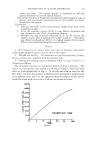
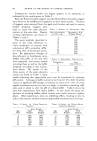
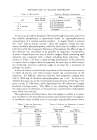
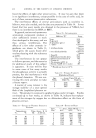
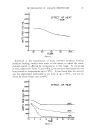
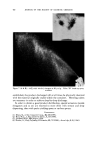
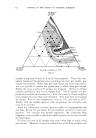
452 JOURNAL OF THE SOCIETY OF COSMETIC CHEMISTS Holding for longer periods, up to twenty-four hours, at 50, 60 and 70øC., was studied, with the results shown in Table 18 and in Fig. 3. It would seem that during a reasonably common manufacturing process such as one involving heating for several hours at about 50øC., there might be expected a loss of phosphatase activity (but not necessarily other activities) of about 20 per cent. A statistical examination of the results of some 90 assays by three technicians, showed a standard deviation from the mean of 4.34 per cent. The probable error of a single determination was 3.43 per cent. The data were obtained in the assay of reconstituted lyophilized human placenta extracts without additives or preservatives, and in the concentration range of 600 to 2600 units per 100 ml. In summary, this report describes a study of the factors involved in the King and Armstrong assay method for alkaline phosphatase, as applied to lyophilized human placenta extract. In addition, the effects of various possible interferences, and of heating, have been examined. •lcknowledgment: The authors wish to thank the R.I.T.A. Chemical Com- pany of Chicago, Illinois, who sponsored this study, for their kindness in furnishing materials and in permitting publication of the results. REFERENCES (1) Jenner, H. D., and Kay, H. D., Brfl. •. Explf. Palh., 13, 22 11932). (2) King, E. J., and Armstrong, A. B., Can. Med. •dssoc. •., 31,376 0934). (3) King, E. J., Haslewood, G. A.D., Delory, G. E., and Beall, D., The Lancel, 1, 1942, 207. (4) Folin, O., and Ciocalteu, V., f. Bid. Chem., 73, 627 (! 927). SPRAY PATTERNS OF COSMETIC PRESSURE PACKS By A. HrzI4^* Presenle,t September Z, Z960, /st Congress of Cosme/ic Chemislry, Inter- national Federation of Societies of Cosmetic Chemists, Munich, Germany Us•ot•'rvm•,¾, AUk PF,•SOSS•L concerned with the marketing of pressurized products are fully aware that many problems have to be over- come before a pack is ready for placing before the public. Thanks to many informative publications during recent years the more common problems, such as corrosion and compatibility, have been dealt with fairly adequately. Within the scope of this paper it is proposed to deal with spray pattern and to summarize the ways and means to achieve correct results. The more important factors which control the type of spray obtained are: * Independent Consultant, l.ondon, England.

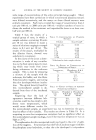
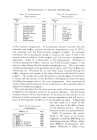
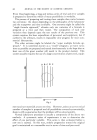
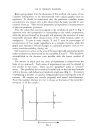
SPRAY PATTERNS OF COSMETIC PRESSURE PACKS 453 1. The nature of the propellant, i.e., whether a liquefied or compressed gas, or a mixture of both types, 2. The ratio of propellant to product, 3. The headspace pressure, 4. The valve design and 5. The viscosity of the product. Some of these factors are more important than others when combined differently in order to achieve a definite purpose. Thus, when employing a liquefied gas propellant, the headspace pressure is not as important as on those occasions when a compressed gas is employed. But even with a compressed gas, the headspace pressure is nowhere near as important with liquids of low viscosity as with those that are highly viscous. In order to illustrate these points the chief types of pack that are likely to be encountered in the cosmetic and allied industries are dealt with hereinunder. SURFACE SPRAYS Surface sprays embrace the majority of cosmetic preparations, and examples are hair lacquers, hair oils, insect repellents, powders, anti- perspirants, perfumes, suntan preparations and foot sprays. For such packs two types of valve could be employed. Standard spray valves are those which discharge continuously while the actuator is operated, and they are subdivided into two groups according to the nature of the actuator. Standard va]ves with ordinary actuators are representative of the type that is most commonly employed when liquefied propellants are part of the liquid phase, providing the internal pressure of the pack is not much below 30 psig. at 70øF. No hard and fast figure can be given because the nature, i.e., viscosity, of the product could easily displace the lower pressure limit in each direction. Ordinary actuators, generally speaking, have external orifices which are relatively large (diameter = 0.02 in.) and cylindrical or conical in shape. If a conical orifice is employed then the base of the cone is on the atmos- pheric side, often known as a "forward tapered orifice." Very occasionally the direction of the cone is reversed, resulting in a "reverse tapered orifice," the purpose of which is to give a limited degree of turbulence to the emerg- ing spray. Standard valves with break-up spray actuators are necessary (a) where the liquid propellant forms a phase distinct from the liquid product, (b) where the internal pressure is low even if the liquid product and liquid propellant are intimately mixed and (c) where compressed gases, both soluble and insoluble, are employed. Atomization is achieved by forcing the product stream through a swirling chamber usually situated very close to the external orifice of the actuator.
Purchased for the exclusive use of nofirst nolast (unknown)
From: SCC Media Library & Resource Center (library.scconline.org)