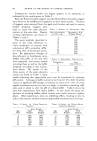
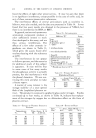
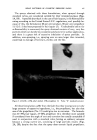
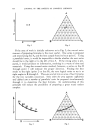
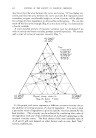
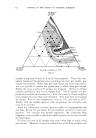
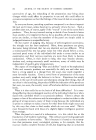
462 JOURNAL OF THE SOCIETY OF COSMETIC CHEMISTS From these beginnings, a long and tedious series of trial and error samples is prepared to determine which of many possibilities is workable. The process of preparing and testing these samples then varies between two extremes: the choice depending on the philosophy of the laboratory and the manpower and time available. One extreme might be called the "single formula approach," wherein only one variation of a formula is prepared at a time and then tested. The composition of each new variation then depends upon the test results of the previous one. This system requires the least expenditure of personnel and equipment, but if carried to the ultimate, results in impossibly slow progress for most com- mercial laboratories. The other extreme might be labeled the "super multiple formula ap- proach." It is sometimes known as a "crash" program as many varia- tions as possible are prepared and tested simultaneously in the hope that at least one of this great number will result in the product desired. This system usually requires the use of a large concentration of personnel, equip- Fig. 1 merit and raw materials at any one time. However, unless an astronomical number of samples is prepared and all possibilities covered systematically, there is still no guarantee that the problem will be solved quickly. Normal laboratory procedure is usually a compromise of the above two methods. A systematic series of experiments is run to determine the effect of one particular variable. This series is then evaluated before a new one is started. In this way, orderly progression toward the original goal is maintained at a reasonable cost in terms of time and personnel.

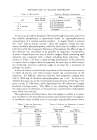
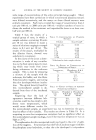
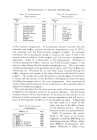
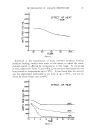
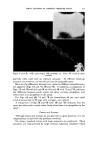
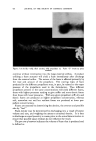
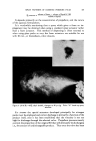
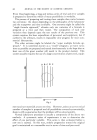
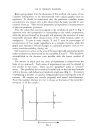
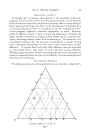
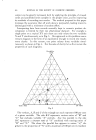
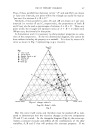
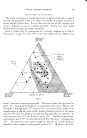
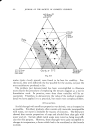
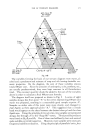
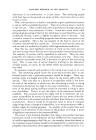
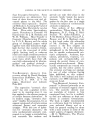
USE Ol• TERNARY DIAGRAMS 463 Before going deeper into the discussion of this method, the nature of the variables subsequently to be demonstrated with various graphs must be explained. It should be understood that the particular variables under consideration are always only a few chosen from the many possible in any cosmetic formula. They may be proportions of ingredients or measurements of physical properties of interest. Thus the values that may be assigned to the variables, X and Y in Fig. 1 represent only their proportion or relationship to the whole composition, while the picture formed by the graph will represent the variation of some measurable physical effect characteristic of the whole formula under in- vestigation. To put it more simply, X and Y may be percentages of concentration of two major ingredients in a complex formula, while the graph may represent over-all changes in a physical property such as vis- cosity, emulsion stability, clarity, etc. Our concern is to arrive at the area of the most desirable physical property under evaluation as determined by the variables, X and Y. This should be accomplished in the shortest time possible with the fewest number of trials. The manner in which each new series of experiments is related forms the basis of our approach. Such series of experiments can only be related to one another in two ways. There can be "paralleled" series or "crossed" series. The paralleled series method is useful only to find the best formula within a known, well defined and relatively small area (Fig. 1). It consists of preparing a number of samples along parallel lines covering the area of interest. All samples are usually prepared and tested simultaneously. From this number, the best prodt•ct is chosen on the basis of the tested per- formance of all the samples. Fig 2
Purchased for the exclusive use of nofirst nolast (unknown)
From: SCC Media Library & Resource Center (library.scconline.org)