SPRAY PATTERNS OF COSMETIC PRESSURE PACKS 453 1. The nature of the propellant, i.e., whether a liquefied or compressed gas, or a mixture of both types, 2. The ratio of propellant to product, 3. The headspace pressure, 4. The valve design and 5. The viscosity of the product. Some of these factors are more important than others when combined differently in order to achieve a definite purpose. Thus, when employing a liquefied gas propellant, the headspace pressure is not as important as on those occasions when a compressed gas is employed. But even with a compressed gas, the headspace pressure is nowhere near as important with liquids of low viscosity as with those that are highly viscous. In order to illustrate these points the chief types of pack that are likely to be encountered in the cosmetic and allied industries are dealt with hereinunder. SURFACE SPRAYS Surface sprays embrace the majority of cosmetic preparations, and examples are hair lacquers, hair oils, insect repellents, powders, anti- perspirants, perfumes, suntan preparations and foot sprays. For such packs two types of valve could be employed. Standard spray valves are those which discharge continuously while the actuator is operated, and they are subdivided into two groups according to the nature of the actuator. Standard va]ves with ordinary actuators are representative of the type that is most commonly employed when liquefied propellants are part of the liquid phase, providing the internal pressure of the pack is not much below 30 psig. at 70øF. No hard and fast figure can be given because the nature, i.e., viscosity, of the product could easily displace the lower pressure limit in each direction. Ordinary actuators, generally speaking, have external orifices which are relatively large (diameter = 0.02 in.) and cylindrical or conical in shape. If a conical orifice is employed then the base of the cone is on the atmos- pheric side, often known as a "forward tapered orifice." Very occasionally the direction of the cone is reversed, resulting in a "reverse tapered orifice," the purpose of which is to give a limited degree of turbulence to the emerg- ing spray. Standard valves with break-up spray actuators are necessary (a) where the liquid propellant forms a phase distinct from the liquid product, (b) where the internal pressure is low even if the liquid product and liquid propellant are intimately mixed and (c) where compressed gases, both soluble and insoluble, are employed. Atomization is achieved by forcing the product stream through a swirling chamber usually situated very close to the external orifice of the actuator.

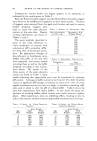
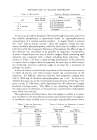
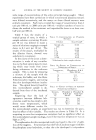
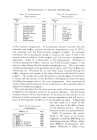
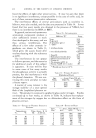
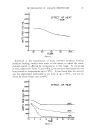
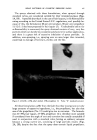
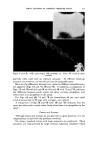
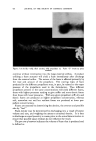
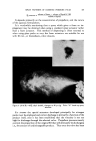
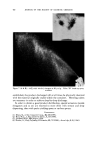
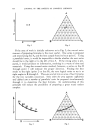
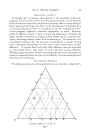
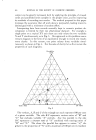
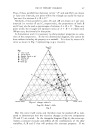
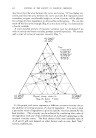
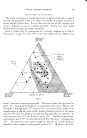
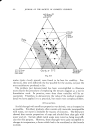
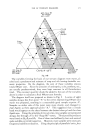
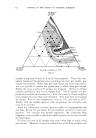
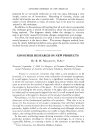
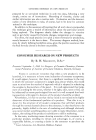
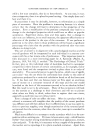
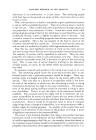
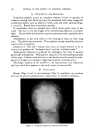
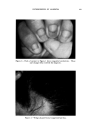
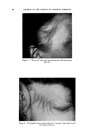
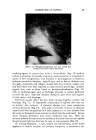
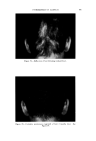
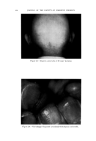
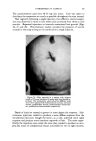
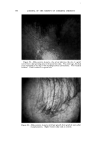
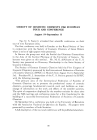
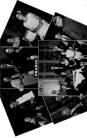
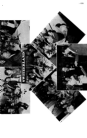
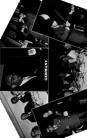
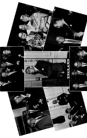
454 JOURNAL OF THE SOCIETY 01 COSMETIC CHEMISTS ... .. -E . Figure 1 (A & B).--50% ethyl alcohol, 25% propellant 11, 25% propellant 12. Valve "A" standard actuator. A turbulance is then caused in the liquid stream as it passes through this special chamber to the final orifice, where it breaks up into fine particles which are, however, often coarser than the particles obtained by direct propellant atomization. The second valve type is known as a metering valve, and its function is to deliver an equal dosage at each operation. It is usual to employ ordinary actuators, but with formulations of low pressure or where compressed gases are employed, mechanical break-up spray actuators are necessary. In order to assess the spray pattern of a particular formulation, the method of Dixon (1) or Root (2) indicating the pattern at right angles to the spray direction, should be utilized in combination with an assessment parallel to the direction of the spray. The latter may be done visually but it is best to make use of high-speed photography which permits a better comparison between different sprays, and also serves as a permanent record. Dixon's method was employed for obtaining the relevant illustrations that follow. In the early days of this industry, hair lacquers (and suntan preparations) were formulated in the following general manner: Product, % .......................... 40 or 50 60 50 Propellant 11/12 (1:1) mixture, % ..... tOO or 100
Purchased for the exclusive use of nofirst nolast (unknown)
From: SCC Media Library & Resource Center (library.scconline.org)