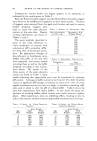
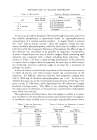
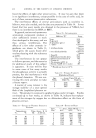
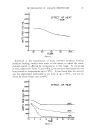
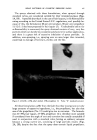
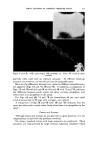
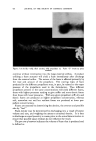
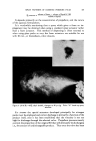
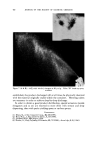
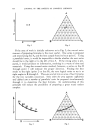
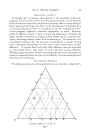
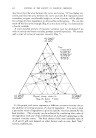
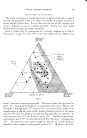
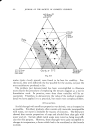
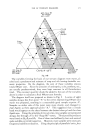
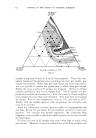
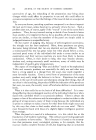
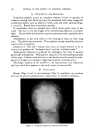
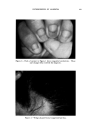
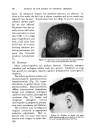
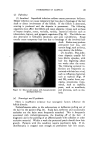
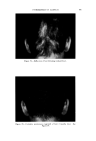
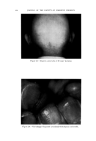
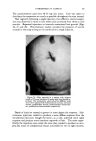
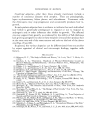
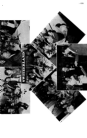
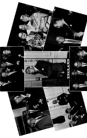
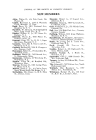
SPRAY PATTERNS OF COSMETIC PRESSURE PACKS 457 Figure 4 (A & B).--65% ethyl alcohol, 35% propellant 12. Valve "B" break-up spray actuator. particles when used with an ordinary actuator. An efficient break-up actuator can, however, convert this jet into an acceptable spray. Here too the differences between two valves by different manufacturers, are apparent (Figs. 6A and 7A, 6B and 7B). In addition, a comparison of Figs. 3A and 3B with 6A and 6B and 4A and 4B with 7A and 7B, indicates the difference between packs where the spray contains propellant, and where there is no propellant in the spray. For Figs. 6A and 6B, 7A and 7B the formulation 66 per cent ethyl alcohol pressurized to 90 psig. with nitrogen, was utilized. A comparison of Figs 3B and 6B (also 4B and 7B) indicates that the spray particles tend to settle rather faster when there is no propellant in the spray. Foams and Streams Although foams and streams do not give rise to spray patterns, it is not inappropriate to deal with the problems involved. For foams, standard valves with foam actuators are employed. These actuators are characterized by large internal expansion chambers which

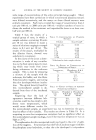
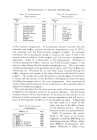
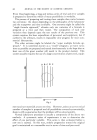
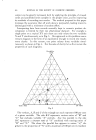
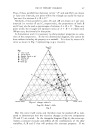
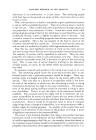
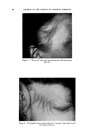
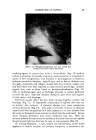
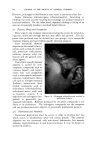
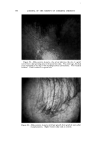
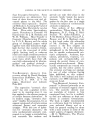
458 JOURNAL OF THE SOCIETY OF COSMETIC CHEMISTS ::! ..... Figure 5 (A & B).--65% ethyl alcohol, 35% propellant 12. Valve "C" break-up spray actuator. continue without interruption into the large external orifices. A product utilizing a foam actuator will yield a foam immediately after discharge from the external orifice. The nature of the foam is affected primarily by the type and amount of the propellant. The varying types of foam produced by the different propellants may, in part, be related to the vapor pressure of the propellants used in the formulation. Thus different propellants present in the same concentrations will yield different foams, those with higher pressures tending to give stiffer and more elastic foams than those with lower pressures. With any given propellant stiff, dry and elastic foams are produced at higher propellant concentration, whereas soft, somewhat wet and less resilient foams are produced at lower pro- pellant concentrations. Foams are assessed by determining the density, the overrun and possibly also by "feel." Foam density may be determined by discharging into a vessel of known volume and tare, and weighing the amount contained therein. It is best to discharge an equal quantity to waste, prior to the actual determination to ensure that possible spout residues do not influence the result. The per cent o/overrun indicates the volume of t•)am that is produced and is defined as
Purchased for the exclusive use of nofirst nolast (unknown)
From: SCC Media Library & Resource Center (library.scconline.org)