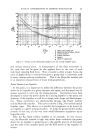
APPLICATION OF TIlE TWIN SHELL BLENDER IN LIQUID-SOLID AND SOLID-SOLID COSMETIC FORMULATIONS By JoHN J. Presented November 29, !960, New York Cily PRECISION blending is only one of many operations that cosmetic manufacturers have to contend with. Depending on the condition and nature of the materials being blended, it may pose serious problems--or it may be just another routine step in the production scheme. Spurred by the problem blends, a considerable amount of development work has been done on blending equipment in recent years. This work has yielded improved performance in a number of cases, and it has opened up interesting opportunities for combining other operations with blending. In our pretesting laboratory we are often asked if we can make a good blend of solid ingredient A with solid ingredient B plus a small percentage of liquid ingredient X. Many times, we never do learn exactly what these ingredients really are. But we find out how the materials 1 ehave by testing small samples in our laboratory blenders. We discuss the problem enough to gain an understanding of what our prospective customer wants to accomplish-- whether he needs a completely uniform blend, for example, a pigment dispersion, a coating, or perhaps a free-flowing mass of granular agglomer- ates. We find out about related operations such as sterilization, drying or complex treatments. Sometimes dry ingredients that will go into a cream or salve are first precisely blended with advantageous results. We have equipment that can do many things to small particles--and to liquids in combination with them. A typical example of dry particle blending would be the uniform dispersion of a pigment in talc to produce a face powder or a dusting powder. Liquid-solids blending is required when perfume oils or liquid conditioning agents are introduced. Purely to facilitate handling in subsequent operations, it may be desirable also to improve the flow properties of the material. Aeration will do this in many cases. A fluffed-up mass that has each * The Patterson-Kelley Co., Inc., East Stroudsburg, Pa. 249

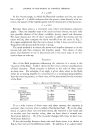
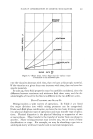
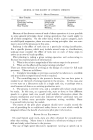
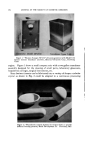
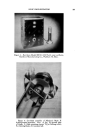
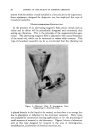
250 JOURNAL OF THE SOCIETY OF COSMETIC CHEMISTS particle separated from its neighbors by a thin film of air will flow freely, while the same particles without this air film tend to hang up and clog. Another way to improve handling characteristics is to granulate the blended material. Granules, as we use the term, are uniform, spherical clusters of very small particles. These clusters are held together only by such effects as a slight surface wetness and sometimes, we think, by electro- static attractions. They are soft agglomerates that can usually be broken up very easily. Granulation is most often a preliminary stage to making a paste or dry cake, such as a powder pack. It is most important to avoid letting any confusion creep into our talks with a prospect about the job to be done. It is possible, if this happens, to do a tremendous amount of work, yet come up with a com- pletely wrong answer. Several years ago, we had just learned how to disperse a very small amount of liquid throughout a mass of fine powder with extremely high uniformity. We showed samples of this dispersion to a prospect with considerable pride. The stuff was dry to the touch, but the liquid was there, and every particle had its share. The man shook his head and showed us what he really wanted. It was a granular mix suitable for compacting--not a dry powder. All I could say was, "But that's so easy! We could have done that for you three years ago !" As a matter of fact, we always seem to be able to do new things each year--things we could not do the year before. One reason for this is that we are learning more. We understand a little better how particles behave. There is still too much we do not know, and we are always dismayed at the number of facts we cannot find in published literature. But where we do not have facts, we make up tentative theories, and some of these blue- sky theories have served us very well on a practical level. Another reason we can do more difficult blending operations each year is that we have continued to make changes in equipment design. Let me trace our blender design evolution for you briefly. We have concentrated on tumble blenders, because they are gentle and because the entire charge moves twice during each revolution of the vessel. Gentleness of blending action is desirable because it avoids breakdown of delicate particles. Sometimes gentleness is essential, because too much scraping or agitation will give particles so much electrostatic charge that they become completely unblendable. Moving the entire charge gently by gravity can be done in a variety of rotating vessels. Our experience has demonstrated that the shapes which present a different cross section for each half turn of the tumbling vessel are most effective. The double-cone blender meets this requirement.
Purchased for the exclusive use of nofirst nolast (unknown)
From: SCC Media Library & Resource Center (library.scconline.org)