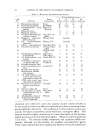
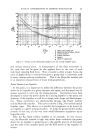
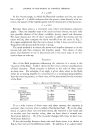
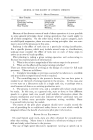
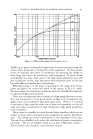
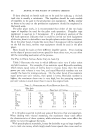
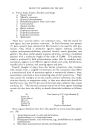
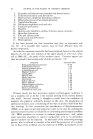
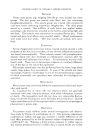
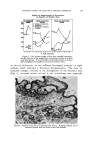
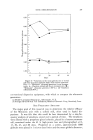
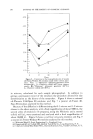
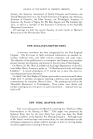
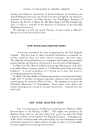
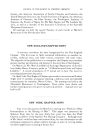
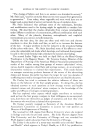
SCALE-UP CONSIDERATIONS IN COSMETIC MANUFACTURE 263 BINGHAM PLASTIC NEWTON DILATANT du SHEAR RATE • Figure 4.--Shear stress versus shear rate for various types of materials on an arithmetic plot. rate the viscosity decreases with time, then we have a thixotropic material. If the viscosity at a given shear rate increases with time, then we have rhe- opectic materials. In scale-up, these fluid properties must be carefully considered, since the difference between maximum and minimum fluid shear rates, and the ob- solute lengths of travel for the fluid are different in the two different scales. PILOT PLANTING AND SCALE-UP Mixing involves a wide variety of operations. In Table 2 are listed five major divisions into which mixing processes can be categorized. Under each fluid phase combination, we have the two basic divisions again into physical dispersion type of operations and mass transfer type of opera- tions. Physical dispersion is the physical blending or suspension of two or more phases. Mass transfer is the transfer of matter from one phase to another. Many mixing processes may involve one, two or more of these classifications or steps. For example, we may be absorbing a gas into a solid-liquid slurry with heat transfer coils to maintain temperature.

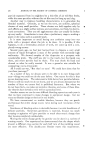
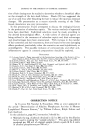
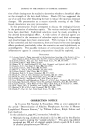
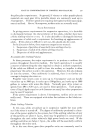
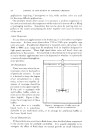
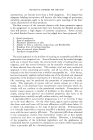
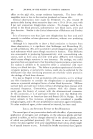
264 JOURNAL OF THE SOCIETY OF COSMETIC CHEMISTS Ti•.•. 2.--Mxx• PRocv. ssv. s Mass Transfer Physical Dispersion Extraction Liquid-Liquid Emulsions Dissolving, leaching Solid-Liquid Suspension Absorption Gas-Liquid Foams Heat Transfer Heat Transfer Blending Blending Because of the diverse nature of each of these operations it is not possible to state general principles about mixing operations that would apply to all of these categories. On the other hand, within a given category, such as solid-liquid suspension, there are many mixing principles that are com- mon to most of the processes in this area. Scale-up is the effect of tank size on a particular mixing classification. For a specific process, which may include several steps or classifications, scale-up must consider the effect of tank size on each of these steps to arrive at an over-all scale-up effect. Pilot planting is taking a given mixing operation and endeavoring to find out two essential pieces of information: 1. What is the relative magnitude of the various steps in the process ? 2. What are the effects of the major mixing variables ? There are three methods of arriving at the design of a mixer fo,- full scale processes. These are as follows: 1. Complete knowledge on previous successful installations is available and practically no experimental work is required. 2. The controlling step in the process is known, but one data point is needed to set the level of mixing required in the process. In this case, one or two runs on a laboratory scale in a single tank size, or perhaps even a small amount of data on an existing production unit. 3. The process is entirely new, and a complete pilot plant study must be made. In this case, as a general rule, runs at three or four different speeds in a given tank size would yield suitable information about the process mechanism and would also indicate whether additional runs are needed to isolate some particular important mixing variables. Runs in a second tank size may be needed. The extent of the pilot plant program should never usually exceed the cost of providing for an additional safety factor in a unit which would be designed without the benefit of extensive pilot plant information. BENCH SCALE EQUIPMENT On small bench scale work, data are often obtained for considerations other than mixing. Many times it is desired to eliminate mixing as a vari- able and study other factors in the process. The use of high speed laboratory equipment running at speeds up to
Purchased for the exclusive use of nofirst nolast (unknown)
From: SCC Media Library & Resource Center (library.scconline.org)