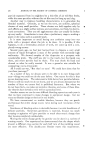
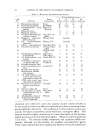
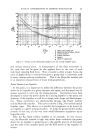
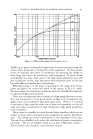
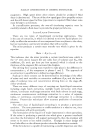
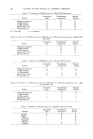
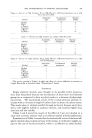
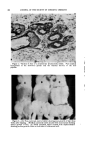
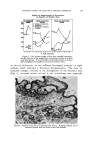
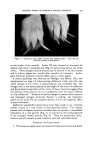
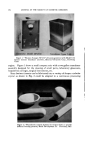
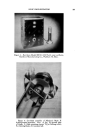
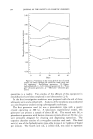
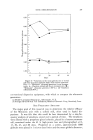
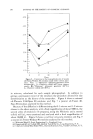
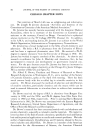
292 JOURNAL OF THE SOCIETY OF COSMETIC CHEMISTS Figure 8.--Castrated male rabbit treated with testosterone. Note the normal size of claws. hair dye were applied to guinea pigs once weekly during four months. Besides mild erythema in all cold wave lotion treated animals, and in three guinea pigs treated with commercial back hair dye, no pathological blood changes or any microscopic alterations in any vital organs could be observed. 2. A brief review is presented of the percutaneous application of estro- genic and androgenic hormones on hair growth, sebaceous glands, and growth of claws in rabbits. The structural changes of the adrenals pro- duced by these hormones is histologically demonstrated. atcknowledgment: Grateful acknowledgment is given to Dr. Robert Epstein and to Mr. John Storer for valuable assistance rendered in the hematolog- ical investigations to Dr. Alfred Schwartz, Chief of Pathology, Jewish Memorial Hospital for the examination of tissue sections and to Dr. Frank Kaldi and Dr. Victor Azueta, of the Department of Pathology, Jewish Memorial Hospital, for performing the animal autopsies connected with the thioglycolate and paraphenylenediamine experiments. The capable assistance of Leona Caroline, A.B., is gratefully acknowledged. REFERENCES (1) Reiss, F., "The I,ocal and Systemic Effect of Ammonium Thioglycolate and Parapheny- lenediamine," in press. (2) Reiss, F., Dermatologica, 116, 419 (1958). (3) Draize, J. H., Alvafez, E., and Whitesell, M. F., Proc. Sei. Sect. Toilet Goods •lssoc. No. 7, 36 (1947). (4) Lehman, A. F.,lbid., No. 3:3, 10 (1960). ß (5) Lehman, A. F., 7. •lm. Med. •lssoc., 141, 842 (1949). (6) Reiss, F., and Gerstl, B., ExptL .•/led. and Surgery, 4, 338 (1946). (7) Friederich, H. C., DermatoL Gutachten, 1, 73 (1952). (8) Behrman, H., Combes, F., and al., 7. •lm. Yled. •lssoc., 140, 1208 (1949). (9) Sulzberger, M. B., and Rostenberg, A., Jr., 7- ImmunoL, 36, 17 (1939).

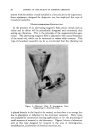
SONIC EMULSIFICATION 293 (10) Ishikawa quoted by: Burckhardt, W., and Amrein, H. P., Intern./itch. /illergy /ippl. Immunol. Suppl., Vol. 5, 57 (1954). (11) Bohrod, G. M.,/I.M./I./irch. Pathol., 62, 17 (1956). (12) Stunzi, Hugo, "Die periarteritis nodosa des Schweines im Rahmen der allergischen Krankheiten der Haustiere," bfabil. Schrift der Vet. Med. Fakultat, Univ. Zurich (1947). (13) Reiss, F., and Gellis, S., y. Invest. Dermatol., 12, 159 (1949). (14) Hammilton, J. B., Endocrinology, 21, 649 (1937). (15) Hammilton, J. B.,/Inn. N.Y./Icad. Sci., 53, 708 (1951). (16) Roony, R. H., and Zakon, J. Z.,/irch. Dermatol. and Syphilol., 48, 601 (1943). (17) Roony, R. H., and Zakon, J. Z.,Ibid., 52,323 (1945). (18) Light, A. E., Proc. Sci. Sect. Toilet Goods/issoc. No. 22, 10 (1954). (19) Mulligan, R. M., and Becker, D. L.,/irn. y. Pathol., 23, 299 (1947). SONIC EMULSIFICATION By DONALD M. SKAUEN, P.D. and HAP. out) M. BEAL, Presented November 29, !960, New York City SEVERAL F. XC•LLF. ST lectures on the fundamentals of ultrasonics have been delivered before the Society of Cosmetic Chemists. Yaeger (1) presented a very comprehensive review of fundamental chemical and processing applications. The basic purpose of this paper is to discuss the ultrasonic equipment available and to indicate the uses to which each type may be put, with particular emphasis on emulsification. Ultrasonic equipment may be divided into three basic types of units depending upon the source and method being used to produce the ultra- sonic wave. PIEZOELECTRIC GENERATORS T.• ioo• T ......... a r•: .... r'..• • r• ....... ? that certain crystals alter their linear dimensions when placed in an electric field, and that when subjected to mechanical pressure develop an electrical potential on their surfaces. Rochelle salt crystals showed this effect to a great degree, as did several other crystals, including quartz, to a lesser amount. This phenomenon, referred to as the" ' ' ' p•ezoelectnc effect," is the basis upon which the modern piezoelectric generator is based. When an alternating source of potential is applied to a quartz, barium titanate or lead zirconate crystal, of the same frequency as the mechanical frequency of the crystal, resonance occurs and the vibrations reach a very large amplitude. The main applications of this type of unit' have been in the field of metal flaw testing and the cleaning of objects ranging in size from a transistor to a jet * School of Pharmacy, University of Connecticut, Storrs, Conn.
Purchased for the exclusive use of nofirst nolast (unknown)
From: SCC Media Library & Resource Center (library.scconline.org)