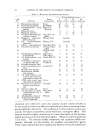
254 JOURNAL OF THE SOCIETY OF COSMETIC CHEMISTS (3) inflammatory and traumatic reactions following the imprudent use of topical irritants and sensitizers, and cosmetics. The hormonal imbalance manifests itself in a disturbed physiological relationship of androgen to estrogen secretion, usually with relative increase of androgen. The impaired metabolism is frequently associated with de- creased activity of the thyroid and the inability of the body to properly assimilate excessive carbohydrate and lipid food ingested, particularly animal and saturated fats. The oral intake of large and continuous amounts of iodine as a constituent of iodized salt and shell fish also play a role in disturbed sebaceous secretion. The biochemical changes of the scalp tissues may be projected because of an altered-ion concentration, reduced cutaneous circulation and the injurious effect of unsaturated lipids present in the sebum producing damaging effects of the sulfhydryl compounds contained in keratin with liberation of hydrogen peroxides. Flesch (10) has reported on the damaging effect of unsaturated com- pounds upon the hair of animals. In the normal genesis of keratinization of the epidermis there chronologi- cally occurs a progressive accumulation of a fine, microscopic epidermal scale which is invisible. This process is continuous unless disturbed by a constitutional imbalance and the internal and external causes mentioned previously. As a result, the accumulation of epidermal scales and debris becomes visible. This pathological process is manifested by the presence of irregular, white, greasy scales which appear on the scalp, the shoulders and sleeves of the clothing following brushing or combing of the scalp. Although no single pathogenic etiologic agent has been singled out, labora- tory studies by the author (1) have indicated that there is an accelerated growth of the resident staphylococcic genus and the pityrosporum ovule on the scalp. Because of the variety of etiological and contributing fac- tors, we believe that the most satisfactory approach to this problem is an attempt to control seborrhea capiris by local therapy, with additional at- tempts to correct the internal and external factors. Cosmetic acceptibility and nontoxicity are important considerations in the choice of a preferred topical agent. It is essential to rule out immedi- ately preparations which stain the hair or scalp, leave an offensive odor, or cause the hair to become unmanageable and oily. The author has pro- posed the following requirements for an ideal seborrheic therapeutic agent (2): this antiseborrheic agent should be nontoxic, have a mild keratolytic action, possess a wide fungicidal and bactericidal spectrum, reduce oiliness when necessary, relieve pruritis and must not be an irritant or allergen. After careful study of the methods which have been utilized in the topical treatment of seborrhea capiris, it has been ascertained that there exist basically four methods of application and utilization of seborrheic prepara- tions:

DISORDERS OF THE SCALP 255 1. THE PRE-SHAMPOO APPLICATION in which a detergent keratolytic is applied to the scalp and remains in situ for from five to twenty minutes. This chemical is either removed by shampooing with neutral soap or detergent or by the use of aqueous solution. The organic sulfur preparation bis-laurylt4methylammonium polythionate is an example. Also the quaternary amines act in a similar capacity. 2. MEDICATED SHAMPOO is applied to the moistened scalp and left there from five to twenty minutes. It is then removed by the addition of water producing diffuse lathering of the medicated constituents with subsequent removal of the active agent. This medicated shampoo may contain sulfur, salicylic acid, resorcinol, hexachlorophene, bithionol, surfac- rants dispersed in a shampoo base. The author has recently reported the excellent results of biphenylamine hydrochloride dispersed in a detergent shampoo (.3). 3. ANTI-SEBORRHEIC SCALP LOTION applied to the scalp at regular intervals may contain antiseborrheic stimulants such as resorcinol, monoacetate, chloral hydrate, tincture of capsicum, tincture of jaborandi, tincture of cantharides, Vancide © and Sarthionate ©. These scalp lotions may also be used as hair dressings. 4. THE AFTER-SHAMPOO RINSE which is used on the scalp after completion of the shampoo. For many years diluted lemon juice was used, and more recently the rinse contains a quaternary ammonium compound, e.g. benzalkonium chloride. Slinger (4), Finnerty (5) and Lubowe (6) have previously evaluated independently the comparative effectiveness of a selenium sulfide suspen- sion, a sulfur, salicylic acid and hexachlorophene detergent combination, and a benzopyran formulation. Ball (7) has reported the beneficial results of Vancide © in combination with a quaternary amine in the treatment of seborrheic dermatitis of the scalp. For many years Vancide © has been used as an agricultural fungi- cide and a rubber antioxidant. An excellent antiseptic detergent anti- seborrheic agent was described successfully in the treatment of 82 re- fractory cases of seborrhea of whom 58 were males and 28 females (8). The agent used was Bis-lauryltrimethylammonium polythionate (Sar- thiohate©). The method of application was once daily on the scalp for the first week and then every other day for the second week, and finally, as a pre-shampoo treatment, twice weekly. Clinical and laboratory studies were conducted simultaneously. Interestingly enough, subjective and objective improvement coincided with the reduction of the resident bac- teria, staphylococcus and the resident fungus pityrosporum ovule. In a paper delivered before an International Meeting of the Society of Cosmetic Chemists in June, 1957 (1) the author presented bactericidal and fungicidal studies of 24 potential anti-seborrheic agents. Unless otherwise stated, the
Purchased for the exclusive use of nofirst nolast (unknown)
From: SCC Media Library & Resource Center (library.scconline.org)