SONIC EMULSIFICATION 293 (10) Ishikawa quoted by: Burckhardt, W., and Amrein, H. P., Intern./itch. /illergy /ippl. Immunol. Suppl., Vol. 5, 57 (1954). (11) Bohrod, G. M.,/I.M./I./irch. Pathol., 62, 17 (1956). (12) Stunzi, Hugo, "Die periarteritis nodosa des Schweines im Rahmen der allergischen Krankheiten der Haustiere," bfabil. Schrift der Vet. Med. Fakultat, Univ. Zurich (1947). (13) Reiss, F., and Gellis, S., y. Invest. Dermatol., 12, 159 (1949). (14) Hammilton, J. B., Endocrinology, 21, 649 (1937). (15) Hammilton, J. B.,/Inn. N.Y./Icad. Sci., 53, 708 (1951). (16) Roony, R. H., and Zakon, J. Z.,/irch. Dermatol. and Syphilol., 48, 601 (1943). (17) Roony, R. H., and Zakon, J. Z.,Ibid., 52,323 (1945). (18) Light, A. E., Proc. Sci. Sect. Toilet Goods/issoc. No. 22, 10 (1954). (19) Mulligan, R. M., and Becker, D. L.,/irn. y. Pathol., 23, 299 (1947). SONIC EMULSIFICATION By DONALD M. SKAUEN, P.D. and HAP. out) M. BEAL, Presented November 29, !960, New York City SEVERAL F. XC•LLF. ST lectures on the fundamentals of ultrasonics have been delivered before the Society of Cosmetic Chemists. Yaeger (1) presented a very comprehensive review of fundamental chemical and processing applications. The basic purpose of this paper is to discuss the ultrasonic equipment available and to indicate the uses to which each type may be put, with particular emphasis on emulsification. Ultrasonic equipment may be divided into three basic types of units depending upon the source and method being used to produce the ultra- sonic wave. PIEZOELECTRIC GENERATORS T.• ioo• T ......... a r•: .... r'..• • r• ....... ? that certain crystals alter their linear dimensions when placed in an electric field, and that when subjected to mechanical pressure develop an electrical potential on their surfaces. Rochelle salt crystals showed this effect to a great degree, as did several other crystals, including quartz, to a lesser amount. This phenomenon, referred to as the" ' ' ' p•ezoelectnc effect," is the basis upon which the modern piezoelectric generator is based. When an alternating source of potential is applied to a quartz, barium titanate or lead zirconate crystal, of the same frequency as the mechanical frequency of the crystal, resonance occurs and the vibrations reach a very large amplitude. The main applications of this type of unit' have been in the field of metal flaw testing and the cleaning of objects ranging in size from a transistor to a jet * School of Pharmacy, University of Connecticut, Storrs, Conn.

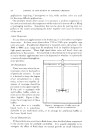
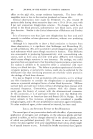
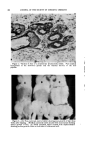
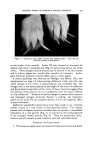
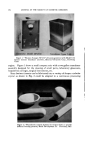
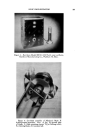
294 JOURNAL OF THE SOCIETY OF COSMETIC CHEMISTS ß ...-• .-- .•. ? •:' - •.. . .--•,. .::. "'•i.,•11.'? '•- "Tra.•s•/ueer Type :•.:4-'• . Figure 1.--Branson Sonogen AP-25-P ultrasonic generator with Model T-52 barium titanate transducer assembly, Branson Ultrasonic Corp., Stamford, Conn. engine. Figure 1 shows a small compact unit with a two gallon transducer assembly designed for the cleaning of small parts, laboratory glassware, hypodermic syringes, surgical instruments, etc. Since barium titanate can be fabricated into a variety of shapes a tubular crystal as shown in Fig. 2 could be adapted to a continuous processing Figure 2.--Piezoelectric ceramic elements in various forms to provide different focusing patterns, Brush Development Co. Cleveland, Ohio
Purchased for the exclusive use of nofirst nolast (unknown)
From: SCC Media Library & Resource Center (library.scconline.org)