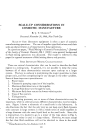
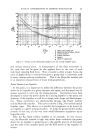
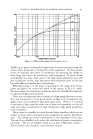
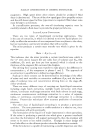
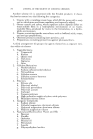
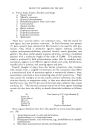
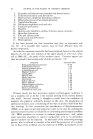
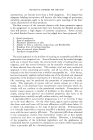
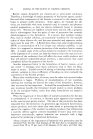
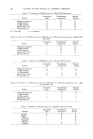
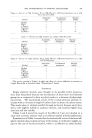
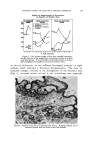
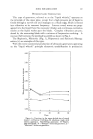
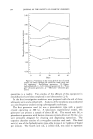
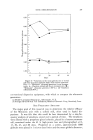
SCALE-UP CONSIDERATIONS IN COSMETIC MANUFACTURE 265 IO(] c 0.001 0.01 0.1 1.0 HORSEPOWER/GALLON Figure 5.--Effect of horsepower level on process result. 10,000 r.p.m. gives a mixing fluid regime that involves extremely large size mixers when projected to production scale equipment. If these power levels are required, then there is justification for pursuing the design of these large size mixers for production scale equipment. If power levels considerably less than those used in the high speed laboratory unit will give satisfactory results, then laboratory work should be done to find out just what effect horsepower has on the process. 'Referring to Fig. 5, if the mixer is operating in the range of 0.5 horse- power per gallon, we cannot tell which of the curves, A, B or C, holds. We must reduce the horsepower to find out where the threshhold horsepower is to give the highest process result. There are two important characteristics of a high speed laboratory mixer. It is not uncommon to have power levels as high as 0.5 horsepower per gallon and to have extremely high fluid shear rates. When it is essential to maintain a high value for either one of these two quantities on the full scale unit, then consideration of high horsepower, high speed production units is justified. Many times in unbaffled or round bottom flasks, impellets which are not similar to those used in production size equipment are used in the labora- tory. This brings up several uncertainties in the usefulness of the data. The use of an unbaffled tank makes the calculation of power consumption uncertain. The use of impeller5 which do not have a Reynolds number-- Power number curve brings in a second source of error.

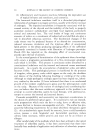
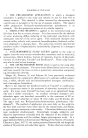
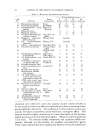
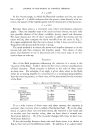
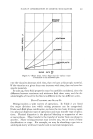
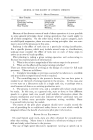
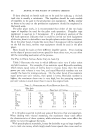
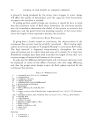
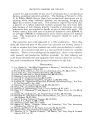
:266 JOURNAL OF THE SOCIETY OF COSMETIC CHEMISTS If data obtained on bench scale are to be used for scale-up, a six-inch tank size is usually a minimum. The impellets should be scale models of impellets to be used in the production size equipment. Baffles similar to those to be used on the production equipment should be employed in the bench scale. For pilot plant work, it is recommended that either of the two basic types of impellets be used for the pilot scale operation. Propeller type equipment is used up to 3 horsepower. If a preliminary analysis of the full scale operation indicates that it could be carried out with equipment of this size, then it is desirable to run the pilot plants under these conditions. If, on the other hand, it looks like more than 3 horsepower will be required on the full size basis, turbine type equipment should be used in the pilot plant. Runs should be made at three different impeller speeds. From looking at the slope of process result versus speed for these three runs, we can often tell the controlling mechanism of the process. The l/Fay in Pl/hich 1/arious Ratios 1/ary in Scale-Up Table 3 illustrates the way in which different ratios vary if other ratios are held constant. For example, if we maintain equal Reynolds numbers, which means equal ratios of inertia force to viscous force, then the total power per unit volume is very low, and equal Reynolds numbers are not usually the basis for mixing scale-up. On the other hand, if we maintain equal power per unit volume, then speed is lower, Reynolds number is higher, the maximum shear rate is very high, but the pumping capacity per unit volume is much lower than it was in the original tank. T.•m,v 3.--PV. OPEP. TIES OF A F•.rm MIXER ON ScAt E-UP Pilot Scale Property 5 Gallons Plant Scale 625 Gallons P 1.0 125 3125 25 0.2 P/Vol. 1.0 1.0 25 0.2 0.0016 N 1.0 0.34 1.0 0.2 0.04 D 1.0 5.0 5.0 5.0 5.0 Q 1.0 42.5 125 25 5.0 Q/Vol. 1.0 0.34 1.0 0.2 0.04 ND 1.0 1.7 5.0 1.0 0.2 ND2p 1.0 8.5 25.0 5.0 1.0 It is threefore essential to pick out some of the ratios that are important. When dealing with viscous materials, the maximum shear rates affect the characteristics of these systems, while minimum shear rates affect the ability to move throughout the tank. With pseudo-plastic materials, it may be desirable to go to large impeller size to tank size ratios, which imply much lower speeds tl•an were used on
Purchased for the exclusive use of nofirst nolast (unknown)
From: SCC Media Library & Resource Center (library.scconline.org)