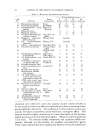
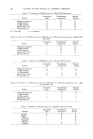
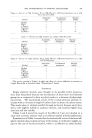
284 JOURNAL OF THE SOCIETY OF COSMETIC CHEMISTS The addition of methyl p-hydroxybenzoate to the solutions containing the ethyl, n-propyl and isopropyl alcohols displayed the same type of additive effect as found with the polyols. Tables 7 and 8 duplicate the above tests except that 10 per cent alcoho was used throughout. The results clearly indicate that the alcohols possess better preservative activity in nonionic solution than do the polyols. Most of the polyols tested effectively inhibited microbial growth at a 10 per cent concentration in combination with 0.2 per cent methyl p-hydroxybenzoate, while the alcohols were effective at the 5 per cent level. Both polyols and alcohols, however, displayed an additive effect or synergism with methyl p-hydroxybenzoate in a nonionic surfactant solution made up in the ap- propriate medium. REFEKENCE (1) Poprzan, J., and deNavarre, M. G., J. Soc. COSMETro CHEMTs'rs, 10, 81 (19597. THE SYSTEMIC EFFECT OF TOPICALLY APPLIED COSMETICS* By FREDERICK REISS, M.D.• Presented November 29, 1960, New York City Tins p•tESE•,^T•O• will concern mainly the systemic effect of topically applied cold wave lotion and black hair dye (1). Our investiga- tion was stimulated by a survey which was conducted in 1958 on the inci- dence of cosmetic dermatitis (2). It was revealed from over 1000 replies that sensitization was produced in the following order: Nail lacquer .................. 36% Hair dyes ..... 23.8% Permanent wave lotion ...... 25.2% Lipsticks ...... 14.4% A few physicians assumed that there might be a relationship between the application of cosmetics and blood dyscrasias. None, however, of- fered an acceptable clinical or experimental proof on animals. Because experimental proof in humans is practically impossible, guinea pigs were chosen as the most appropriate experimental animals, since it is well known that these animals are highly susceptible to cutaneous and systemic sensitization. - ½ P-art of this investigation was carried out with a grant from the Lawrence Richard Bruce !ncorporated Foundation. • Associate Clin. Professor of Dermatology, New York University, Postgraduate Medical School, New York, N.Y.

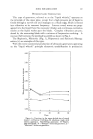
SYSTEMIC EFFECT OF TOPICALLY APPLIED COSMETICS 285 METHODS Ninety male guinea pigs weighing 300-350 gr. were divided into three groups. The first group was treated with black hair dye containing paraphenylenediamine. The second group was treated with commercial cold wave lotion containing ammonium thioglycolate. The third group served as a control. One milliliter of each lotion was applied weekly according to the instructions attached to the bottles, alternating right and left flank. The animals were maintained on standard Purina diet. Food intake and gross local effects were recorded weekly. Blood examinations were made every four weeks. After four months, all animals were sacri- ficed. PATHOLOGY All the thioglycolate (cold wave lotion) treated animals showed a mild erythema of the skin, but no evidence of any obvious inflammatory process was found miscroscopically. Three animals treated with paraphenylene- diamine (black hair dye) developed an inflammatory reaction after the second week with subsequent loss of hair. All recovered at the end of the fourth week. There was no microscopic evidence of a residual inflamma- tion of the skin at the end of the experiment. Microscopic examination was also performed from the heart, large blood vessels, lung, spleen, liver and adrenal. In none of the animals was there microscopic evidence of pathology in any of the parenchymatous organs, of which occasionally two specimens were submitted for histological ex- amination. HEMATOLOGY Blood counts were performed before the experimental period and there- after each month. An occasional rise of white cells was observed which was generally associated with some infectious process, with either subsequent recovery or death. The hemoglobin level did not show any appreciable fluctua- tions, nor did the thrombocyte count fall below the normal level. Kurloff bodies were observed in all three groups which is considered a nonpathogenic phenomenon in guinea pigs. D•set•ss•os The present study confirms earlier animal investigations and observa- tions made by Draize (3) and Lehman (4, 5). Our previous experiments conducted on rabbits and pigs also revealed a notable difference of the local effect produced by an 0.6 M aqueous sodium thioglycolate solution of pH 9.6-9.7 (6). Whereas a thirty-minute exposure in rubber cups to this solution produced necrosis in rabbits skin, it caused hardly any visible
Purchased for the exclusive use of nofirst nolast (unknown)
From: SCC Media Library & Resource Center (library.scconline.org)