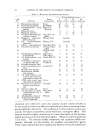
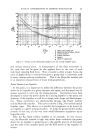
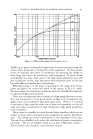
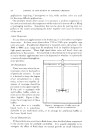
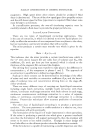
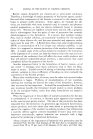
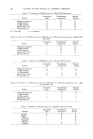
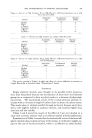
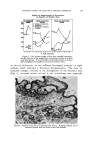
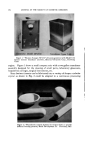
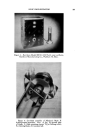
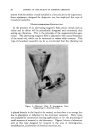
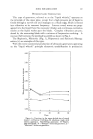
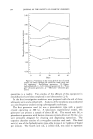
SONIC EMULSIFICATION 297 HYDRODYNAMIC GENERATORS This type of generator, referred to as the "liquid whistle," operates on the principle of the organ pipe except that a high pressure jet of liquid is forced through a narrow slit and impinges on a blade edge, which is forced into vibration at its resonant frequency. Intense sound waves are prop- agated into the liquid from this resonator (blade) and continuous cavitation results as the liquid rushes past the blade. Complex vibrations are pro- duced by the resonating blade with a mixture of frequencies resulting. A resonant bell contains the jet-blade assembly as shown in Fig. 4. The Rapisonic, Minisonic (Fig. 5), Dispersonic and Sanisonic Homog- enizers (c) are examples of this type. With the recent commercial production of ultrasonic generators operating on the "liquid whistle" principle ultrasonic emulsification in production 4.00 3.50 3.00 2.50 2.00 1.50 1.00 I I [ I • 0 15 3O 45 60 Days Figure 6.--Varations in the mean globule size of stored mineral oil-Fluronic F-68-Span 80 emulsions made with various apparatus. Emulsifying apparatus: O--Eppen- bach colloid mill X--"Sonogen" ultrasonic generator /x-- "Minisonic" ultrasonic generator.

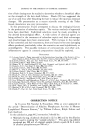
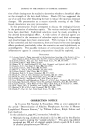
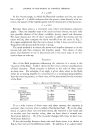
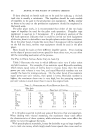
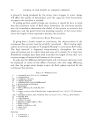
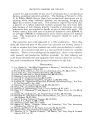
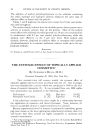
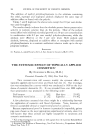
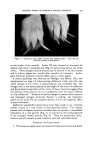
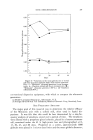
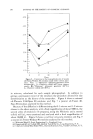
298 JOURNAL OF THE SOCIETY OF COSMETIC CHEMISTS 3.50 .• 2.50 .=• •2.00 1.50 1.00 0.50 , I I 0 15 I I 30 45 6O Days Figure 7.--Variations in the mean globule size of stored peanut oil-Tween 40-Span 80 emulsions made with vari- ous apparatus. Emulsifying apparatus: O--Eppen- bach colloid mill [2--G. E. ultrasonic generator X--"Sono- gen" ultrasonic generator A--"Minisonic" ultrasonic gen- erator. quantities is a reality. Two studies of the efficacy of this equipment in emulsification have been completed in our laboratories (3, 4). In the first investigation emulsions were prepared with the aid of three ultrasonic units and a colloid mill. Analysis of the emulsions was conducted as a size-frequency analysis using a photographic technique. The first generator used (a) was a piezoelectric type with a quartz crystal operating at 300 kc. A laboratory experimental model, this generator can process a sample of about 20 mi. The second unit (b), a piezoelectric generator with barium titanate crystals driven at 39.1 kc., is a unit primarily designed for cleaning and degreasing operations. The exposure chamber consists of a two-gallon stainless steel tank. The third unit (c) was of the hydrodynamic type, able to pass 4 to 5 gallons of liquid per minute. The fourth unit (d), a colloid mill, was used to represent
Purchased for the exclusive use of nofirst nolast (unknown)
From: SCC Media Library & Resource Center (library.scconline.org)