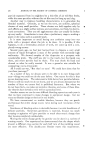
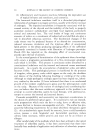
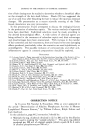
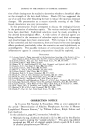
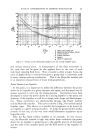
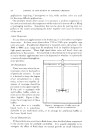
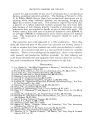
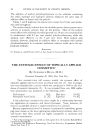
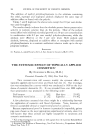
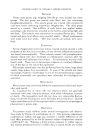
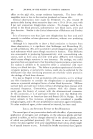
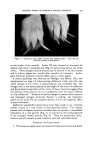
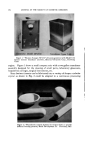
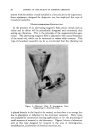
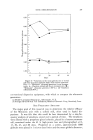
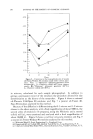
SCALE-UP CONSIDERATIONS IN COSMETIC MANUFACTURE BY J. Y. OLDSHUE* Presented November 29, I960, New York City SCALE-UP from laboratory equipment is often a part of cosmetic manufacturing operations. The use of impeller type fluid mixers and their scale-up characteristics is of importance in these operations. In a previous paper, "Fluid Mixing in Cosmetic Formulations," (•7ournal of the Society of Cosmetic Chemists, 10, 5 (1959)) some gerleral background to fluid mixing operations was discussed. The reader is referred to this paper for a geneal treatment of fluid mixing theory and practice. SOME IMPORTANT MixINc, CHARACTERISTICS There are several characteristics that can be used to describe the fluid regime in a mixing tank. In general, it is not possible to keep the ratios between all of these characteristics constant upon scale-up to a larger system. The key to scale-up is maintaining the major quantities in their proper ratio, and then compensating for any changes in the other variables. Some of these important quantities are: 1. Power input. 2. Volumetric pumping capacity of the impeller. 3. Maximum fluid shear rate at the impeller. 4. A,•erage fluid shear rate through the tank. 5. Minimum fluid shear rate at the lowest velocity point. 6. Type of flow pattern. 7. Tank geometry. In some mixing processes, one or more of these characteristics may be important, while in other processes different characteristics may be impor- tant. Figure 1 shows a schematic of a small tank in the laboratory. It also illustrates the fact that the only way we can keep every fluid dynamic ratio constant in large systems is with a whole series of small impellers in a large diameter with the same liquid level as the small tank. Since this is impractical, it is desired to go to a mixer of the type shown in Fig. 2, in which one mixer is used in a large volume. However, we must accept the fact that fluid conditions will not be identical to those in the small * Mixing Equipment Co., Inc., Rochester 11, N.Y. 259

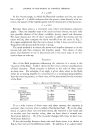
260 JOURNAL OF THE SOCIETY OF COSMETIC CHEMISTS I i I I I F'•_L..r-'I L_j L--.,I I 1 Figure 1.--Scale up from small laboratory tank to larger volume keeping all fluid ratios identical. tank. Practically all mixing processes are scaled up successfully, since the exact numerical ratio between all of the quantities is not as important as the gross over-all mixing effect. However, if one or two of the quantities listed previously are important, then we must be sure to maintain those quantities in their proper numerical value and let the other quantities fall where they will. However, scale-up can be most accurate when the major controlling factors in the process are known, since we may then control accurately the quantities that are most important. ß FLUID FORCES In many texts on scale-up of hydraulic processes, the concept of fluid forces is used. In a mix- ing process, the use of these fluid force concepts is helpful in estab- lishing the fluid flow pattern through the system, and the power consumed by a mixing impeller, but it does not define the process performance of the system. The force we apply to the liquid in the tank is related to the speed and diameter of the impeller. This is the force that we control by our choice of the mixer. The fluid in the tank has several in- ternal forces which resist move- ment of the fluid. These are viscous force, gravitational force, Figure 2.--Scale up to larger volume using single larger mixer. Mixing ratios not identical.
Purchased for the exclusive use of nofirst nolast (unknown)
From: SCC Media Library & Resource Center (library.scconline.org)