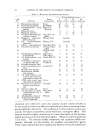
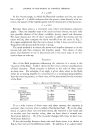
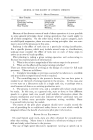
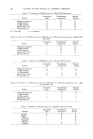
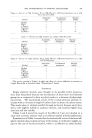
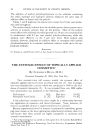
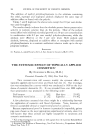
THE INTERFERENCE OF NONIONIC EMULSIFIERS 281 To twelve and one half ml. of the sterilized solutions in test tubes (25 X 200 mm.) was added 0.1 ml. of A/spergillus niger spore suspension in sterile distilled water or 0.1 ml. of a forty-eight hour nutrient broth sus- pension of Pseudomonas aeruginosa or Bacillus subtills. All inoculations were made in duplicate. The tubes were stored at room temperature (25øC.) for at least two months and some for as long as one year. Po LYO LS The polyols used in this study were dipropylene glycol, 1,4-butanediol, 1,3-butanediol, 1,2,6--hexanetriol, and 1,$-pentanediol in appropriate nutri- ent. The effect of 5 per cent polyot on a 2 per cent solution of G-3720 with no addition of methyl p-hydroxybenzoate, is summarized in Table 1. All five polyols supported the growth of the three micro6rganisms at a 5 per cent concentration. Previous work has shown that hexylene glycol and 1,3-propanediol inhibited the growth only of A/spergi//us niger at the $ per cent level while commercial propylene glycol was ineffective at this concentration. Table 2 shows the effect of the addition of 0.2 per cent methyl p-hydroxy- benzoate to the polyol-nonionic medium. Examination of Table 2 shows that the growth of z/. niger is inhibited in all tests, but the bacteria continued to grow. Only 5 per cent 1,5-pentane- diol plus 0.2 per cent methyl p-hydroxybenzoate was a completely effective combination it inhibited the growth of all three microiSrganisms under test. It is apparent from these data that an additive effect is obtained with the polyols and methyl p-hydroxybenzoate in preventing mold growth in particular in media containing a nonionic. Further investigation shows the effect of 10 per cent polyol on a nonionic surfactant solution. 1,3-butanediol and 1,5-pentanediol at a 10 per cent concentration, with- out any preservative, were capable of inhibiting the growth of the three micro6rganisms under test. In the previous work, hexylene glycol and 1,3-propanediol were equally as effective while commercial propylene glycol required a concentration of 15 per cent or higher to inhibit growth. When 0.2 per cent methyl p-hydroxybenzoate was added to this system, the results in Table 4 were obtained. With the addition of the preservative, all the 10 per cent polyol com- binations except dipropylene glycol, were effective in preserving a non- ionic surfactant solution. These results also indicate a synergism or additive effective. Molecular weight or position of hydroxyl groups does not seem to have a bearing on the efficiency of the polyols among those tested. The hydroxyl groups seem to be the only chemical grouping in common with these compounds which can be responsible for this activity.

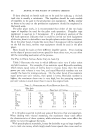
282 JOURNAL OF THE SOCIETY OF COSMETIC CHEMISTS TABLE I*--EFFECT OF 5% POLYOL ON A 2% G-3720 SOLUTION Atspergillus Pseudomonas Bacillus Polyol niger aeruginosa subtilis Dipropylene glycol G G G 1,4-Butanediol G G G 1,3-Butanediol G G G Hexanetriol-1,2,6 G G G Pentanediol-l,5 G G G G = growth -- = no growth TABLE •2--E•'FECT OF 5% POLYOL PLUS 0.2% METHYL p-HYDROXYBENZOATE ON A 2% G-3720 SOLUTION zfspergillus Pseudomonas Bacillus Polyol niger aeruginosa subtilis Dipropylene glycol -- G G 1,4-Butanediol -- G G 1,3-Butanediol - G G HexanetrioL1,2,6 - G G Pentanediol-l,5 -- - -- TABLE 3--EFFECT OF 10% POLYOL ON A 2% G-3720 SOLUTIOIq dspergillus Pseudomonas Bacillus Polyol niger aeruginosa subtilis Dipropylene glycol . G G G 1,4-Butanediol G - G 1,3-Butanediol -- -- -- Hexanetriol-l,2,6 G G G Pentanediol-l,5 -- -- -- TABLE 4--EF}'ECT OF 10% POLYOL PLUS 0.2% METHYL p-HYDROXYBENZOATE ON A 2% G-3720 SOLUTION zf spergillus P seudomonas Bacillus Polyol niger aeruginosa subtilis Dipropylene glycol - G G 1,4-Butanediol -- -- -- 1,3-Butanediol -- -- -- Hexanetriol-l,2,6 -- -- -- Pentanediol-l,5 - - -- TABLE 5--EFFECT OF 5% ALCOHOL ON A 2% SOLUTION OF G-3720 ß /lspergillus ?seudomonas Bacillus Alcohol niger aeruginosa subtilis Methyl G G G Ethyl - G G n-Propyl - G G Isopropyl - - G n-Butyl -- -- -- sec-Butyl -- G G
Purchased for the exclusive use of nofirst nolast (unknown)
From: SCC Media Library & Resource Center (library.scconline.org)