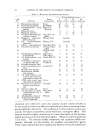
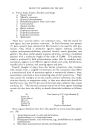
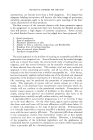
PROTECTIVE BARRIERS FOR THE SKIN 273 compounds that can actually enter into chemical combination with the hostile substances, rendering them harmless or nonirritant by neutraliza- tion or by complexation. When protection is sought against assault by a nonmaterial environmental factor, light in particular, other physical and physical-chemical properties of the barrier components must be utilized. In these cases, protective activity derives from reflection of light rays as by some of the common white pigments, or from selective absorption of harmful rays, as by the sunscreens. While the mechanism of action of barriers is in most cases the formation of mechanical, pharmaceutical, or chemical interference between the usual skin/environment relationship, there seems to be some correlation between barrier activity and skin moisture loss. The effect of a wide range of proved barrier materials on moisture loss of the skin has been measured (2) by strapping desiccators on the forearms of human subjects. Controls were run first on the bare skin then the equipment was placed over areas that had been covered with cosmetic raw materials. The variance between like samples was negligible, and the results were reported as averages of at least three determinations (as many as eight were obtained). The following table summarizes the findings: Material .4verage effect on moisture loss Petrolatum 48% reduction I.anolin, anhydrous 32% " Light mineral oil 28% " Lanolin alcohols (25% in mineral oil) 28% " Isopropyl palmirate 28% " Silicone oil 26% " Squalene 23% " Glyceryl trioleate 23% " Polyoxyethylene glyc!)ls and esters all showed no effect or caused an increase in moisture loss. This work supports a proposal (3) to attach priority of importance to the moisture content, particularly of the horny layer of the skin. Further, it confirms the opinion that fatty emollients soften the skin by restricting moisture evaporation. When such studies are considered from the point of view of mechanism of action, it would appear that effective barrier components may serve in a bilateral capacity, functioning in two direc- tions (both skin/barrier and barrier/environment) rather than in the single (barrier/environment) direction earlier expressed. There are to be found in the literature several systems of classification of barrier creams and protective agents. One of these (4) approaches the problem from a mechanistic aspect the categories include: 1. Pore filling products, such as vanishing creams 2. Bases containing a high proportion of inert powders 3. Water-repellent fatty substances 4. "Invisible glove" film-formingprotectives and 5. Rather special preparations which protect against specific irritants.

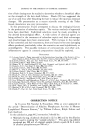
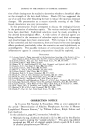
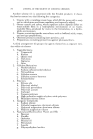
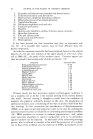
274 JOURNAL OF THE SOCIETY OF COSMETIC CHEMISTS Another scheme (5) is concerned with the finished product it classi- ties barrier creams into the following five categories: 1. Creams with a vanishing cream base, which fill the pores with a soap and to which gums and water repellents are frequently added 2. Greasy creams and salves, whose repellent action depends either on water-soluble films in a hydrophobic environment or on water- insoluble films, produced by resins in the formulation, in a hydro- philic environment 3. Creams containing specific neutralizers such as buffered acids, soaps, and anti-gas preparations 4. Ointment products containing inert powders and 5. Preparations containing protectives against photosensitizers. A third arrangement (6) groups the agents themselves as separate enti- ties within six classes: 1. Vegetable Gums a. Tragacanth b. Karaya c. Quince seed d. Irish moss e. Alginates f. Guar 2. Cellulose Derivatives a. Methylcellulose b. Sodium carboxymethylcellulose c. Nitrocellulose d. Cellulose acetate e. Cellulose acetate butyrate f. Ethylcellulose 3. Polymers a. Silicone oils b. Polyvinyl alcohol c. Polyvinyl pyrrolidone d. Polyvinyl acetate e. Carbopol f. Terpene polymers g. High molecular weight ethylene oxide polymers h. Butadiene-styrene latices 4. Inorganic Compounds a. Sodium silicate b. Colloidal magnesium aluminum silicate c. Hydrated magnesium aluminum silicate d. Hydrous magnesium silicate 5. Natural and Hydrocarbon Waxes and Oils ' a. Beeswax b. Paraffin c. Ozokerite d. Mineral oil e. Petrolatum f. Lanolin g. Polyoxyalkylene lanolins
Purchased for the exclusive use of nofirst nolast (unknown)
From: SCC Media Library & Resource Center (library.scconline.org)