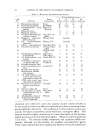
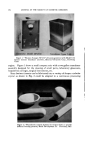
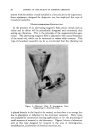
252 JOURNAL OF THE SOCIETY OF COSMETIC CHEMISTS Solids, liquids and gases can be brought together under controlled condi- tions of mobility, attrition, pressure cycles and temperature cycles--all with precise timing. As regards materials of construction, small laboratory equipment is usually built of clear plastic. We can see what is going on when we use these blenders. Most of the units we build for cosmetic manufacturers are all stainless steel. Internal corners are carefully rounded and polished, because easy cleanability is a must if you are running batches of different shades or compositions. Now, what can we do with equipment like this? What good might it do in your plant? We often tackle jobs we do not know how to do at the outset. Gratifyingly often, we have found ways to do them. The difficult blends are usually the ones that require extremely high uniformity and which involve particles that tend to segregate--not to blend. By judicious use of tumbling and attrition of any agglomerates, using the intensifier bar, we can usually get good results. When this fails, we may have to introduce a small amount of another agent, such as water or alcohol. After the blend is achieved, the wetting agent can be removed again by drying. All this can be done in a twin-shell blender provided with the proper facilities. Many jobs that tumble-type equipment does satisfactorily can also be done other ways. We often furnish equipment to supplement or replace such units as ribbon blenders, pulverizers, hammer •nills, screening devices, mullers and the like. Here, even if the precision equipment is able to do a better job, that fact is not so important as time saving and process simpli- fication. It only takes a few minutes to make a good blend. It only takes a few minutes to break up agglomerates into individual particles. A mass of mobile particles can be dried or granulated more rapidly than pan drying them. The key to speed is to do everything while the batch is where it can be controlled. The twin-shell and its modification almost always yield substantial production cost savings just by being fast, versatile and cleanable. We are fortunate in one aspect of this business. Any performance claims we make can be checked in a hurry. Whenever there is the slightest doubt whether a shade of color can be matched uniformly, whether desired flow characteristics can be achieved, whether a delicate mixture can be handled gently enough, or whether components of a mixture can be blended at all, it is a simple matter to run a few trials in the pretesting laboratory. Scale-up has not posed any difficulties that have been hard to overcome. As a matter of fact, the bigger you make a tumble blender, generally the more efficient it seems to get. This is not true of the rotating attrition device we call the intensifier bar. However, it is usually possible to

DISORDERS OF THE SCALP 253 space pins or blades to combine large size with effective agglomerate break- down. The experience on which I base these observations does not all come from cosmetic applications, of course. Some of your problems are special ones. But the general rules that apply in such fields as pharmaceuticals, foods, plastics, ceramics, powder metallurgy, chemicals and others provide a pretty sound platform on which to work. TOPICAL AGENTS FOR TREATMENT AND PREVENTION OF DISORDERS OF THE SCALP By I•twiN W. LvBowE, M.D.* Presented November $, 1960, Seminar New England Chapter, Storrs, Conn. THE EAR•,•EST humans with whom we are acquainted, namely, the cave men and their apish forebears, possessed hair which covered the en- tire surface of the body. It protected them from the cold, the heat, the sun of the day, the rain and the wind, and also acted as a protective padding against traumatic injury. With the evolution and civilization of man, tie has been shedding his natural hairy covering to become increasingly hairless but with the maintenance of scalp hair. Because of the diminished need for scalp hair it is becoming sparse with the passing of time. The in- cidence of dermatological disturbances of the scalp hair has been increasing during the past decade. The relative increase in the incidence of seborrhea capiris and alopecia has been reported both in the male and in the female. The pathogenesis particularly of' seborrhea capitis is related to altera- tions of the physiology and function of the pilo-sebaceous apparatus. The related causes pertain to a combination of internal or constitutional varia- tions and contributing external or local factors. The internal causes are: (1) hormonal imbalance--disturbance of the relation of hormone secre- tion between androgen and estrogen. (2) impaired metabolism and nutrition. (3) dietary indiscretion such as excessive carbohydrate and lipid intake. (4) increased nervous tension. The external causes are: (l) biochemical changes of the cutaneous tissues of the scalp. (2) increased activity of the resident bacterial and fungal flora. * Assistant Professor, New York Medical College, Metropolitan Hospital Center, New York, N.Y.
Purchased for the exclusive use of nofirst nolast (unknown)
From: SCC Media Library & Resource Center (library.scconline.org)