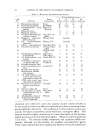
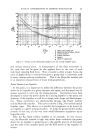
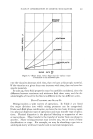
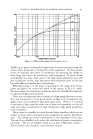
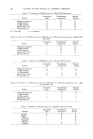
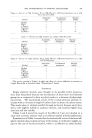
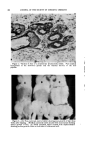
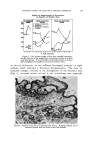
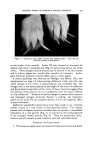
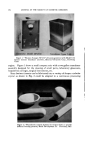
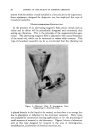
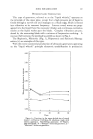
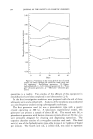
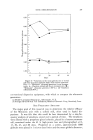
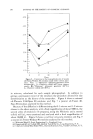
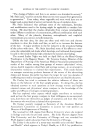
300 JOURNAL OF THE SOCIETY OF COSMETIC CHEMISTS 4.50 4.00 3.50 2.50 TOO 3.00 0 15 30 45 60 Days Figure 9.--Variations in the mean globule size of sesame oil-Tween 40-Span 80 emulsion made with various appa- ratus. Key: []--"Minisonic" ultrasonic generator (room temperature) A--Charlotte colloid mill (room temper- ature) 1--"Minisonic" ultrasonic generator (40øC.) A--Charlotte colloid mill (40øC.) in microns, calculated for each sample photographed. In addition to giving a permanent record of the emulsion the procedure allowed for size determination at the leisure of the researcher. Figure 6 shows a mineral oiI-Pluronic F-68-Span 80 emulsion and' Fig. 7 a peanut oil-Tween 40- Span 80 emulsion analyzed by this method. Because of the difficulty in differentiating the 0-1 micron and 1-2 micron classes in the above analysis, with a final magnification of about 5000 X, the second series of emulsions (4) prepared, using the Minisonic and a second colloid mill (e), were examined and analyzed with a final magnification of about 10,000 X. Figure 8 shows a cod liver oil-acacia emulsion and Fig. 9 a sesame oil-Tween 40-Span 80 emulsion analyzed by this method. (c) Minisonic Mark II, Sonic Engineering Co., Stamford, Conn. (d) Eppenbach QV-6-1 Colloid Mill, Admiral Tool & Die Co., Long Island City, N.Y. (e) Charlotte Colloid Mill, Model ND-1, Chemicolloid Labs. Inc., Garden City Park, N.Y.

SONIC EMULSIFICATION 301 CONCLUSIONS 1. It would appear that the ultrasonic generator can well take its place among other equipment for the reduction of globule size in liquid disper- sions. The hydrodynamic generator, as represented by the Minisonic, is adapted for production use. Recent design changes in this generator will further increase the emulsification efficiency of the unit. 2. Although not too much has been investigated as to the chemical effects of ultrasonic waves upon emulsion components, that work which has been reported indicates that the effects are not significant in the time of exposure required for emulsification. Fixed oils require rather long exposure at high power for chemical effects on the oils and emulsifying agents do not seem to be changed with normal treatment. REFERENCES (1) Yaeger, E., 5 e. Soc. Cosmetic Chemists, 6, 139 (1957). (2) Curie, P., and Curie, J., Compt. rend., 91,294 (1880) Ibid., 92, 186 (1881). (3) Singiser, R. E., and Beal, H. M., 2 t. ,,lm. Pharm. ,,lssoc. Sci. Ed., 49, 478, 482 (1960). (4) Jackson, G. J., Master of Science Thesis, School of Pharmacy, Univ. of Connecticut, Storrs (1960).
Purchased for the exclusive use of nofirst nolast (unknown)
From: SCC Media Library & Resource Center (library.scconline.org)