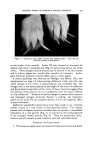
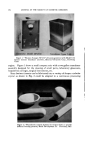
304 JOURNAL OF THE SOCIETY OF COSMETIC CHEMISTS "The dyeing of fabrics and furs is an ancient one shrouded in secrecy," Mr. Stein said, "and for centuries these secrets were passed from generation to generation." Even today, when vegetable and most wood dyes are no longer used, a great deal of secrecy surrounds the use of oxidation dyes. Mr. Stein indicated that perhaps some of the techniques, formulas and modifications used in fur dyeing might be applicable to modern hair tinting. He described the shades obtainable from various intermediates under different conditions of concentration, pH and combination with each other. Many of the phenols, diamines, aminophenols and naphthoI intermediates are common to both industries. Unlike the hair dyes, fur dyes are often used with iron and chrome mordants to alter the shade and hue, as well as to increase the fastness of the dye. A major problem in the fur industry is the unnatural fading of the colors with time. Mr. Stein described some of his efforts to over- come the undesirable red shade which develops, and indicated that pyrogal- lic acid in the initial formula helps stimulate the natural color fading. The annual Ladies Night was held on April 18th at the Hotel George Washington in the Regency Room. Dr. Veronica Conley, Director of the Department of Nursing of the American Medical Association presented the results of her studies among four groups of women--physicians' wives, nurses, health magazine subscribers and average women--in an attempt to characterize resistance to claimed skin rejuvenators. This study focuses on estrogen containing products because of the nature of the advertising claims and because the public has been the target for over two decades of conflicting mass media messages from manufacturers and health educators. Dr. Conley has tried to estimate the relative influence of these two forces on the behavior of the four sample groups. In doing this, she has obtained answers to such questions as how average women and health oriented nurses and physicians' wives compare in the knowledge of the safety and efficacy of estrogen containing products. She has explored other aspects which might contribute to resistance such as how the four groups compare in their willingness to use new prod- ucts , how they rate themselves as judges of cosmetics and how they view the women who would use a claimed skin rejuvenator. Dr. Conley recently resigned as Secretary of the American Medical Association's Committee on Cosmetics to assume her new position as Director of the Department of Nursing. She received her A.B. degree from Boston University where she majored in biology and took the pre-med course. She holds Masters degrees from Yale University and the University of Chicago and was awarded her Ph.D. degree in adult education from the University of Chicago. Dr. Conley is the author of a seven-year monthly series entitled "Beauty and Health" which appears in Today's Health, an A.M.A. lay publication.

JOURNAL OF THE SOCIETY OF COSMETIC CHEMISTS 305 In addition, she has contributed articles to such publications as the yourhal of the /tmerican Pharmaceutical/tssociation, The Bulletin of the ztmerican Society of Hospital Pharmacists, Proceedings of the Scientific Section of the Toilet Goods ztssociation, Family Doctor and the Proceedings of the Inter- national Congress of Dermatology. The regular monthly meetings are held at the George Washington Hotel, I,exington .Avenue at East Twenty-third Street, New York City. CORRESPONDENCE 763 Central Avenue Hammonton, New Jersey March 15, 1961 Gentlemen: We wish to refer to the paper by R. J. James and R. L. Goldemberg, THE JOURNAL OV THE SOCIETY OV COSMETIC CHEMISTS, 11, 461 (November, 1960), with the subject "The Use of Ternary Diagrams in Cosmetic Formulation." In their paper, James and Goldemberg propose the use of ternary dia- grams and present the proposal as if it were an original method of plotting data in the cosmetic field. This is not an original method as shown by the enclosed U.S. Patent No. 2,736,683, issued February 28, 1956, to L. D. Apperson and E. L. Richardson. This patent shows the use of ternary diagrams in finding the areas of concentration of three components (alcohol, water and alumL num sulfamate) that produce single phase solutions. I do not make the claim that this is the first publication making use of ternary diagrams in cosmetic formulation although it may well be. Very truly yours, EARL I,. RICHARDSON
Purchased for the exclusive use of nofirst nolast (unknown)
From: SCC Media Library & Resource Center (library.scconline.org)