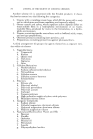
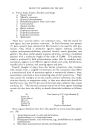
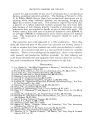
DISORDERS OF THE SCALP 255 1. THE PRE-SHAMPOO APPLICATION in which a detergent keratolytic is applied to the scalp and remains in situ for from five to twenty minutes. This chemical is either removed by shampooing with neutral soap or detergent or by the use of aqueous solution. The organic sulfur preparation bis-laurylt4methylammonium polythionate is an example. Also the quaternary amines act in a similar capacity. 2. MEDICATED SHAMPOO is applied to the moistened scalp and left there from five to twenty minutes. It is then removed by the addition of water producing diffuse lathering of the medicated constituents with subsequent removal of the active agent. This medicated shampoo may contain sulfur, salicylic acid, resorcinol, hexachlorophene, bithionol, surfac- rants dispersed in a shampoo base. The author has recently reported the excellent results of biphenylamine hydrochloride dispersed in a detergent shampoo (.3). 3. ANTI-SEBORRHEIC SCALP LOTION applied to the scalp at regular intervals may contain antiseborrheic stimulants such as resorcinol, monoacetate, chloral hydrate, tincture of capsicum, tincture of jaborandi, tincture of cantharides, Vancide © and Sarthionate ©. These scalp lotions may also be used as hair dressings. 4. THE AFTER-SHAMPOO RINSE which is used on the scalp after completion of the shampoo. For many years diluted lemon juice was used, and more recently the rinse contains a quaternary ammonium compound, e.g. benzalkonium chloride. Slinger (4), Finnerty (5) and Lubowe (6) have previously evaluated independently the comparative effectiveness of a selenium sulfide suspen- sion, a sulfur, salicylic acid and hexachlorophene detergent combination, and a benzopyran formulation. Ball (7) has reported the beneficial results of Vancide © in combination with a quaternary amine in the treatment of seborrheic dermatitis of the scalp. For many years Vancide © has been used as an agricultural fungi- cide and a rubber antioxidant. An excellent antiseptic detergent anti- seborrheic agent was described successfully in the treatment of 82 re- fractory cases of seborrhea of whom 58 were males and 28 females (8). The agent used was Bis-lauryltrimethylammonium polythionate (Sar- thiohate©). The method of application was once daily on the scalp for the first week and then every other day for the second week, and finally, as a pre-shampoo treatment, twice weekly. Clinical and laboratory studies were conducted simultaneously. Interestingly enough, subjective and objective improvement coincided with the reduction of the resident bac- teria, staphylococcus and the resident fungus pityrosporum ovule. In a paper delivered before an International Meeting of the Society of Cosmetic Chemists in June, 1957 (1) the author presented bactericidal and fungicidal studies of 24 potential anti-seborrheic agents. Unless otherwise stated, the

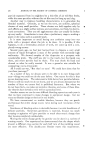
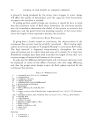
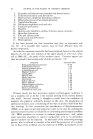
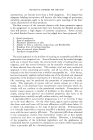
256 JOURNAL OF THE SOCIETY OF COSMETIC CHEMISTS TABLE 1--i•oTzNTIAL ANT•-SzBoRRHE•C AOENTS Code Name No. Chemical Commercial ,- .... Zone Inhibition in mm. .--, S. P. P. M. Aureus Ovale 10vale 2 Lanosum 13 Mercaptobenzothiazole Rotax 42 38 41 0 14 N-acetylbicycloheptene 264 (MGK) 36 Good 0 32 15 6-propylpiperonyl butyl Piperonyl 18 0 0 33 carbityl Butoxide 16 Piperazine citrate .... 0 0 0 0 17 Piperazine caprylate 0 0 28 0 .... 18 Glyodin (2-heptadecylgly- Crag (fruit fun- 0 0 17 0 oxalidine acetate) gicide) 19 Manganese ethylenehis- Dithane M-22 Insoluble dithiocarbamate 20 Zinc ethylenebisdithio- Dithane Z-78 Insoluble carbamate 21 Sodium o-phenylphenate Dowicide A flake 17 10 12 0 22 Para chlorometaxylenol Ottosept 3% al- 18 14 0 2 cohol 24 ....... MCP-90 (LOT 0 21 28 0 0-9) 25 Alkyldiaminoethylglycine- Tego 103 S 5 20 26 21 hydrochlorides CRL •Ot312 26 2-4 dichlorophenol ester Genite EM 923 29 29 30 31 benzene 27 N-trichloromethylthio- Captan 50 30 47 35 41 tetrahydrothalimide Vancide 89 28 Pentachlorobenzene thiol 31 0 0 0 29 Laurylisoquinolinium bro- Isothan Q15 22 30 35 29 mide 30 Benzalkonium chloride ..... 26 27 32 32 31 Benzalkonium chloride ..... 11 2 0 3 plus shampoo 33 2-4 dichlorophenol ester ..... 40 29 24 23 benzene plus lauryl iso- quinolinium bromide (29) 34 0.25% ortho benzyl para Solrex 0 0 35 20 chlorophenol in shampoo 40 Bis-laurylt rime t h y lam- Theradan 43 12 10 12 monium polythionate 3% 39 Selenium sulfide 2% Selsun 3 3 7 10 41 2,2' methylene his (3,46- Hexachloro- 40 25 18 15 trichlorophenol) 3% in phene isopropanol 38 Chlorohexidine diacetate Hibitane 33 28 26 0 47 P-chlorobenzyl-p-chloro ..... 0 20 8 0 phenyl sulphoxide chemicals were utilized in 2 per cent aqueous alcohol solution (Table 1). It was noted that the most effective chemicals were those containing a halo- genated phenolic derivative. The addition of a sulfur radical to many com- pounds introduces a keratolytic action which has a synergistic effect. This premise would be highly satisfactory if it were descriptive of the bacterio- logical spectrum of all anti-seborrheic agents. However, unfortunately this is not basic. The selenium sulfide compounds and cadmium sulfide com- pounds, although not bactericidal, are excellent anti-seborrheic agents. Their modus operandi has been explained by Butcher (9) by the interference '
Purchased for the exclusive use of nofirst nolast (unknown)
From: SCC Media Library & Resource Center (library.scconline.org)