THE JOURNAL OF THE SOCIETY OF COSMETIC CHEMISTS This edition is published for THE SOCIETY OF COSMETIC CHEMISTS OF GREAT BRITAIN by Pergamon _Press, Ltd. Editorial Office: Ashbourne House, Alberon Gardens, London, N.W.11. Publisher's Office: Headington Hill Hall, Oxford ¸ 196oe Society of Cosmetic Chemists of Great Britain VOL. XIII MAY 1962 4 THE STRUCTURES WHICH LIMIT THE PENETRABILITY OF THE SKIN R. T. TREGEAR, M.A., M.S½.* A lecture delivered before a Joint Meeting of the Surface Activity Group, Society of Chemical Industry, and the Society on 20th November 19ill. Evidence is l•resented that the l•enetrafion ol substances al•lflied to skin is a l•hysical l•rocess, indel•endent ol metabolic activity. Penerrants l•robably l•ass through the el•idermis, not its al•l•endages. The barrier to l•ene•ration is the kerafinised cell matrix ol the stratum comeurn, assisted by the surface lil•ids. Ions l•robably l•ene•rate around the keratinised cells, not through them. One of the main functions of skin is to prevent the loss of water from the body and the entrance of extraneous chemicals. In mammals this function is nearly perfect and the rate of movement of substances through the skin surface is very slow. The loss of water through non-sweating skin (insensible water loss) is readily measured by the increase in mass of a water absorber in the air above the skin. It has often been studied in the last twenty years, and the factors affecting it are now reasonably well-known •-5. The inward movement of extraneous chemicals is not so easily measured, because the mass of tissue into which the penerrants move is so large that they have to be measured at very low concentrations. Interesting qualitative, or *Ministry of Supply, Porton, Wilts. 145

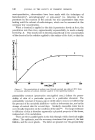
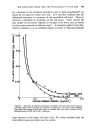
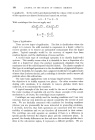
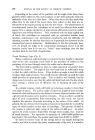
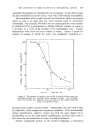
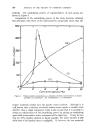
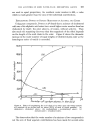
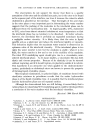
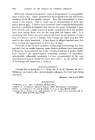
146 JOURNAL OF THE SOCIETY OF COSMETIC CHEMISTS semi-quantitative, observations have been made with the techniques of histochemistry 6, autoradiography 7 or auto-assay 8 (i.e. detection of the penetrant by the reaction of the animal) but true quantitative data were lacking until the advent of radio-isotopes, which can be measured at the necessary low concentration. When a chemical is applied to the skin it penetrates slowly at first the penetration rate then rises, approximately exponentially, to reach a steady level (Fig. 1). This steady rate is directly proportional to the concentration of the chemical in the solution applied to the surface of the skin ø, so that the E Lid / o 5o ioo 15o TIHE CHIN ) ß I 500 250 Figure 1. The penetration of sodium ions through excised pig skin at 35øC from an isotonic solution of sodium chloride applied to the epidermal surface. permeability constant (penetration rate/applied conc.) defines the perme- ability of skin of a particular species to a particular chemical. The permeability constant of human, pig or rabbit skin to ions is not affected by the presence of the metabolic inhibitors--azide or iodoacetate ion, nor by the storage of excised skin for several days. Similarly, insensible water loss is not critically dependent on the condition of the skin 2'•ø. The large resistance to diffusion of skin is therefore apparently a physical property of the tissue, independent of its metabolism. There are three parallel paths in the skin through which chemicals might diffuse: The epidermis, and the accessory structures that pierce it, the hair follicles, and the sweat glands. The latter are present over the general body
Purchased for the exclusive use of nofirst nolast (unknown)
From: SCC Media Library & Resource Center (library.scconline.org)