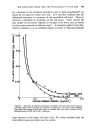
THE STRUCTURES WHICH LIMIT THE PENETRABILITY OF THE SKIN 151 Bettley, R. A. and Donoghue, E. Nature 185 17 (1960) Mali, J. W. H. J. Invest. Dermatol. 27 451 (1955) MacKee, G. M., Sulzberger, M. B., Herrmann, F. and Baer, R.L. J. Invest. Dermatol. 6 43 (1945) Axelrod, D. ]. and Hamilton, J.G. Am. ]. Pathol. 23 389 (1947) Valette, G., Cavier, R. and Savel, J. Arch. intern. pharmacodynamie 97 232 (1954) Treheme, J.E. ]. Physiol. London 133 171 (1956) Kerslake, D. McK., Brebner, D. F. and Waddell, J.L. ]. Physiol. London 132 225 (1956) Tas, J. and Feige, Y. J. Invest. •Dermatol. 30 193 (1958) Kuno, Y. Human perspiration, (1956) (Ch. Thomas, Springfield, Ii1., U.S.A.) Tregear, R. T. J. Physiol. London 156 307 (1961) Blank, I. YI. J. Invest. Dermatol. 21 259 (1953) Monash, S. J. Invest. Dermatol. 29 367 (1957) Szakall, A. Arch. klin. u. exptl. Dermatol. 201 331 (1955) Marzulli, F. N. and Tregear, R.T. J. Physiol. London 157 52P (1961) Brody, I. J. Ultrastructure Res. 2 482 (1959) Charles, A. J. Invest. Dermatol. 33 65 (1959) Flesch, P. J. Invest. Dermatol. 31 63 (1958) Dirnhuber, P. and Tregear, R.T. J. Invest. Dermatol. (in press) Lawlet, J. C., Davis, J. C. and Griffiths, E.C. J. Invest. Dermatol. 34 301 (1960) Blank, I. H. and Gould, E. J. Invest. Dermatol. 33 327 (1959) Stoughton, R. B., Clendenning, W. E. and Kruse, D. f. Invest. Dermatol. 6 43 (1945) Barnett, A. J. Physiol. London 93 349 (1938)

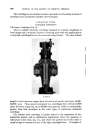
159, JOURNAL OF THE SOCIETY OF COSMETIC CHEMISTS MODERN TRENDS IN CONTINUOUS CENTRIFUGAL SEPARATION AND CLASSIFICATION A. J. HAYTER, B.Sc., Ph.D., A.M.I.Chem.E.* A lecture delivered before the Society on 22nd February 1962. Theoretical methods o• centrifugal separation are discussed, and general equations which can be used to assess eentri•uge performance are derived. Centriluge types are reviewed, and their range o• application is indicated. INTRODUCTION OF ALL the unit operations carried out in process plants, it is probably true that the most common are the operations of mixing and separation. There are few plants indeed which do not require, at some stage, both of these operations. It is a surprising fact, however, that much less attention has been paid to the fundamentals of these operations than to the rather more esoteric operations such as distillation. Much of the blame for this rests with our schools and universities who cover this ground rather inadequately but undoubtedly also with the chemical engineers who design this equipment since in the past they have seemed reluctant to publish their theoretical data. This is particularly true in the field of centrifugal separation, and as a result large sectors of industry are only familiar with the laboratory centrifuge and do not realise the advanced stage of technical sophistication which has been reached in machine design and application. THEORETICAL METHODS OF CENTRIFUGAL SEPARATION It is important to realise that centrifugal force differs from gravitational force only in intensity and direction. Thus all centrifugal operations have their gravity analogne. There are two basic methods of gravitational or centrifugal separation. Firsfly, the mechanism of filtration where the liquid passes through some form of retaining mesh which retains solids. This mechanism is independent of the difference in specific gravity between the solid and liquid. As a mechanism, it is not suited for liquid-liquid separation or the resolution of emulsions. It is not proposed to discuss centrifugal filtration in any detail since it has little application in the cosmetic industry. The second and more important mechanism is that of centrifugal sedimentation. Here, there is a separation of two or three phases due to differences in specific gravity of the phases and this can apply either to liquid-solid, liquid-liquid, or liquid- liquid-solid systems. Obviously if the sedimentation treatment is continued *Sharples Centrifuges, Ltd., Camberley, Surrey.
Purchased for the exclusive use of nofirst nolast (unknown)
From: SCC Media Library & Resource Center (library.scconline.org)