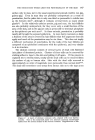
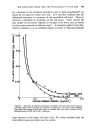
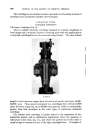
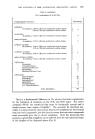
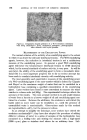
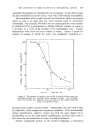
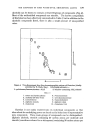
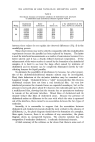
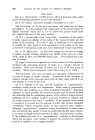
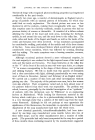
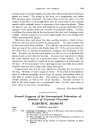
THE ACTIVITIES OF SOME WATER-IN-OIL EMULSIFYING AGENTS Table 1 (continued) The Constitution of Wool Wax 175 Unsaponifiable fraction :-- nAlcohols 11 members, C16 to C30 even numbered carbon chains C10 to C23 odd numbered carbon chains isoAlcohols 6 members, C16 to C26 even numbered carbon chains anteisoAlcohols members, C17 to C33 odd numbered carbon chains nAlkane-l,2-diols 10 members, C14 to C24 even numbered carbon chains C17 to C23 odd numbered carbon chains iso Alkane- l ,2-diols 6 members, C16 to C26 even numbered carbon chains anteisoA1 kane- 1,2-diols 6 members, C15 to C25 odd numbered carbon chains C27-Sterols: Cholesterol 7-Oxocholesterol Cholestan-3,5,6-triol Cholestenol Cholesta-3,$-dien-7-one C30-Sterols: Lanostadienol Lanostenol Agnostadienol Agnostenol 7-Oxolanostenol 7,11-Dioxolanostenol Total identified :-- Percentage 4 3O 3 2 1 1 16 16 1 3 2 1 98 There is a fundamental difference in the physico-chemical requirements for the formation of emulsions of the O/W and W/O types. For invert emulsions (W/O), the interfacial film must be electrically neutral and it should possess some degree of rigidity 7. The necessity for electrical neu- trality is evident from the observation that invert emulsions are best formed from non-ionic compounds, but this does not mean that non-ionic compounds must necessarily give rise to invert emulsions. That the interfacial film possesses a great deal of rigidity can be inferred from the non-spherical shape of the droplets of the dispersed phase (Fig. 2).

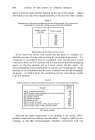
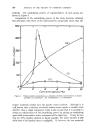
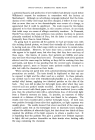
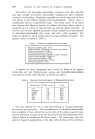
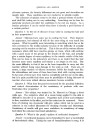
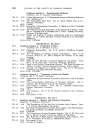
176 JOURNAL OF THE SOCIETY OF COSMETIC CHEMISTS Figure 2. Irregularly shaped globules of a W/O emulsion stabilised with 2-5% cholesterol + 2.5% cholesteryl palmirate photographed after dilution with liquid paraffin MEASUREMENT OF THE EMULSIFYING POWER The normal criterion of the activity of an emulsifying agent is the extent to which it can lower the oil/water interfacial tension. For W/O emulsifying agents, however, the reduction in interfacial tension is not a satisfactory measure of the emulsifying power. In general, a good W/O emulsifying agent will lower the benzene/water interfacial tension to 10-30 dynes/cm which, by the normal standards of surface activity, is very poor. As will be seen later, the ability of the emulsifying agent to form a viscoelastic inter- facial film is a more important property but so far no serious attempt has. been made to correlate interfacial viscosity with emulsifying activity. The most generally used quantitative measure of the emulsifying power of a W/O emulsifying agent is the water number which is defined by Casparis and Meyer 8 as the maximum weight of water that can be emulsified in a hydrophobic base containing a specified concentration of the emulsifying agent. Later workers have found it more convenient to measure the water number in volume units (ml/100g). The experimental technique affects the accuracy of the results. The most accurate method is to add small volumes. of water from a burette to a known weight of oil and emulsifying agent con- rained in a beaker. Between the additions, the emulsion is well stirred (by hand) until no more water can be emulsified, i.e., until the presence of unemulsified water is unmistakable. Observations made by this method are reproducible to +5%, but the process is tedious. In an attempt to simplify the technique, some workers have stirred the emulsions mechanically TM they have also adopted the procedure of adding different volumes of water to a series of samples of the hydrophobic base contained in a boiling tube and stirring the mixture with a high-speed (2200 r.p.m.) glass or stainless steel stirrer for an arbitrary time. Sub-
Purchased for the exclusive use of nofirst nolast (unknown)
From: SCC Media Library & Resource Center (library.scconline.org)