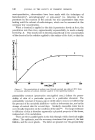
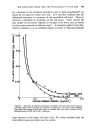
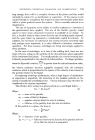
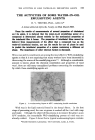
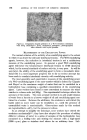
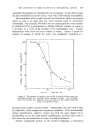
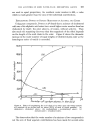
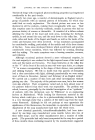
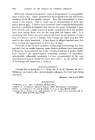
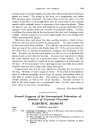
THE ACTIVITIES OF SOME VVATER-IN-OIL EMULSIFYING AGENTS 177 sequently, the samples are classified into two categories: in one, all the water has been emulsified and in the other, some water still remains unemulsified. The uncertainty of the results obtained by methods in which a mechanical stirrer is used is so large that the water number must be determined statistically. For example, Worrell et al 9 have determined the water number of cholesterol (3%) in petrolatum by adding different volumes of water, in 1 ml steps, to a series of 3g samples of the hydrophobic base. Twenty observations were made for each volume of water. Figure 3 shows the number of samples in which the water was completely emulsified as a 2.0 o--o '• O •, o $ o IE o i i I I I I 5 IO 15 woter odded, ml Figure $. The number of sampies (out of 20) in which all the water was emulsified plotted as a function of the volumes of water. The deviation from the broken line indicates the inaccuracy of the results obtained using a mechanical stirrer function of the volume of water added. Statistically, the best result is that for which 50% of the samples are completely emulsified. If the mechanically stirred emulsification could be carried out with the same degree of re- producibility as can the hand-stirred emulsification, an ideal curve such as that shown by the broken line in Figure $ would be obtained. Another undesirable feature of the method employing a mechanical

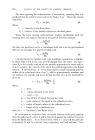
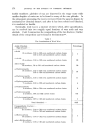
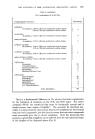
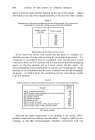
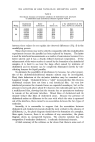
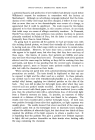
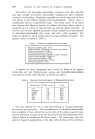
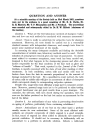
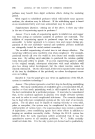
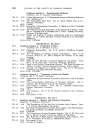
178 JOURNAL OF THE SOCIETY OF COSMETIC CHEMISTS stiiTer is that the water number depends on the size of the sample. Table oe shows that as the size of the sample increases, so too does the water number. Table 2 Dependence of the water number on the size of the sample (3%9 cholesterol in petrolatum) when the emulsions are stirred mechanically. Sample weight Water number in grams __ . 1 300 2 375 3 45O 4 5OO 5 500 6 550 EMULSIFYING POWER OF LANOLIN It has long been known that lanolin has the power to emulsify con- siderable amounts of water without losing its characteristic properties. For a long time it was believed that the constituent esters had the power to hold water in the form of a W/O emulsion but it is now known that the emulsifying agents are the free alcohols and to a lesser extent, the free acids 4. By chromatographing commercial lano!in on alumina and examining the various fractions, it was established that the esters of lanolin were devoid of emulsify- ing power. As Table $ shows, the emulsifying activity of lanolin lies mostly in its free alcohols. Table 3 Water numbers of lanolin fractions obtained by chro•natography on alumina. Water Sample number 100% commercial lanolin 355 100% lanolin esters obtained by chromatography 16 5% commercial lanolin* 145 5% lanolin esters* 5 5% lanolin alcohols* 710 5% lanolin acids* 235 2.5% lanolin alcohols* 255 2.5 % lanolin alcohols + 2.5 % lanolin esters* 650 2.5 % lanolin acids + 2.5 •o lanolin esters* 190 *In liquid paraffin. Although the entire composition of the alcohols is not known, 59 in- dividual compounds have already been identified. Using the relatively new technique of thin film chromatography, Hartolan (commercial wool wax
Purchased for the exclusive use of nofirst nolast (unknown)
From: SCC Media Library & Resource Center (library.scconline.org)