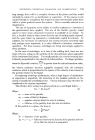
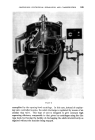
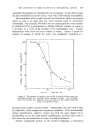
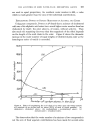
CONTINUOUS CENTRIFUGAL SEPARATION AND CLASSIFICATION 167 basket type machine and, in addition, the wash liquor mixes with the mother liquor and discharges with it. Where a high degree of washing efficiency of the product is required, or where the wash liquor must not mix with the mother liquor, it is usual to employ a re-slurry technique, using two stages of centrifugal decanters. Often the decanter is used as a "roughing" centrifuge for separating the coarse and relativeIv easily removed solids before feeding the liquor to one of Figure the other types of machines, such as a tubular bowl centrifuge or one of the nozzle type centrifuges, for "polishing". Centrifugal Filtration The centrifugal filter only differs basically from ordinary filters in that the driving force which causes liquid to flow through the filter medium is obtained centrifugally. The centrifugal force may be many times that produced by the acceleration due to gravity, and consequently much speedier drainage can be obtained, and a drier cake produced.

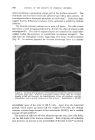
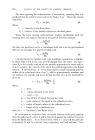
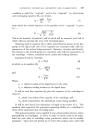
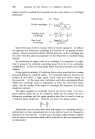
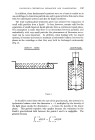
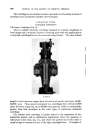
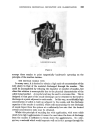
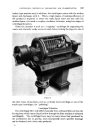
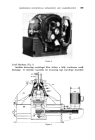
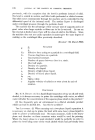
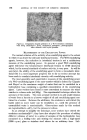
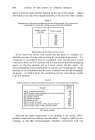
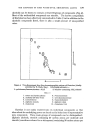
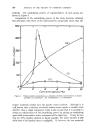
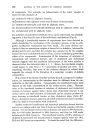
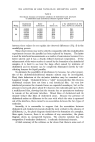
168 JOURNAL OF THE SOCIETY OF COSMETIC CHEMISTS In the perforated basket continuous centrifuge, a different mode of action is involved from that in the centrifugal sedimenters which have already been described. In the centrifugal sedimenter, the solids are separated from a continuous liquid phase or phases by a centrifugal settling process, and for separation to be effected, destiny differential is essential. The perforate basket machine is, however, a true centrifugal filter in that the solids separ- ated from the mother liquor act as a filter bed in most cases. A density differential between the solid phase and the liquid phase is no longer necessary and, in fact, slurries can be handled where the density of the solids is lower than that of the liquid. Automatic Knife Discharge (Fig. 6) The centrifugal filter, in its simplest form, consists of a perforated basket, lined with a suitable filter medium. This basket rotates on fixed bearings about a horizontal axis. Slurry feed and wash are fed to the basket through suitable nozzles, while discharge of the cake is effected by means of a piston- operated underloader knife. Almost any degree of complexity of operating cycle can be achieved, but a typical example of the manner in which the machine is used is, (i) screen rinse, (ii) loading, (iii) cake rinse, (iv) spin dry and (v) unloading. The cycle is controlled by automatic timers, and the time interval for each step may be altered at will by appropriate setting of these timers. Once started, the centrifuge operates continuously, repeating this cycle without further attention. The advantage of this type of perforated-basket centri- fuge is that the flexibility of the control mechanism permits almost any desired sequence of operations, and since the timers can be reset at will, it is also adaptable for dealing with off-standard material. The length of the cycle varies according to the nature of the application, but is generally between 30 seconds and 3 minutes. In some special cases, however, cycle times of as long as 20 minutes have been employed. Many variations can be incorporated in the cycle. For example, more than one type of cake rinse can be used. Where necessary, the mother liquor can be kept separate from the rinse liquor or liquors. The spin-dry stage in the cycle can be varied at will to obtain the desired crystal dryness or crystal purity. In general, this type of centrifuge is used for the recovery and dehydration of crystals where the desired product is the solid phase. A characteristic of the knife-discharge perforated-basket centrifuge is that excellent washing can be obtained. It has, however, been successfully used for the separation of microcrystalline and amorphous solids where special considerations such as toxicity, hygiene, vapour hazard, etc., have applied. Another interesting application has been the handling of crystal separation problems at very low temperatures.
Purchased for the exclusive use of nofirst nolast (unknown)
From: SCC Media Library & Resource Center (library.scconline.org)