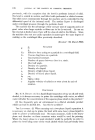
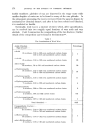
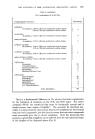
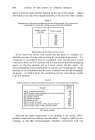
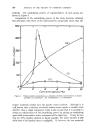
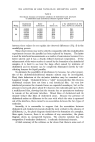
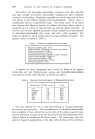
JOURNAL OF THE SOCIETY OF COSMETIC CHEMISTS All doctors are becoming increasingly concerned with skin infection and skin carriage of bacteria, particularly staphylococci since antibiotic resistance is spreading. Hospitals especially are much interested in ways and means of preventing staphylococcal crossinfections. Hence, there is considerable interest in germicidal soaps. The social mores of our times also demand the effective control of axillary and body odour, which is produced by the action of skin bacteria on apocrine gland secretion. It was the need of more efficient germicides which resulted in the introductior• of tetrachlorosalicylanilide into soaps and other toilet products. The range of substances which remain active in soap solutions is limited. The present choice is shown in Table 1. Table 1. Germicides suitable for use in soaps. Hexachlorophene (Gll, AT7) Dichlorophenol (Bithional, Actamer, horothidol) Dichloro-m-xylenol (DCMX) p-Chlormethylxylenol (PCNIX) Tetramethylthiuramdisulphide (TMTD, Puralin) Trichlorosalicylanilide (Anobial) Tribromosalicylanilide (TBS) Tetrachlorosalicylanilide (TCSA) Trichlorcarbanilide (TCC) A number of these compounds were tested by Hurst et al a against Escherichia coli and Staphylococcus aureus, and tetrachlorosalicylanilide was found to be the most effective, as shown in Table 2. Table 2. Bacteriostatic levels (ppm.) of different disinfectants-- Disinfectant Staph. aureus E. coli G11 0.5 50.0 Actamer 1.0 50.0 DCMX 2.5 50.0 TMTD 0.25 25.0 TCC 0.2 25.0 TCS 0.1 12.5 TBS 1.0 25.0 Any new product for use in man must undergo a testing programme for toxicity and sensitivity. The manufacturers of tetrachlorosalicylanilide had a number of tests carried out on the skin of the guinea pig and man, and the substance was passed by the Food and Drug Administration of the United States, as satisfactory for use in soaps. The guinea pig tests con- sisted of repeated applications to the skin with solutions of the chemical,

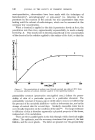
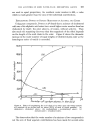
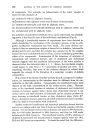
PHOTO-CONTACT DERMATITIS FROM SOAPS 191 followed in one series by exposure to ultraviolet light. Only irritant effects were seen, without evidence of allergic sensitization. (This substance is irritant in concentrations of about three to five per cent.) As regards man, routine patch tests and repeat insult patch tests of various types in over four hundred subjects were also negative except for a few irritant reactions again. The chemical was then incorporated into toilet soap at a concentration of 0-2% and used for the routine washing of children, and of dermatological patients at three centres in the United States. In two of them, over three hundred children and nearly two hundred skin patients showed no adverse reactions at all but at the third centre three per cent of over two hundred skin patients became sensitized. The crux of the problem of evaluation is to know how much weight to put on a single positive result as in this case. It could be disregarded as being unrepre- sentative. Perhaps the most relevant factor is how the particular chemical is going to be used. If it is being developed as a pharmaceutical for the treatment of infective disease, certain risks are justifiable when they could not be accepted for a substance which is to be utilised in an everyday toilet requisite or article of clothing or foodstuff. When products are being developed it is not usually possible to forecast how they will be used, so that the mere fact that a substance has a known sensitization index should not negative its use in any form. Tetrachlorosalicylanilide has been used in soaps in several countries without ill-effects, and perhaps it continues to be used safely. The reasons for such variation are obscure, but in experimental sensitization, the results obtained in different countries, or in different parts of the same country, may vary enormously. In the case of this compound under consideration the incidence of dermatitis appears to have been very much greater in the south of England than in the north, and in Scotland. A dermatological colleague in the United States has told me that he has seen no cases of contact dermatitis from soaps containing tetra- chlorosalicylanilide (at a concentration of 0.2%), but when using it as a 1 ø/o solution for the treatment of fungus infections of the feet, he encoun- tered an incidence of allergic sensitization of up to 20% of cases treated. An interesting property of this chemical is its ability to be adsorbed on to the skin surface and on to clothing. It has been estimated 4 that when the skin is washed in soap containing tetrachlorosalicylanilide, as much as 20•o may remain on the surface after rinsing. The concentration may increase with repeated washing several times a day, and this factor is likely to be an important one in facilitating both allergic contact sensitiza- tion and photosensitivity. At the same time, of course, if it is germicidal the persistence on the skin surface will be beneficial, provided that no adverse reaction is induced.
Purchased for the exclusive use of nofirst nolast (unknown)
From: SCC Media Library & Resource Center (library.scconline.org)