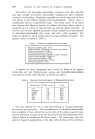
PHOTO-CONTACT DERMATITIS FROM SOAPS 187 Miss E. E. CHAMPION : W/O emulsions. I refer to the stability of hand stirring with a glass rod against the instability of an American experiment using a mechanical stirrer. Had any air been incorporated during the manual action using a glass rod, hence any bearing on the stability ? THE LECTURER: I have never observed the inclusion of air in hand-stirred emulsions. With a high-speed mechanical stirrer air might well be included in the emulsion but I do not believe that it would affect its stability. MR. K. H. STEINITZ: At what temperature were the hand-stirred emulsions prepared ? THE LECTURER: All emulsification experiments have been conducted at room temperature. I have observed that some emulsions break very readily as the temperature is raised. Moreover, the breaking temperature is fairly reproducible which suggests the possibility of a phase change in the system. DR. J. J. MAUSNER: Please comment on the relative stabilities of cholesterol versus cholesterol/ester emulsions. THE LECTURER: There is nothing to choose between them. Both types of emulsion are stable for four weeks at room temperature. PHOTO-CONTACT DERMATITIS FROM SOAPS C. D. CALNAN, M.R.C.P.* A lecture delivered before the Society on 26th January 19•2. The studies which led to the discovery o• the photo-contact sensitizing property o• tetrachlorosalicylanilide are described. ABNORMAL HYPERSENSITIVITY to light is a phenomenon that has interested biologists, veterinarians and physicians for at least a century, although the most intensive studies have been made over the past twenty or thirty years. It has been appreciated for a long time that certain chemicals have the capacity to make animals and men more sensitive to light, not as an exceptional phenomenon but as a normal inherent property. The use of some such chemicals has been discontinued in medical therapeutics entirely because of their photosensitizing properties. The first medicaments to be used on a large scale in recent years which frequently produced light sensi- tivity were the sulphonamides. Various sulphonamide derivatives used for other than anti-bacterial action have been found to have a similar effect. *The Institute of Dermatology, St. John's Hospital for Diseases of the Skin, London, W.C.2.

PHOTO-CONTACT DERMATITIS FROM SOAPS 187 Miss E. E. CHAMPION : W/O emulsions. I refer to the stability of hand stirring with a glass rod against the instability of an American experiment using a mechanical stirrer. Had any air been incorporated during the manual action using a glass rod, hence any bearing on the stability ? THE LECTURER: I have never observed the inclusion of air in hand-stirred emulsions. With a high-speed mechanical stirrer air might well be included in the emulsion but I do not believe that it would affect its stability. MR. K. H. STEINITZ: At what temperature were the hand-stirred emulsions prepared ? THE LECTURER: All emulsification experiments have been conducted at room temperature. I have observed that some emulsions break very readily as the temperature is raised. Moreover, the breaking temperature is fairly reproducible which suggests the possibility of a phase change in the system. DR. J. J. MAUSNER: Please comment on the relative stabilities of cholesterol versus cholesterol/ester emulsions. THE LECTURER: There is nothing to choose between them. Both types of emulsion are stable for four weeks at room temperature. PHOTO-CONTACT DERMATITIS FROM SOAPS C. D. CALNAN, M.R.C.P.* A lecture delivered before the Society on 26th January 19•2. The studies which led to the discovery o• the photo-contact sensitizing property o• tetrachlorosalicylanilide are described. ABNORMAL HYPERSENSITIVITY to light is a phenomenon that has interested biologists, veterinarians and physicians for at least a century, although the most intensive studies have been made over the past twenty or thirty years. It has been appreciated for a long time that certain chemicals have the capacity to make animals and men more sensitive to light, not as an exceptional phenomenon but as a normal inherent property. The use of some such chemicals has been discontinued in medical therapeutics entirely because of their photosensitizing properties. The first medicaments to be used on a large scale in recent years which frequently produced light sensi- tivity were the sulphonamides. Various sulphonamide derivatives used for other than anti-bacterial action have been found to have a similar effect. *The Institute of Dermatology, St. John's Hospital for Diseases of the Skin, London, W.C.2.
Purchased for the exclusive use of nofirst nolast (unknown)
From: SCC Media Library & Resource Center (library.scconline.org)