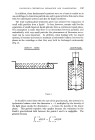
CONTINUOUS CENTRIFUGAL SEPARATION AND CLASSIFICATION 159 concerned with complex emulsions which include a third component which could be either liquid or solid located at the interface. The stability of an emulsion is influenced by :-- 1. The interfacial tension and by the emulsifying agent present at the interface. 2. By the extent of Brownian movement which would lead to particle collision. 3. By the electrical double layer causing repulsion. There are three ways in which an emulsion can become less homogeneous. 1. By concentration of globules of the disperse phase due to density differences. I would not normally regard this as emulsion breaking but rather as emulsion concentrating. 2. By the flocculation of aggregates where the globules retain their identity. 3. By coalescence to form larger globules. To break emulsions it is necessary either to increase the chances of globule contact or to change the resistance of the emulsifier film towards coalescence. Although the analogy between gravity and centrifugal force has been stressed above, and the performance of centrifuges have been related to the performance of gravity settling tanks, we now have an example of where this theory does not remain completely valid. We have all experienced emulsions which can be left for long periods of time in gravity tanks without changing their character. Stabilised water paraffin emulsions show this behaviour, but the emulsion can be partially resolved by agitation. This phenomenon is encountered very frequently in the centrifugal treatment of emulsions. For instance, we were faced with many thousand tons of a tar-water emulsion which had been in gravity tanks for many years in an attempt to break the emulsion and recover the tar. Over this period of time no separation was possible. A centrifuge was installed and a complete resolution was immedi- ately possible. The centrifuge obviously possesses some features which the simple analogy to a gravity tank ignores. We believe that the ability of the centrifuge to break emulsions is probably caused by :-- 1. A mechanical shearing effect which ruptures the interfacial film. 2. The need to achieve a terminal settling velocity which is sufficiently great to overcome the effects of Brownian movement. 3. The ability to operate at elevated temperatures with a subsequent reduction of viscosity, and to employ settling velocities which are again in excess of those induced by convection currents.

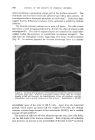
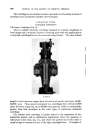
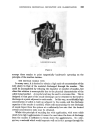
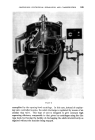
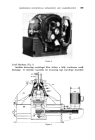
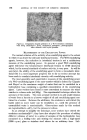
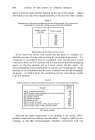
160 JOURNAL OF THE SOCIETY OF COSMETIC CHEMISTS The centrifuge as an emulsion breaker represents an interesting method of carrying out an accelerated stability determination. CENTRIFUGE TYPES Centrifugal Sedimentors The Super Centrifuge (Fig. 2) This is a tubular bowl type centrifuge designed to combine simplicity of bowl design and a minimum number of moving parts with the application of a very high centrifugal force to the material being treated. The ratio of bowl Figure length to bowl diameter ranges from 4-8 and bowl speeds vary from 15,000- 50,000 r.p.m. These speeds correspond to a centrifugal force of from 12,000 times the force of gravity, up to 65,000 times gravity, which is considerably greater than that developed in the other types of continuous industrial centrifuge. The tubular bowl centrifuge is ideally suited to the separation of two immiscible liquids, and to clarification applications where the quantity of solid phase is less than, say, 1%, and where the particle size of the solids is small enough to warrant the use of the high centrifugal force. Examples of
Purchased for the exclusive use of nofirst nolast (unknown)
From: SCC Media Library & Resource Center (library.scconline.org)